FACE THE SKILLS: A rough guide to getting the most out of video on Facebook 

In the early days of video training I helped deliver we’d have a clip that showed how landscape was the right way to shoot footage and upright video was plain wrong. 

“People have eyes side by side,” the video joked, “not above each other.” 

How we laughed.

It’s an example of how things have changed that Facebook have announced plans to move ALL their video to upright video. That includes Reels, live video and what they describe as other longer video. 

It’s a huge shake-up but I’m here to tell you it needn’t be daunting. 

Why are they doing this? Because more people watch video on a mobile phone holding their phone in one hand upright scrolling with the other. 

When will this take shape? This transformation is taking place in USA and Canada first before being rolled out globally. 

This huge shift in approach and demands we all take a fresh look at how video is created.  A key part of this is to look at what the recommendations Meta themselves are making.

Here’s some help with making sense of video. 

Types of video on Facebook 

There’s three types of video you can post to Facebook. Each one has a role to play. 

Short-form video 

Firstly, you can still post longer video to Facebook. Soon, you’ll have to do this as portrait-shaped as opposed to landscape-shaped. Facebook have said that you can re-purpose existing content for this but it is unclear as to how this will take shape.

Landscape footage can still be posted with a button to convert the clip from a portrait viewing experience to landscape.

Optimum length: Ten years ago, Facebook went from 16 seconds to two minutes for optimum video to encourage ads popping up mid-way through clips. Now, more than 90 seconds is the new optimum length for shortform.

Reels

This is where I’d be putting time and effort. Reels is Meta’s TikTok equivalent that they are pushing strongly. 

Recent research on public sector content put Reels head and shoulders above other content. When Reels was first launched it came as a laboured version of something that should be fun. You could see what they were trying to do but it was limited spark. That’s got better although the search algorithm still has some way to catch up with TikTok.

Be creative. Start with a hook so a teasing intriguing question or arresting footage. Keep it short. People work best because people connect with people.

If you are not creating Reels then start now is Meta’s advice.

Optimum length: Between 15 and 20 seconds is best.  

Live video 

Live video has pulled in huge numbers but often the public sector is a little hesitant. 

Upright live video may be challenging but it’ll be interesting to see how tools like the landscape video tool Streamyard can sync with it. This tool that takes people’s webcams and adds them to a desktop studio where they can give guests name titles, add banners to the screen with questions and add the title of the discussion. I’m a huge fan. 

Alternatively, you can take the Spudman or Max Out in the Lake District approach and go live direct from your mobile device.

Optimum length: 20 to 30 minutes.  

Facebook’s tips on creating video

There’s aa few pointers that Meta have made to give people a steer. This is so much better than the earlier days of Facebook where people were left pretty much to guess. 

If you’re making video then pay attention. 

Record in vertical video 9:16

The 9:16 format is portrait-shaped. This content will be rewarded. 

Engagement

This is a big one. 

In their update, Facebook have been keen to stress engagement. That means comments likes and shares as well as eyeballs where people are watching. So, the question to ask yourself is how you can encourage this. Is it asking a question or maybe questions? 

“Focus on engagement: Our recommendation systems favour videos that have a lot of engagement,” is the guidance. 

“Beyond plays and watch time, this also includes interactions such as reactions, comments and shares.”

This on its own should encourage people to play around with live video.

Storytelling

Being able to tell a story with a who, what, when, where and why. Meta’s own guidance is that authentic storytelling is more likely to perform well, regardless of whether it’s a Reel, medium length or long video.

Authentic 

Meta still want you to be authentic. If you think you need special effects, slow motion, drone footage and exploding space rockets then you can relax a touch. Rough around the edges has a place on Facebook. 

Use Meta’s editing tools

The advice with Reels is to still finish off using the tools that Meta provide. So, use their music and their text on screen. If you use the Reels editing tools on Instagram you can add subtitles that use the AI tool to make a stab as to what they say. You still need to check that out to avoid inaccurate subtitles. 


If you’ve found this useful you’ll like ESSENTIAL VIDEO SKILLS REBOOTED training to help you plan, shoot, edit and post effective comms and PR video.

GUEST POST: How an NHS Trust harnessed video through telling people stories

One of their TikTok clips has chalked-up 1.4 million views alone. How is Sandwell & West Birmingham NHS Trust using video effectively? By focussing on people. Anuji Evans lifts the lid.

I’ve always loved storytelling – just ask my nine-year-old kid. In his home made Mother’s Day card recently he wrote a list of things to thank me for. You know, the usual, like tidying his room and making his dinner. But he signed off with “telling me crazy stories”. 

How I do love a good tale – even he recognises that. And so, it’s only fitting that this is what I’ve continued to do throughout my career as a journalist and communications professional. Of course, they’re true stories which I hope will make a difference. 

So how do me and the team at Sandwell and West Birmingham NHS Trust do this? Primarily through our social media channels using photographs of real people and/or capturing them on video. Whether that’s a member of staff, or a patient, it’s important to us that our comms content is fronted by faces that people can relate to.

And we are there to guide and support them in telling their stories. 

As cliche as it sounds, the three hospitals, GP and community services run by the Trust is our patch and we build contacts constantly, working with them to raise awareness of services that will benefit patients, change the way the NHS works and save lives. 

The Bowel Screening Service is a great example. The team have a giant inflatable bowel. And why wouldn’t that be a great opportunity to create video tour of the bouncy back end? Yes, the bowel was impressive, but even more so was Anna, an enthusiastic bowel screening practitioner who took us on the journey, explaining the importance of the test. The video was a hit – worldwide.

Millions on TikTok

It’s currently at 1.4 million views on our TikTok channel with more than 1,100 comments such as “She’s (Anna) wonderful at explaining”, “I have a kit at home, I’m definitely going to use it” and “bowel screening saved my mum. If you have this kit use it.” Anna is originally from Ghana and we saw a sharp rise in views and comments from her motherland.

TikTok: ‘Welcome to our giant inflatable bowel.’

Content to us is about spotting an opportunity to tell a story and seizing it. We’ve been doing that for a while now, just in different forms so that we continue to move with the times. 

We began with filming our videos in landscape – but when TikTok suddenly started to soar, it was the boss who pushed us towards the portrait platform. Yes, it came with challenges. Would we have film the video twice, in landscape and portrait? Would the content have to change completely for the different audiences? How much extra work would it involve for our small team?

A hit in Bengali

But we made it work without too much extra graft. After some careful scrutiny of the data, it soon became apparent that audiences on our other channels liked the snappier and shorter films. The inflatable bowel video enjoyed a higher than usual engagement figure on our Facebook page, as did our measles symptoms explainer videos in English and Bengali. Both are doing well on all platforms and there are many others.  

Reels: Measles advice in Bengali.

We now post our TikTok vids as reels on Facebook and Instagram and change the aspect ratio to square for X (formerly known as Twitter) and LinkedIn. So yes, we do two different versions but only with minor edits. And yes, it still takes time, but it’s worth it for the results we see.

Not all our videos go across all channels. And it’s not all about the reels. We use static imagery of our people and patients on Facebook, Instagram, X and LinkedIn. The accompanying posts explain the narrative and the engagement continues to grow as do our followers.

Our latest campaign incorporating our Trust values and strategy is all about the different characters working within our organisation. We share a photograph each week of someone who has made a difference and give our audience a snapshot into their working life. It’s simple yet effective, as the data again is showing us.

Storytelling can be done in many different forms. Generic campaign material, with assets using text does have its place somewhere, but for us we must never lose sight of the most important part of our content – the people.

You can follow Sandwell and West Birmingham NHS Trust on Facebook here and on TikTok here.

Anuji Evans is external communications manager at Sandwell & West Birmingham NHS Trust.

CLICK POST: What good Instagram content looks like in 2024

Instagram has often baffled the public sector yet with some fresh thinking it could work well for you.

The worst examples I’ve seen of corporate Instagram are a receptacle for every piece of artwork or campaign regardless. The sense of box ticking is as strong as the tumbleweed, frankly. Just because something been posted doesn’t mean it’s worked.

So what does work?

Well, firstly, it’s creating a filter around who your audience is. Who is likely to follow you? Who is following you? Instagram is most popular amongst under 30s. It’s visual and increasingly video. Half of all time spent on Instagram is spent watching video, so how can you tailor something?

The days of Instagram being a place solely for landscape pics, fashion pics or shots of your breakfast have long gone.

Here’s three examples of good Instagram use to inspire you.  

Alderhey Children’s Hospital 

A few years ago, this children’s hospital on Merseyside was involved in a high profile court case involving a baby and medical advice that pointed to switching off the life support machine. The case was traumatic for all concerned and led to a rethink by the hospital on how they use social media.

Instead of using Instagram as a general bulletin board they asked a simple question: ‘What are we about?’ The answer was they were a place that had inspiring staff doing amazing things for amazing child patience. So, they decided to use Instagram as a place to posting inspiring stories of staff and patients and nothing else. 

This remarkable approach has generated some truly magnificent content that has been picked up by news outlets across the globe. 

For example, here’s 13-year-old Ellie who appears in this video ringing the end of treatment bell.

It’s an emotional video that shows video ringing the symbolic bell then hugging her Mum. It’s beautiful.

Then there’s this which is a quick staff profile of Linda a catering assistant. 

Both build a picture of a hospital with real people doing a fantastic job. 

Leeds Plus Social 

This isn’t public sector but its absolutely a channel to learn from. Leeds Plus is a news outlet that exists on social media that focuses on the positive. 

Scroll through and you’ll see stories from across the city with more than 100,000 followers on Instagram. That’s an impressive number. 

The platform divides its content into seven nicely curated categories including news to food & drink, new venues, local heroes, back in time and events. Want more food & drink? Hit the category at  the top of the channel. The lesson here is to focus on what people want and curate it for them.

As you scroll down the timeline you get a layer which gives the title of the video. Click through and it uses subtitles to run through the story. Here a £250m tram proposal is being explained in the caption but also the video which tells the story in text on cutaways of Leeds streets.

Or this which tells the story of the Mr Whippy Vans departing the city park.

It’s clear that news stories can be covered on Instagram if they are created for uniquely for Instagram and from the ground-up.  

Yorkshire Dales 

While video is a driver there’s still room for good photography. Every area has its share of people who celebrate the area with good pics. The trick is to ask them for permission to share them and then credit them.

Here, a shot taken by amateur photographer Andy Kay is used to celebrate the view. What I also love about this are the comments. One person recognises it as his father-in-law’s land where he first started to dry stone wall. So, connections with the community in an unexpected way.

From a more day-to-day call to action perspective this shot of the museum flags up the museum as a place to go for events.

What good looks like

Anton Mosseri, head of Instagram, recently posted that follower numbers were less important than likes and views per post. This makes loads of sense and navigates around the legacy impact of previous ways Instagram were used. An account may have 20,000 people, for example, but if the content is poor this week it’ll lead to limited engagement. A couple of likes for this is not a great look. 

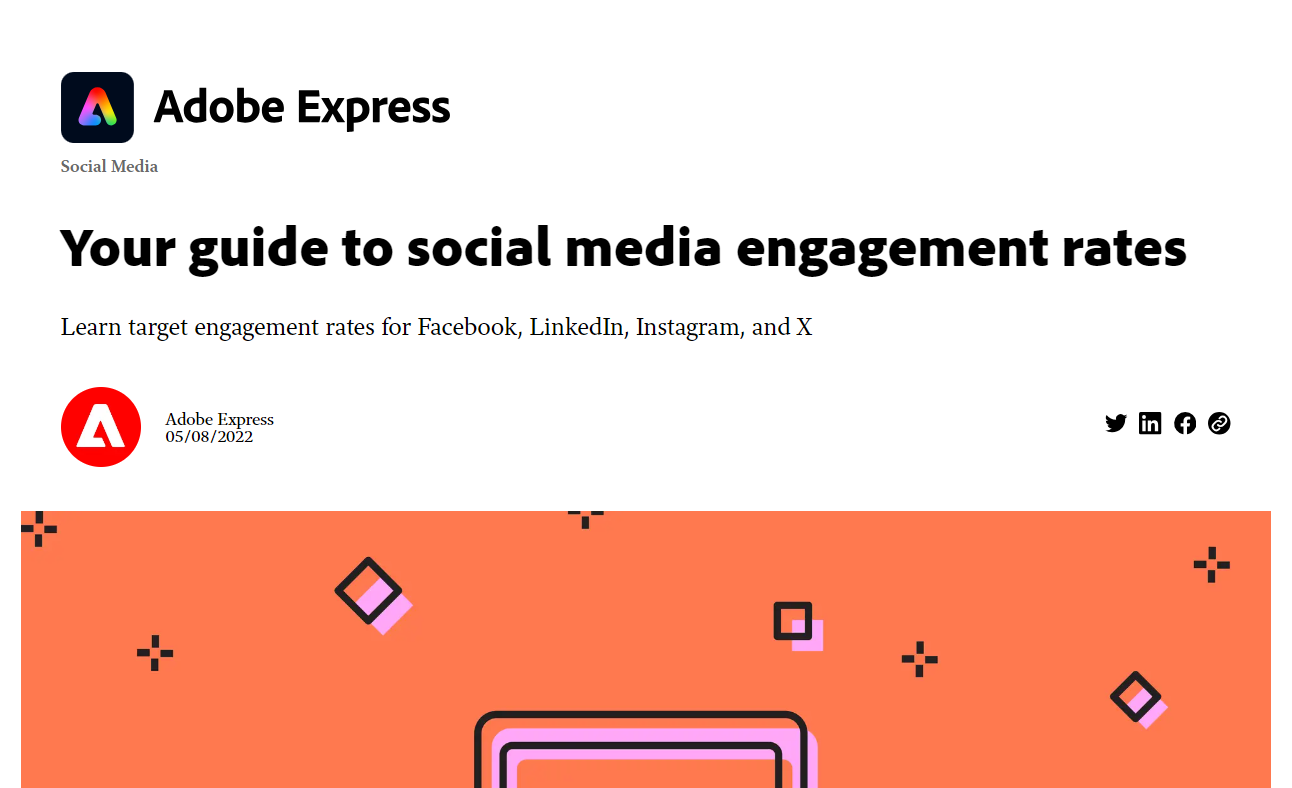
The other good thing about this is that it can be understood with a basic grasp of maths rather than buying an external tool. Adobe put ‘good’ at four per cent engagement. So, two likes amongst 20,000 followers at 0.01 per cent is demonstrably poor. To reach four per cent for 20,000 followers would need 800 engagements. 

Summary

Instagram is its own channel with its own filter needed to weed out the content topics that won’t work. Will it appeal to under 30s? Is it visual? Can it be video? 

Consistently, what doesn’t work are pieces of graphic design messaging. The numbers for these are consistently poor. 

TRUST WARS: Yes, the public sector should be clear on how they use AI

When I was a kid I’m sure I was delivered a lecture on how a reputation was so hard to build and so easy to lose. 

Maybe it was for something pretty minor although – full disclosure – me and eight of my mates were suspended for a day in the VI form for drinking alcohol on Cannock Chase while we were running an orienteering checkpoint. 

I told my kids this a few years ago and they were both – again, full disclosure – ASTOUNDED. 

Reputation and trust also applies to public sector institutions. In the UK, trust in the pillar of Government is sparse with the Edelman Trust Barometer running a 12-year low with just 31 per cent of people in the UK having trust in Government institutions.  

Trust is also easy to lose and hard to build. Look at the Kate Middleton’s photoshopped Mother’s Day picture issue.

Never mind misleading photoshop, AI can demolish trust in an institution overnight.   

What made me reflect on the issue of identifying AI content was Scottish Government’s bold announcement that all public sector bodies north of the border will be required to register their use of AI for projects. Importantly, this logs projects rather than all AI use. At the moment, the register is voluntary but is the first in the UK to become mandatory.

What’s on the Scottish AI Registry now? 

A quick look at the AI Register shows just three projects. Included in this list is a tool that shows how vulnerable children may be to exploitation and a virtual concierge assistant to help you choose the right tool for blind or deaf people to take part in civic society. 

The benefit of being transparent

Back in the day, Tom Watson MP was a junior Minister responsible for the Civil Service (full disclosure: Tom was a very approachable contact when I was assistant chief reporter in the Express & Star’s Sandwell office). 

One weekend, Tom crowdsourced what should be in the first draft of the civil service social media guidance. This included a suggestion to declare your connection to the Civil Service as you used social media in connection with a civil service matter. I’ve always thought this broad approach was a good idea.

If you’re declaring how you are using AI this can only build trust. There is no ‘gotcha’ moment but there may be a debate about the methods you use. But if you can’t justify it then should you even be using it? 

Why setting out how you use AI is a good idea

For me, yes a comms team should set out how AI is used. 

Indeed, Meta has already required that content created with AI are labelled. So, images and video created with AI tools need to be identified. But so too must text that’s been shaped with a tool like ChatGPT and posted to a Meta platform such as Facebook, WhatsApp, Threads or Instagram.

Not only this but in the UK, uploading deepfakes without the owners’ consent is already a crime. I cannot sensibly think of a time when a public sector comms team would create such a deepfake without the subject’s permission. However, the state of political campaigning in America is another thing entirely.  

I’d be interested to hear what others think. 

SCHEDULE QUESTIONS: Questions to ask if you’re thinking about using a social media management tool

A couple of months back I was invited to become a partner of a social media management tool. After brief reflection I declined in part because I didn’t want to be hobbled in the independent advice I give.

Are social media management tools a good idea? For me, maybe. But never always. There are some tough questions to ask first before you sit through the sales pitch and commit to the dotted line.

Q: Will posting from your social media management tool inhibit my reach?

At a time when algorithms are making life hard it’s important to squeeze every ounce of advantage. Back in 2011 Meta confirmed that third party tools would harm social media reach. However, the picture today is far less clear. You can find posts from several social media management tools assuring people that’s not the case anymore. But there is a real lack of independent academic research in this area. A trawl of Google Scholar which searches academic papers draws a blank.

Q: Will the social media management tool have access to all of the new tools and functionality the platform develops?

Famously, Facebook as a platform is in permanent Beta. This is a geek way of saying that it is never ever finished. It will always evolve. New tools are constantly emerging. Some are tested in a handful of key territories, refined, rolled out or dropped. 

There’s no realistic way that every tool is passported through to every social media management platform. After a successful trial Meta, X, Google or whoever are likely to attach a price tag on the latest must-have tool. Meta’s social media tool Business Manager on Meta doesn’t have every available tool so why would third parties? 

This is a key question because platforms want new tools to work. Therefore, using new tools is often likely to be rewarded. Posting natively using them is likely to have the advantage.

Q: Will the social media management tool monitor who is posting from the account? 

This is something the tool can usually do well. An integration with the platform means that certain people can post and some can’t. When those people can post they leave a trail behind them. You can see who did it. This can be useful. Business Manager on Meta can also grant and restrict access centrally to Meta tools. LinkedIn as a similar approach. It may be worth comparing and contrasting what the social media management tool can do against what is freely available. Is this valuable to you?   

Q: Does the social media management tool have AI skills?

This is a new front in the battle. Many platforms say they use AI to help you write content. Whether or not using AI to create content is a good idea is one for you to reflect on. The research would urge you not to blindly rely on it. A clumsily-written post can undo plenty of hard work. However, using AI to create content can make the most of limited time so long as checks and balances are in place. Dilemma time.

If you are in the public sector the issue of trust and AI is very much one you need to be aware of. Scottish Government have taken the lead by requiring every public sector organisation to register how they are using AI. So, north of the border, for transparency if you are using AI tools on social media you need to declare it.    

Q: Will the social media management tool evaluate everything?

Often, social media management tools are really good at producing a report on demand with pie charts, numbers and other useful things. There’s no doubt these can look visually attractive. But are they the complete answer? For me, they’re part of the journey. Clicks, reach and numbers are useful as a broad metric. They can help you refine and learn from content. But will it tell you how many clicked on the job ad? How many ended up applying and how many are still engaged in the process? No. You need HR for that. Their data is the acid test as to whether or not your recruitment campaign is a success. There is no substitute for this.

In football terms, looking at individual metric data alone will tell you how far the player ran and how many passes were completed. It won’t tell you the final score. That’s the bigger picture.

Q: Will the social media management tool encourage corner cutting?

One thing I’ve learned from the last few years closely researching algorithms and effectiveness is that social media is changing and evolving. All social media algorithms penalise links. Why? Because the longer you spend on the platform the more attractive you are to advertisers. Does ITV tell people to go to the BBC mid-way through a peaktime drama? The heck it does. 

The most effective content is created bespoke for a specific platform and tells the story on the platform. On Facebook, it can also be posting a link into the comments or on X, formerly Twitter, build a thread of tweets to tell the whole story.

With that in mind, I’ve lost count of the times people guiltily admit to cutting and pasting the same thing just to get the thing out of the door. We’ve all done it. I have in the past. 

Posting the same content is also a bad idea. The most I’ve seen is 17 identical posts in a 24-hour period. Reader, the algorithm did not reward them. Fewer crafted posts are more effective than repetition.  

Q: Can you use the social media platform on a mobile phone?

If you’re out and about and some news breaks can you use your mobile to post an update? 

Q: Can you hit pause on the social media platform in an emergency? 

Or if a key piece of news happens, can you quickly pause what you are about to send?     

Q:  How much will the social media management tool cost? 

This is a big one.

How much? 

If the questions you ask lead to answers you are prepared to pay for then knock yourself out. 

But balance the figure you have against the free tools the platforms already provide.   

Good luck.

TARGET NICHE: The Daily Mail multi-channel approach could be the way forward for public sector WhatsApp Channels

There’s no question that the launch of WhatsApp Channels is a huge shift on the public sector comms radar.

WhatsApp is used in the UK by around 80 per cent of people aged between 18 and 64, according to Ofcom. That’s as close as you can get to a universal soc ial app.

The platform also chimes with the trend away from shouty public squares to quieter walled gardens where groups of people can chat.

But how to use this new channel?

In the early weeks of WhatsApp Channels it became clear that text on images was the way forward for tactics

But how about the big picture? 

Using WhatsApp Channels strategically 

The big strategic picture is how to use them as an organisation. One channel to rule them all? Or multiple? In many ways we’re repeating the head scratching of the early years of social media. Should we have just one Facebook channel for everything? Or should there be multiple channels?

For me, one channel with multiple audiences never really works. I’m always reminded of the council I worked with in quite a tourist-friendly area. They recruited loads of German tourists to follow their page in the summer. Then in the autumn they drove them away with dog mess messaging. If you live in Hannover, this is not the messaging that you signed up for.

But multiple channels only works when there are audiences and a willingness to create content.

The Daily Mail approach of multiple channels

As WhatsApp Channels use begins to solidify an interesting use is emerging. The Daily Mail.

Daily Mail has 265,000 followers on WhatsApp for the Match of the Day highlights package of a broad spread of content.

But also…

Daily Mail I’m A Celebrity 19,000

Daily Mail Royals 17,000

Daily Mail Australia 3,000

Daily Mail US Sport  18,000

Daily Mail Strictly News 5,000

Daily Mail Politics 6,000

Daily Mail Mr Beast News 12,000

Daily Mail Harry Styles News 7,000

Daily Mail Best Shopping 6,000

Daily Mail Kate Middleton News 6,000

Daily Mail Black Friday Deals 3,000

Daily Mail Kardashians News 3.8 million

Daily Mail Netflix News 39,000

Daily Mail Britney Spears News 11,000

Daily Mail Taylor Swift 303,000

Daily Mail Bravo TV 13,000

Daily Mail Australia MAFS 7,000

Daily Mail Australia Cricket 3,000

Daily Mail Australia Politics 1,000

Daily Mail Jake and Logan 5,000

Daily Mail Ukraine – Russia War 26,000

So, multi-channel approach sees the Daily Mail with 20 channels with more than 200,000 followers between them, one of 300,000 and one of 3.8 million. That’s serious numbers.

It also makes sense. If the Ukraine war is your bag you may not be wanting the Kardashians. If you’re all about Harry Styles you may not be so keen on Australian cricket. That’s fine. Back in the days of print you simply opened the paper up on the back page for sport or the gossip pages for celeb news. I think we forget this sometimes and think people will wear an everything channel. I’m not so convinced they will.

How a public sector organisation can use it 

Now, you could be looking at that list and be thinking that you’re not a purveyor of celeb gossip and you’d be right. But the 1,100 services that local government does has multiple audiences, for example.

So, would there be an audience for events? And a separate one for families? Or for parks and countryside? Or news? Or emergency planning?

This cuts to the heart of the insoluble public sector issue. They have lots of things to tell people the thing is people don’t want to hear it all.

I can certainly see this working with emergency planning with partners, Councillors and community leaders signed-up for a specific public-facing emergency channel. In an emergency, they can all be useful players in getting the warning and informing message out, for example.

The Daily Mail approach shows that multiple WhatsApp Channels can be used for multiple audiences. 

I’m looking forward to seeing who will experiment with this approach in the public sector.

LONG READ: If you are in public sector and wrestling with AI, here’s what you can learn from journalism

One day when I was a journo the deadline had passed and we were killing time the subject turned to our favourite intros.

If you have never been a hack, an intro is the first paragraph of a news story, and it tends to be. Back then, it was handy to have few tried and tested intros that you can pull out of the bag. There is no such thing as writer’s block in journalism only a lack of professionalism.

My own stock intro for minor stories – better known as news in brief or nibs – was the classic ‘X fans are jumping for job because Y’. Fill in the blanks and you have your instant story. Bingo. 

During this newsroom chat we agreed that if someone works out a computer programme to write nibs we’ll all be out of a job.

You may not have noticed but there’s been a shift in the landscape of local journalism… and it’s only a matter of time before it filters into public sector comms.

The tool we imagined back on that lazy afternoon in the West Bromwich newsroom that has since closed down is AI. AI has been steadily moving into the newsrooms across the UK. Over the fence in my own profession there are lessons for public sector comms.

We’re maybe used to the big players in journalism talking about how they are using artificial intelligence tools but how about Berrow’s Worcester Journal? Or the Hexham Courant?   

Newsquest, who have 250 titles across the UK, now have seven AI-assisted reporters who use the tool to create content. Under the scheme, the human reporter pastes in a comment and some facts and asks the robot tool to come up with a news story. It’s down for the reporter to fact check the piece before sending it along the production process for it to be used in print and online.

“We’ve produced thousands of articles this way,” the relevant Newsquest executive said, “and we haven’t had any major errors reach the publishing stage.”

It’s probably canny that they’re trialled it Off Broadway at some relative backwater. 

Over at Reach plc, they’ve been trialling a tool which helps the very Reach art of re-writing a piece for different websites.  Recent work I’ve carried out shows the amount of content shared on local newspaper Facebook pages can be classed as ‘local’. This does not feel like reinforcing a strength if the comments are anything to go by.   

Across the industry, journalism is looking at how guidelines for titles can be drawn-up. This makes bags of sense. Have a framework so there can be no comeback to the reporter from the newsdesk or from any people in the newspaper’s front office. Only, the people who may be complaining may not be the man objecting to having his name printed in the drink drive court report but it may be a copyright holder of a large website. 

Over in the public sector, there is the knowledge that the ICO’s office is ready and willing to investigate what you are doing with AI and how you are doing it. 

When AI went wrong 

The former journo side of my brain was fascinated at how using AI blew-up in the face of those behind the Bournemouth Observer. This online news site emerged with a full rosta of named staff none of who really existed.  

We can say that the fallout was started by rival news outlets angry at an interloper stealing their turf. Or we could say that there was genuine concern at how trust would be eroded once people found out.

But that’s a really good red flag for public sector comms to consider.  I’ve sat in enough Full Council meetings to know how this may sound to a councillor whose knowledge of technology comes shaped by the Daily Express. You have one crack it and if you get that wrong you are stuffed.

Not creating efficiencies but new products

One of the key benefits of AI in public sector comms is to streamline the process and to have something like ChatGPT as a ‘spare brain’. Journalism is looking at much more than that. David Caswell, who has advised 40 different newsrooms across the globe, thinks that innovation in journalism is back. So, new products for new times.

That’s interesting because the public sector after a decade of austerity, a global pandemic and the chance of more austerity knows it should be experimenting but actually doesn’t have much head space.

If you’re experimenting, should you label it? 

What’s interesting is a check on the two featured Newsquest newspapers online doesn’t show a mention content is created with the help of AI. No doubt the company would point at the publicity the jobs generated. But most of this was within the trade press rather than in the pubs and bus stops of Hexham and Worcester. I’m not sop sure their readers would be so happy.  

Indeed the trend is for labelling. Meta are moving towards labelling content created by AI, as does TikTok and the EU are pressing big tech companies to label AI-generated images, audio and video.  

Not only that, but UK Government has been really clear that any organisation using AI should be clear how the tools were used. The UK Government’s ‘Generative AI Framework for HM Government’ says that it should be clear that content has been created with the help of AI. While this stops short of badging everything with an AI label this would point as a minimum for declaring policies and frameworks:

“Transparency is a cornerstone of the ethical development, deployment and use of AI systems. A lack of transparency can lead to harmful outcomes, public distrust, a lack of accountability and ability to appeal.

“Public transparency: where possible from a sensitivity and security perspective, you should be open and transparent about your department’s use of generative AI systems to the general public.”

The authentic stands out 

For all I can see the usefulness of AI, early experiments with AI tools show a remarkable insincerity. The video voiced by a generic AI by a Midlands council is remarkably insincere. Make a tool with an accent from your patch and you could be onto something. 

Only a few weeks back I blogged at how pics of people were the most effective public sector content on Facebook right now. Why? Because people connect with people. People have Facebook accounts and their own networks, too. That’s where the engagement starts from.

Conclusion 

Looking over the fence at journalism, many of the same challenges are being explored that also face public sector comms. The only thing is over there is more urgency. Mass journalism is dying in the UK with fewer reporters and fewer titles. Journalism needs to crack AI as a lifeline for the future.

But public sector comms people would be wrong to sit back in complacency. If we are not shaping change we will be changed at. Find out who needs to be looking at all this and shape the discussion. This feels like a report to Full Council if you are in local government. Or something to be signed off, stamped and agreed if you are in another part of the public sector.

The bad news for the public sector is that without guidelines – just as news companies have – then AI won’t safely get off the launchpad.  

Setting up social media in the public sector was at times a struggle. It’s going to look like that was a cake walk. 

Better get going.

CAREER CHALLENGE: Put a finger down… if you’re knackered / overworked / undervalued / fed-up being abused online?

There’s been a trend on TikTok called ‘put a finger down if…’ and it makes me think of public sector comms. 

In the style of the video making someone puts a hand up and says to put a finger down if something specific has happened to you.

It’s a playground game commandeered for a real world challenge.

But the playground game for public sector comms right now feels a whole lot darker.

So, try this would you?

Put a finger down if… you’re feeling overworked?

The number of people I’ve spoken to who are trying to fit 12 things into the day is legion. 

… underpaid? 

Like the rest of the public sector, salaries have decreased in real terms. Recently, I saw a job that I had when I entered public sector comms in 2005 being advertised at exactly the same rate. The buying power of £31k back then was the equivalent to £52k today. That’s a 40 per cent drop.

… falling behind?

The pace of change has got faster. Think of these three 15-year cycles. If you started work in 1990, you’ll have seen the advent of the internet. If you started in 2005, you’ll have seen the advent of social media and if you started in 2020 you’ll have seen the rise in AI.  

But when can you catch up? 

In 2008, a network of like minded people pushed the envelope on social media but did so largely in their spare time at work and at home. This has evaporated now. 

… as though you’ve had enough re-structures, thanks?

Ideally, a restructure can be a positive thing. But like ‘budget efficiencies’ it’s a phrase that has lost its sheen for people who’ve gone through it. I did one and it let to me leaving local government through choice which was absolutely fine by me. It enabled me to go freelance but I know not everyone is in that position.

… fed-up being abused online?

Either by name, job title or by association. There’s a bingo card that says ‘I pay your wages’, ‘jobsworth’, ‘lazy’ or ‘idle’. Austerity has seen 40 per cent cut – not efficiency saved – from local government budgets and Council Tax has drifted up. The target for people’s spleen has often been to go to the council’s social media account rather than to the ballot box. 

… undervalued?

You’d not be alone if you were. There’s something unique about people thinking that anyone can do comms. Try telling town planners that it’s okay, there’s no need to write that committee report because you’ve already had a stab at it. 

Good comms look so simple and effortless. So, maybe people can be forgiven into thinking that it’s all simple.

… feeling fed-up at being asked to sprinkle fairy dust, weave your magic or put out a clip art poster?  

If you haven’t are you even a comms person? 

… knackered?

There has been little lull since COVID and before that there was years of austerity. If you’re knackered you’re not alone.  

Has it ever been harder?

The worst of COVID did for many people and many teams. Long hours and an uncertain future was hard. But the motivation to communicate to save lives had its own wind in its sails. Is it easier to communicate cuts when you’re already knackered? Maybe not. 

But what is there to do?

Well, as an individual, you still have autonomy. You can join the flow of people leaving the public sector and when each one goes I feel slightly sad but also a feeling that they deserve something else. You can also join a union, too. As a member since 1993 of the NUJ I look at it as insurance policy. 

As a team, this is where it can get interesting. There are some levers the team can push. It can actively learn and actively review what it does and does not do. I have a mental image of teams carrying boxes and when I’m suggesting doing something different in training it’s instead of rather than as well as.   

How many fingers did you put down? 

VIEW & REVIEW: Six tools for a social media review

There’s been more change in 12-months than the past 12 years and it’s high time for a social media review.

What probably noticed that your numbers have been declining and the tactics that once worked aren’t.

So what can you do? You can run a social media review.

What this is a chance to take stock and refocus what you’re doing. This could be doing less of something and more of something else. But if you’ve got the data then you can bring the team, your boss and the organisation along with you. 

If you are public sector, I’m running a Zoom session on the Public Sector Comms Headspace Facebook group at 12pm on 6.3.24. You can sign-up here

Here’s six tools out of may to use. 

How old is your audience? 

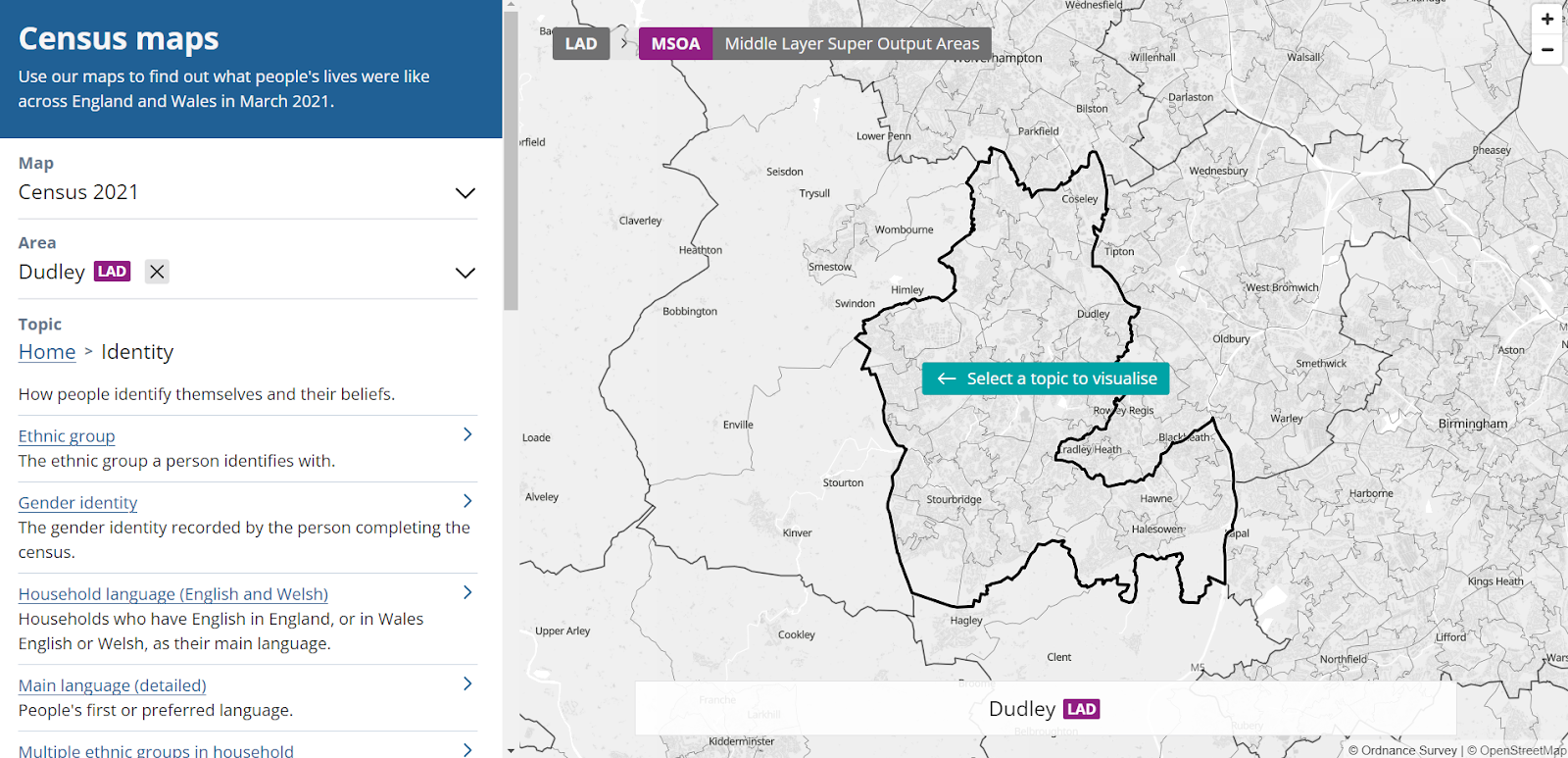
If you are England & Wales the Office of National Statistics have a brilliant tool. is a pile of ward, borough, city and county-level data that gives you masses of data on population. 

Knowing how old people are will play through into what channels they are likely to be using. 

What channels are your audience using?

Once you know how old they are start delving into Ofcom data that will trace what channels they are using. Tools like the Communications Market Report and the other resources they have.

Where are your audience across Facebook groups?

If you are public sector, you’ll have got used to the feeling that people aren’t always beating down your website or your socials.

So where are they?

One of the largest channels is Facebook. Facebook say that two thirds of that big chunk of population are using community Facebook groups. They also say that on average they are members of five groups.

Some of those groups I have to say are surprisingly huge. If that’s where the eyeballs are then you need to be there too. 

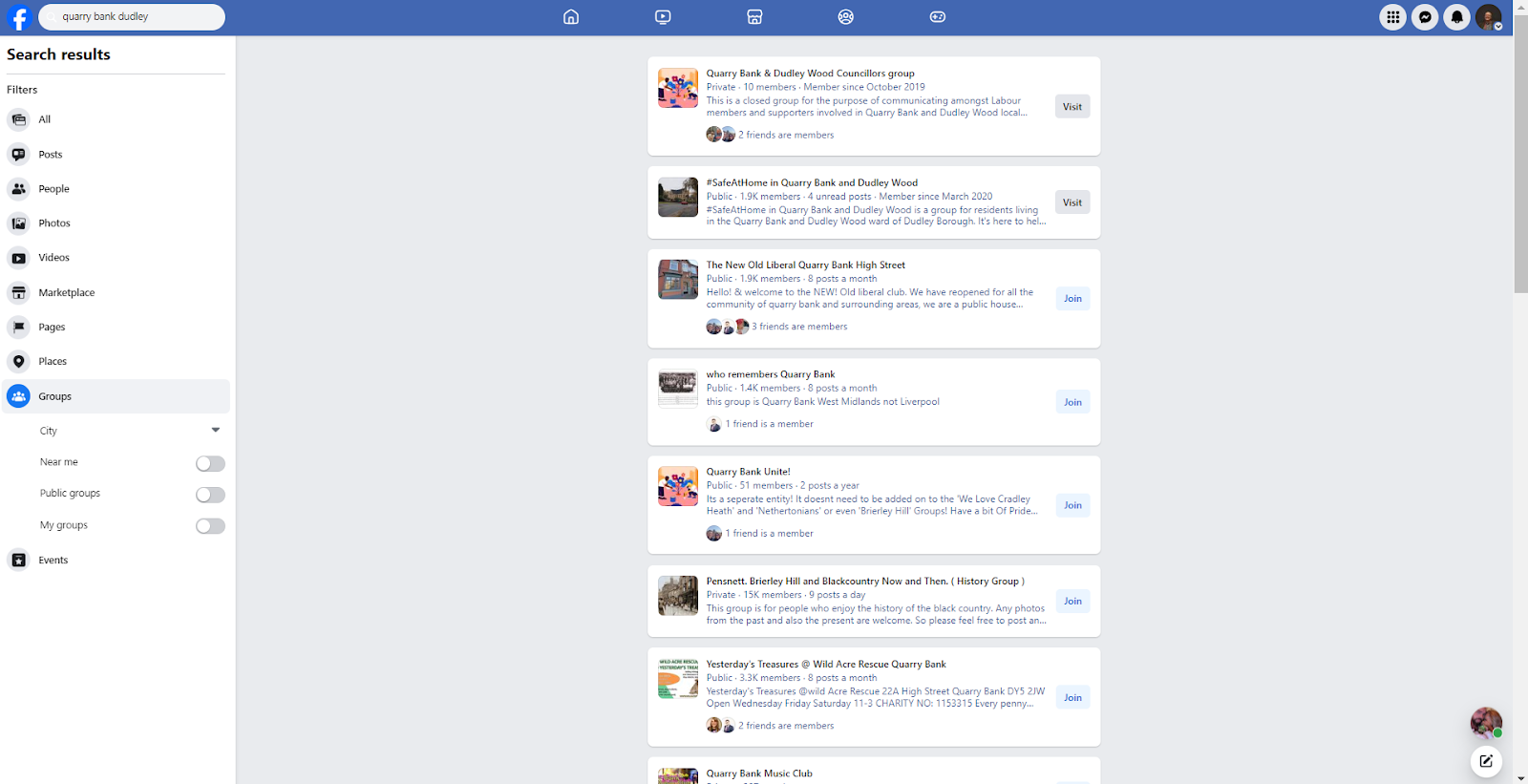
The bad news is there’s no quick way to count Facebook groups.

You’ve got to get Google maps out, search for your boundaries.

Then add the list of communities on that map to a spreadsheet and add council wards too. Then use Facebook search to look for groups, how often they post every week and what type of group it is.

They may be a community noticeboard or maybe they’ll be a community campaign, local history, photography or a club or society

By listing the Facebook groups you’ll get a sense of how significant they are. 

What does good engagement with your audience and your channels look like?

Now you’ve found out how old your audience is and what channel they’ll be using it’s time to get to grips with your own list of channels.

How are they performing?

How many followers are there? 

Then I pick a seven day window to review the content. I’m keen to see how much engagement there is. As its social media this is the killer metric to see how well the content is landing. 

Adobe some good research about what good looks like in engagement terms. For X, formerly Twitter its now quite low. For LinkedIn its as high as 6 per cent compared to follower numbers.

This will help you understand what is working and what is not.

It’s going to take some time for you to complete this. It can feel like going through invoices when you are a student. You know it needs doing and some of the findings will be a surprise.

But it’s always better to do it.

The organisation that’s all about MySpace and Friends Reunited isn’t one going in a forward direction.

I run SOCIAL MEDIA REVIEWS. Drop me a line. I’d love to chat to see how I can help.