Results of a year of polling globally on COVID-19 has been published and it deserves to be looked at.
In the UK, it seems we are becoming more trusting of UK government and the vaccine.
We also are fine working from home while a minority struggle to do so, according to the YouGov/Imperial College data.
While the study is global, the data is published for the UK.
Findings
We are hand washers. 97 per cent of people are doing that to stop the spread.
We’re not that happy at using face masks. Almost 40 per cent have reported difficulty using them. Eighty per cent regularly wear a mask while 16 per cent never do – the 4th highest rate in the q14 countries surveyed.
We work from home. A total of 69 per cent have avoided going out to work while 21 per cent never have.
We avoid going out. Those avoiding going out are at 81 per cent.
We find it easy and are willing to self isolate. 73 per cent say it would be no problem while 19 per cent say it would be a problem. Overall, 97 per cent are happy to self-isolate.
We think Government is improving. Those who think the UK administration have done well have moved over 12-months from 36 per cent to 45 per cent. Those who think its done badly have moved from 59 to 49 per cent.
We have confidence in the NHS. More than 80 per cent back the health service a figure hardly changed over 12-months. The 15 per cent that don’t haven’t changed their minds in the period.
We are in favour of COVID-19 vaccines. 67 per cent are in favour in April 2021 over the 24 per cent who aren’t.
Fears over vaccine side effects have been calmed. In April, the figure had almost halved to 27 per cent. 83 per cent trust the vaccine while 17 per cent don’t.
Today is May 17 2021, and pubs in England are re-opening their indoor premises to customers who previously had to shiver outside in beer gardens.
Elsewhere, Northern Ireland, Wales and Scotland are travelling at a different pace but the mood music is we’re over the worst.
The dark cloud on the horizon is the India variant where 250,000 have died of COVID-19 and forecasts say a million is in sight before its over.
In the UK, the Indian variant is troubling public health people.
So, how is the latest pandemic chapter playing out on Facebook?
I had a look.
People in Facebook groups have stopped talking about COVID
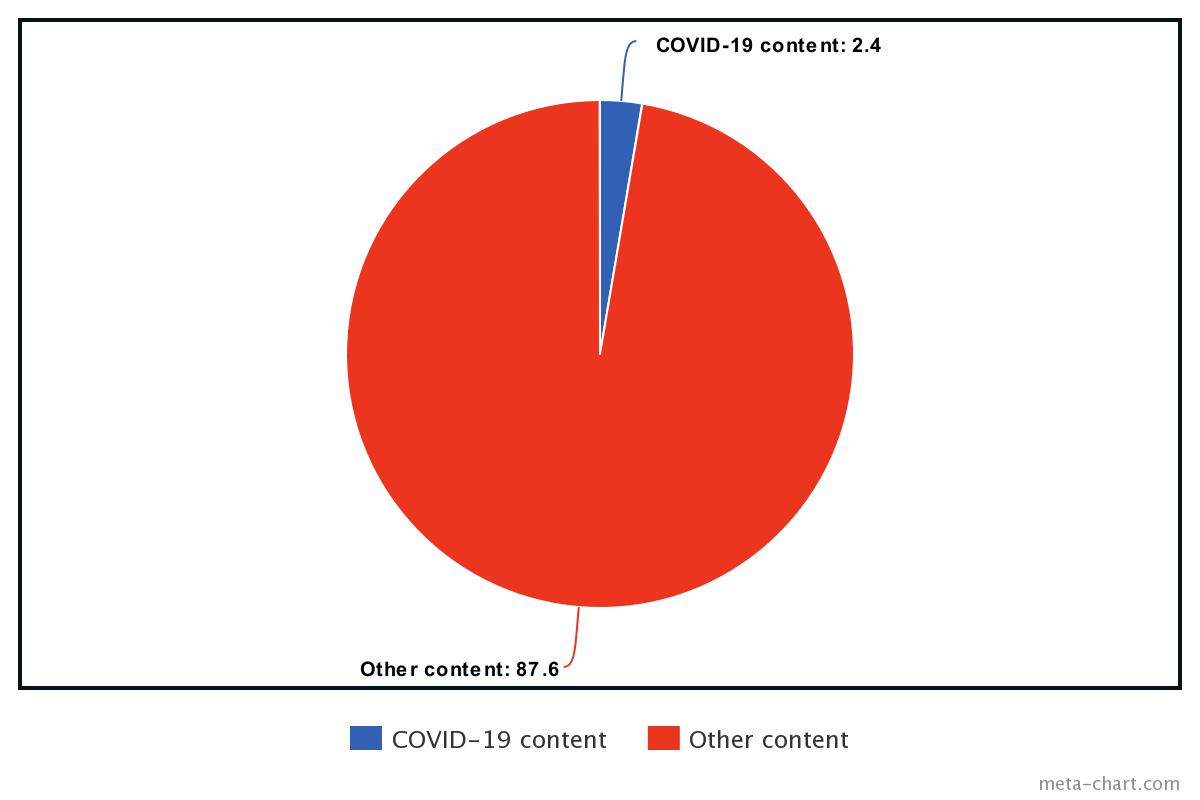
I looked at 25 Facebook groups across the Black Country on Sunday May 16 to see how much COVID-19 content there was.
I also mapped the four Black Country council’s Facebook pages and the four NHS Trusts in the region.
Just 2.4 per cent of Facebook group conversations were about COVID-19. This includes Brierley Hill and Halesowen which has an outbreak of Indian variant.
It’s not there.
Content in Facebook groups about COVID-19
In short, people in groups are disinterested and talking about other things.
Hey, its been 12-months and we’re all bored of it, right?
Over on pages, the COVID public sector content isn’t cutting through
On public sector pages, artwork carrying central and local messages simply aren’t landing.
Even without seeing each posts’ insights its clear that nobody is sharing them.
I’ve a lot of time for public sector comms people these past 12-months. Barely able to look up from their kitchen table work stations they are time poor and tired.
But its important to be clear that the content being posted is ticking a box but not much more.
It appears the question is not to ask how many people have seen it let alone what they have done as a result of it.
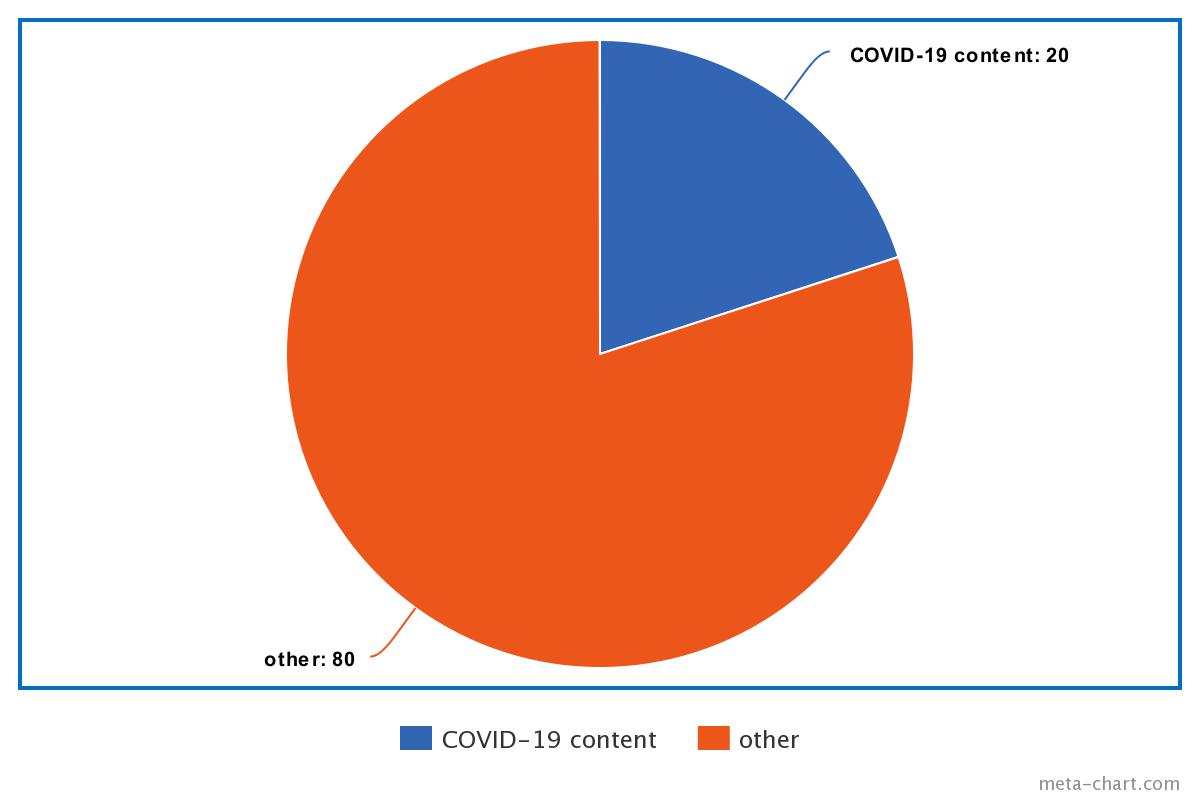
In the snapshot survey of public sector pages, 23.7 per cent of content was COVID-19 related.
Content in public sector pages featuring COVID-19 on NHS and council pages
The content is certainly there.
The problem is it’s just not getting shared.
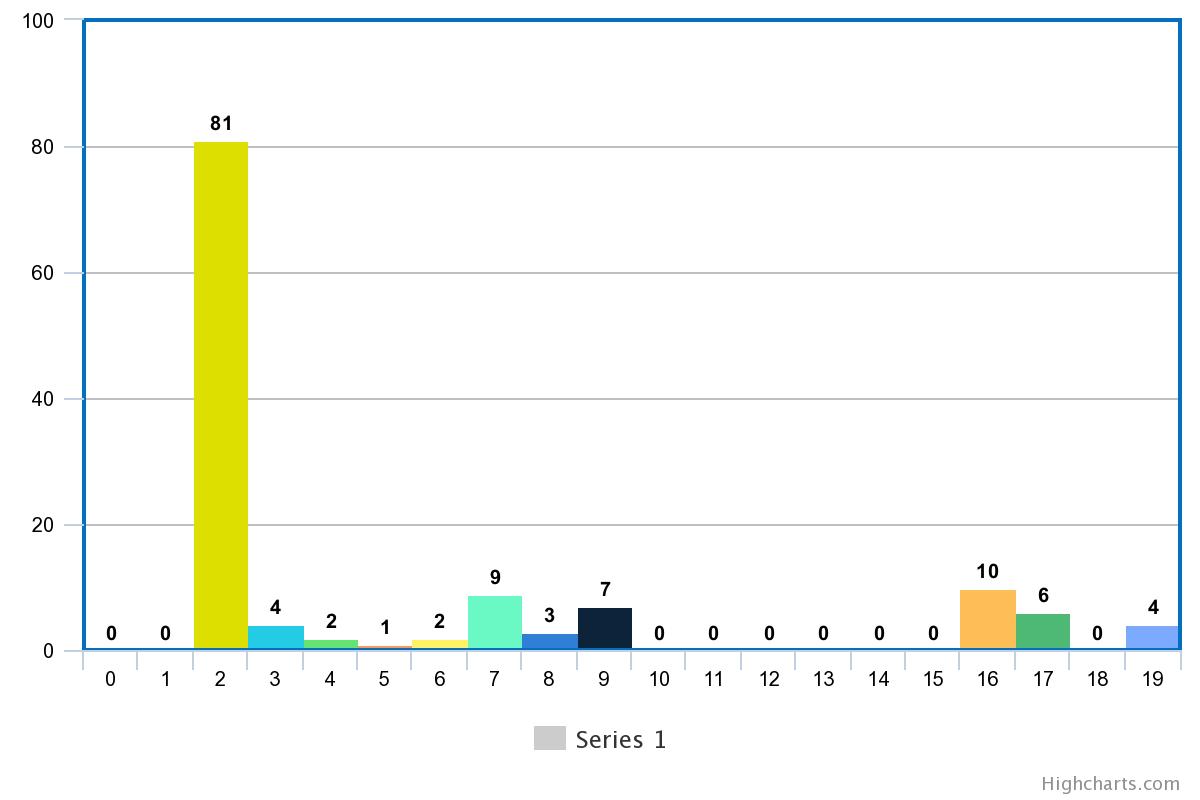
Of the analysis of four councils and four NHS Trusts, the median number of shares per post was just two.
Twenty of the 80 posts were pandemic-related. Seven were national government or NHS while eight were locally made. The majority was a text called to action on image.
The data shows its not being shared.
Public sector COVID-19 content with shares per post
One piece of content that did connect was Dudley Council’s warning of the Indian variant in Brierley Hill which received 81 shares. It highlighted a local matter in two places in the borough. It did not have high production values but that doesn’t matter if the message is important.
Conclusions
Message fatigue and pandemic weariness means COVID-19 content is largely not cutting through.
I absolutely don’t blame individual comms people for this. Overworked, under paid and often sworn at online daily they are just trying to get through the day.
This describes the problem but there are clues for a solution.
Firstly, generic national messages don’t work. Twelve months into the pandemic, its time to retire this routine generic content. Like a man on a bus with his face mask half off it’s more harm than good.
The only content that does cut through is localised warnings for named areas and human stories which also carry a message.
When I’ve blogged before, locally-made content worked best as does content with real people.
Then theres chef Marcus Warning’s reminder to follow the rules with 500,000 views on the St George’s NHS Foundation Trust Facebook page.
The content that works has people in it or at the very least has local areas listed.
This leads to a conclusion of less is more.
People stories and video work.
So do local messages with local place names.
This means concentrating efforts on better made efforts that will take more time to create but are more effective.
Methodology
Facebook pages included in the snapshot were Dudley Group NHS Foundation Trust, Dudley Council, Sandwell Council, Sandwell & West Birmingham NHS Trust, Wolverhampton Council, Royal Wolverhampton NHS Trust, Walsall Council and Walsall Healthcare NHS Trust.
Facebook groups in the Black Country included in the study were in Dudley borough, Halesowen Times Take Two, Safe at Home Quarry Bank, Spotted Dudley, I’m From Dudley and Bromley / Pensnett and Brierley Hill Local Issues.
In Wolverhampton, Finchfield, Merry Hill, Penn, Castle Croft Community group, WV11 – Ashmore Park, Wolverhampton COVID-19 Mutual Aid, Bushbury Fordhouses and Oxley Neighbourhood Watch.
In Walsall, Brownhills Bob, Walsall Wood Community Group, Rushall Now, Walsall Chit Chat and Natter and Walsall For All.
In Sandwell, The Oldbury Page, West Bromwich Updates, Roeley Rergis Page, Blackheath / Rowley Regis Page, Spotted Tipton and Dudley Port and We Are Smethwick.
The first 25 posts in each Facebook group as served by the algorithm were assessed along with the previous 10 of page posts.
I was a journalist for 12 years and worked in and around a council press office for another eight years.
It’s become clear to me that media relations remains an important part of the comms team’s armoury. Print may have fallen but in many areas reader numbers remain buoyant online.
It’s not uncommon to have potentially 70 per cent of the population in an area seeing content from a newspaper at least once in the past week.
Local news stories are all over social media, for example. Pop into a Facebook group and its never long before you see a link.
Strategically, its clear that the skills that used to be common in comms teams have dissipated.
In this post, here’s a few steps in making a complaint.
What kind of relationship do you want?
Somewhere on YouTube there’s a clip of Peter Mandelson bollocking a reporter for not running a story in the way that he wants. Spin was in the ascendancy and acceptable reporting was rewarded with access. Of course it still goes on but for the benefit of this I’m not going near it.
How and if you make a complaint is dictated by what kind of relationship you want with the reporter and the news outlet.
Is it going to be a long running relationship? Or is this the only time you’ll speak to them? What do you want to achieve by complaining?
Certainly, I spent a lot of time in my career listening to aggrieved people and explaining to them that they didn’t really have a leg to stand on and no, I wouldn’t be reporting that reporter to the now defunct Press Complaints Commission for reporting what they said.
However, I spent a lot of time pulling up reporters who were trying to cut corners and not do their job at my organisation’s expense.
EXCLUSIVE: Reporters don’t like complaints
Here’s a secret. When I was a journalist, despite the united front appearance, I needed a complaint like a hole in the head.
At best, it was a ball ache and at worst a complaint potentially career ending. A reporter needs to go back over the ground, write a briefing note, speak to news editors or editors some of them may hate their guts.
So, how to go about it?
Step one: facts
Get your facts right.
Go over the ground paragraph by paragraph and line by line with the person in your organisation who is most irritated by the content.
Factual inaccuracies are there to be challenged.
Someone angry that the reporter is covering an agenda without their permission is going up the wrong tree.
Does the piece tell the whole story?
Is there even a benefit for telling the whole story?
Step two: have a conversation
Now you’ve got your facts marshalled, you can have a conversation with the reporter in question.
Set out why you are cheesed off and importantly get a sense of what you’d like to happen as a result.
Be wary of the ‘X hits back at claims that Y’ follow-up as you are at risk of re-inforcing the inaccuracy.
You can do this over the phone best, in my experience.
If step two doesn’t work, its time to think of step three.
Step three: Go public
If the reporter is unrepentant, its time to be pro-active.
The BBC Press Office are past masters at this.
It’s a chance to point out publicly what is wrong and why it is wrong.
Bear in mind that this should not be the first step to take. It’s you being hard but firm and drawing a line in the sand over what is acceptable and what is not.
It’s down to you when to deploy it but it absolutely should be part of your armoury.
Handled wall his shouldn’t be the end of the relationship.
I once used this over a story claiming a swimming pool had put dark tint over the window of a swimming pool because Muslims had complained on religious grounds.
The story attracted right wing extremists and needed to be challenged but the reporter refused to amend his story so we put out the facts on Twitter and asked people to decide for themselves what the truth was.
It didn’t end well for the newspaper, with a mild pile-on on the newspaper.
The next piece they carried on the subject was balanced.
I rest my case.
Step four: the almost nuclear option
If the first three steps aren’t working then its time for step four. The official complaint to the regulatory body.
This is going to take time and resources and represents a break in a relationship.
Step five: the nuclear option
Law.
This is the final step to take and not one to take lightly. Elton John did it with The Sun. Meghan Markle did it with the Daily Mail. It’s going to be very expensive to even consider down this path and the liklihood is you may have a lengthy career without ever darkening a media lawyer’s door.
If you feel as though you may need to my advice is to engage the services of media law expert David Banks. He is a former editor of McNae’s Essential Law for Journalists and is a media law expert. He’s going to know more on the subject than your legal team.
In conclusion
Journalists and press officers have never got along swimmingly all the time. There’s always been friction. You can have a good relationship but sometimes you aren’t going to see eye to eye.
Reporters are there to do a job to try and report what they see as a story and sometimes you’ll have to politely explain that to people in the organisation.
The job of media relations is to represent the interests of the organisation.
If you have are going to have a relationship with journalists you’ll need to know the basics of how and when to make your views known.
We’ve reached a stage of the COVID-19 pandemic in the UK where restrictions are easing and we’re starting to look to the future.
In a few days, we’ll be able to book a table inside in a pub and order food. For the past six months we’ve not been able to. More than half the country have had a jab. We’ll also be able to hug people.
There may well be more acts in the play to follow but we have a sense of the burden lifting.
This may be too early, but how will we look back at things?
History gives us a blueprint and what it says will surprise people right now.
The excellent BBC podcast Pandemic 1918 tells the story of the Spanish Flu and how the country reacted. The country had not long finished World War One when this pandemic struck.
War claimed 10 million lives while the new virulent outbreak of flu claimed up to ten times as many people.
Communities won’t memorialise the dead
Travel the length of Britain and you’ll see war memorials to the fallen but across the country there isn’t a single statue, roll of honour or plaque for the victims of the Spanish Flu.
Historian and author Catherine Arnold in the sums up why in the BBC podcast:
“They call the Spanish Flu the ‘forgotten pandemic’. I think its because people chose to forget. Spanish Flu was so bloody awful. People’s response was that ‘we’ve got through four years of war and now this?’
“And the symptoms were disgusting. War deaths are heroic. We memorialise them but we don’t have the time or space to memorialize deaths from flu.”
Communities will feel betrayed
After the first world war, gradually as time went on a feeling of bitterness spread in the British countryside. Rural communities were the ones who gave up men and horses and the warm promises of running water and better conditions never happened.
The phrase that emerged in the countryside in the thirties was ‘The Great Betrayal.’
You don’t have to look far in the UK to find who the betrayed communities may be. The NHS have sacrificed their health, their lives in some cases and their mental health and have been rewarded with a real time pay cut.
In 2021, we are sat on a mental health timebomb. Will we do everything we can for them? I’m not so sure. We haven’t served mental health well in the years before the pandemic. Now the Treasury has less money the chances of a largesse on a hidden illness is hard to imagine.
There will be a long shadow of ill health
The Spanish Flu pandemic, left a trail of illness that spanned decades. In the words of the time, there was ‘melancholy’ that overshadowed the country in the decade that followed.
Longer than that was the heart disease, lung disease and Parkinson’s that had a root amongst flu survivors.
We don’t know what the impact of COVID-19 will be.
In conclusion
History says pandemics have a massive impact and part of the recovery from that impact is not looking backwards but looking to the future.
If that means we recover, who are we to argue?
For a communicator, this means that the future can be uncertain. We’ll have to adapt to the reality that we find and that’s what many have done over the past 12-months.
It also means that COVID-19 will last far longer than the point where we can go and sit in a pub in the warm.
If you have an amazing story of a nurse who has come out of retirement fronting a video to encourage you to take the jab and if people engage with it, that’s good.
But if people also mark it as ‘inspiring’ in feedback to Facebook then even more people will see it.
The whole aim is to find a way to highlight that story of the inspiring nurse over the punch-up about, say, potholes which is a story that raises hackles and therefore engagement but isn’t all that inspiring.
You’ll be asked your views more
You’ll be asked: ‘Is it inspirational?’
Look out for this type of pop-up:
You’ll also be asked what type of content you’ll like to see from friends, groups and pages.
So, if you love your Aunt very much but you’re not keen on her love of Steps then potentially you can opt out of the 90s pop act content but still get the other stuff.
Detail is vague right now with ‘cooking, sport and politics’ only given by Facebook as examples.
This part of Facebook will look like this:
In summary, Facebook describe it as:
Overall, we hope to show people more content they want to see and find valuable, and less of what they don’t. While engagement will continue to be one of many types of signals we use to rank posts in News Feed, we believe these additional insights can provide a more complete picture of the content people find valuable, and we’ll share more as we learn from these tests.
What it may mean for the public sector
As a rule, Facebook is a huge oil tanker that barely stops for big brands. Government and public sector doesn’t float their boat that much.
But it does raise the intriguing prospect that there may be less shouting on Facebook. If people don’t feel inspired by posts about dog mess and potholes they will be ranked down so they will be seen less.
It also means – and this is important – that you need to pay even more attention to the content you are creating if you want organic connection – eg without spending money on ads.
It absolutely means that the uninspiring clip art poster a middle manager is insisting be posted to Facebook is even more unlikely to go viral. You need to push back on this type of tumbleweed even more.
More than anything, it underlines the hard fact that if your audience is on Facebook you need to take what you post there even more seriously.
We’re in the middle of the post-election period in local government when power shifts.
New brooms want to come in and make a mark and the old certainties have gone.
Often a new administration or new Leader is a time of turbulence for the council and none more so than for the head of comms and the comms team.
If its a change of administration, the opposition are now behind the chair in the Leader’s office.
This can be a tricky time as often the opposition have railed against the comms team for being ‘spin doctors’ or the ‘mouth piece’ of the administration.
Actually, local government communications is one of the most tightly regulated and scrutinised areas of communications anywhere in public relations.
They are not answerable to the Leader but to the Chief Executive. Their loyalty is to the council not the political party. Often their jobs will be politically restricted. So, they can be a member of a political party but they cannot campaign or make public shows of support.
The team will also be governed by the Code of Recommended Practice on Local Authority Publicity. The UK Government version governs England while a cut-and-paste near identical versions govern Scotland, Wales and Northern Ireland.
It can be a tricky time, but it is not insurmountable.
As a senior local government communicator for eight years there was two changes of leadership, a new chief executive and an administration kept in power by the casting vote of the Mayor and the vote of an independent.
Words of advice
Here are some crowd-sourced words of advice.
Debra Savage:
Do a First Day Brief which emphasises your impartiality and what you can do for them, to get their message across.
Kate Pratt:
“Be prepared to prove yourself all over again. Prove you are non-political, prove you will give them the same service you have their predecessors, prove they can rely on you the same way any leadership could.
It takes time.
It isn’t something that happens overnight.
It can only happen by doing it.
Again and again and again.
Remember they don’t know you. They don’t know what you think, what makes you tick, what you believe or where your loyalties lie. Stress – and if necessary bluntly – that your loyalties lie with your organisation, that you work for and serve the public whoever makes up the political leadership.
Remember you do know what you are doing.
No matter what anyone says, or has said in the past. It is a new start and your job is to advise and help even if you think the new lead member for roads is a complete moron and only interested in driving fast in his brand new Range Rover when you are trying to promote cycling.
Along with this one is they are new. They will probably not know what they are doing. It is your job to help them know what they are doing (preferably without them realising they didn’t know before) even if you think they are as thick as two short planks and trying to explain communications policy is like trying to teach a two year old how to read.
Be prepared to have things you have done in the past rubbished.
They don’t mean it personally, they just want to show they are better and the first way to do that is to slag off what came before.
That favourite video you were so proud of, rubbish. That excellent campaign to promote cycling, rubbish.
And don’t expect them to come up with something better.
Their advice will probably be “just be less rubbish” until point 1 and 3 are covered and some time has gone past.
Smile and congratulate them (even if it makes you want to puke).
And if you can manage it, say you are looking forward to working with them. They have just been elected, they are on a high, they think they are demi-gods. Don’t be the one to burst that bubble. It will be burst soon enough by the realities of life.
Give yourself time to mourn.
A load of work, people, colleagues have just become less important in the grand scheme of things. It is OK to mourn that. It is OK to sit in your car and not want to go into work. It is OK that your morale is in the toilet and you can barely look anyone in the face without wanting to scream: “Aaaaaargh you don’t know what you are doing, why the hell are you in charge now?”
It is all OK.
But remember, it will get better over time.Ruth Fry:
Ruth Fry:
Have a written protocol that explains who you quote and when (eg portfolio lead for x) and who gets invited to photo calls (particularly in multi member wards – I found an ‘everyone is invited but the date is set so if you don’t show up we’re not rearranging’ policy best).
And if you can rustle up even a quick and dirty ‘annual report’ showing how that cycling campaign they’re slacking off actually reduced air pollution and saved money then that will help.
Know the rules
In addition to knowing the Code of Recommended Practice on Local Authority Publicity for your home country also take a look at your organisation’s constitution which sets out the elected member and officer relationship and a load of other things.
It’s useful to know the chapter and verse of what you can and can’t be expected to do.
You’ll need some skills as a diplomat to advise and guide them in the right direction.
22 million people a week consume content from regional newspapers.
The training
It’s not the only show in town but it remains an important show. In the last decade, news companies have been forced into sometimes painful re-invention.
Understanding that re-invention and how to create content for today’s re-invented journalist is a skill.
Dealing with a journalist on deadline is also a skill.
I was approached to create some training recently to help train public sector comms people in how to deal with the media. With the input from some current journalists I did. I was surprised that the essentials remain the same. News is news. Delivering the training was fun.
It dawned on me that there was a need for this.
Many teams have moved towards generalists rather than specialists and people who didn’t start their careers in newsrooms are being asked to pitch a story or pick up the phone to a reporter. Understandably, they’re not brimming with confidence and that’s a considerable risk.
The training is split into three sessions. Firstly, proactive, what you need to do to create content and ‘sell in’ a story. The second element is reactive. What happens when a media query comes in. For each, there is tried-and-tested strategies.
Thirdly, there will be a practical session. This gives some time to practice.
These statistics were gathered during the second and third UK lockdowns of late 2020 so reflect the turbulence of the first year of the pandemic.
TLDR: 2021 in summary
As a country, older people gravitate to Facebook and WhatsApp while younger people can be found on a wider array of platforms.
Messaging platforms like Messenger, WhatsApp and Skype collectively are more popular than social media accounts.
Every age demographic has its distinct preferences.
Surprisingly, 35 to 44 year olds are now narrowly the single biggest users of social media.
TikTok is climbing but hasn’t reached the top four for under 24s with 54 per cent using it.
Most favoured social platforms, source: Ofcom, 2021
What platforms do 16 to 24-year-olds use in the UK?
Instagram tops the list with Snapchat and YouTube following. TikTok hasn’t reached the top four. For messaging, its WhatsApp. A total of 88 per cent use social media and the same number with messaging.
Social media
Instagram 69 per cent
Snapchat 64 per cent
YouTube 63 per cent
Facebook 61 per cent
Messaging
WhatsApp 69 per cent
Messenger 54 per cent
Discord 28 per cent
What platforms do 25 to 34-year-olds use in the UK?
For this age group, Facebook and WhatsApp with 90 per cent messaging use pipping 89 per cent social media.
Social media
Facebook 72 per cent
Instagram 68 per cent
YouTube 48 per cebnt
Snapchat 39 per cent
Messaging
WhatsApp 78 per cent
Messenger 65 per cent
Skype 27 per cent
What platforms do 35 to 45-year-olds use in the UK?
This age group messages the most of all (93 per cent) and also uses social media the most (91 per cent).
Social media
Facebook 75 per cent
Instagram 57 per cent
YouTube 47 per cent
Twitter 37 per cent
Messaging
WhatsApp 83 per cent
Messenger 72 per cent
Skype 31 per cent
What platforms do 46 to 54-year-olds use in the UK?
Facebook is used most by this demographic with 77 per cent.
Social media
Facebook 77 per cent
Instagram 41 per cent
Twitter 33 per cent
YouTube 33 per cent
Messaging
WhatsApp 83 per cent
Messenger 72 per cent
Skype 26 per cent
What platforms do 55 to 64-year-olds use in the UK?
Almost three quarters use social media and messaging apps.
Social media
Facebook 65 per cent
Twitter 23 per cent
Instagram 23 per cent
Messaging
WhatsApp 62 per cent
Messenger 55 per cent
Skype 20 per cent
What platforms do over 65-year-olds use in the UK?
The majority of this age group use social and messaging platforms with 59 per cent and 64 per cent users. Facebook is favourite.
Social media
Facebook 54 per cent
YouTube 16 per cent
Twitter 13 per cent
Instagram 11 per cent
Messaging
WhatsApp 44 per cent
Messenger 43 per cent
Skype 13 per cent
Conclusion
Wise communications and PR people will read this data and reflect on how it affects them day-to-day. This represents a subtle year-on-year shift. Ten years ago, the tide was showing signs digital comms was going to be important.
The tide has washed in the direction of social media but has also brought with it messaging apps which have now overtaken social as a way to keep in touch.
For public sector communicators, this data can be a powerful tool in your armoury.
I’ve often spoken about the dangers of using a fake platform on Facebook.
It’s close neighbour is the stuff that they take down for breaching terms and conditions.
There’s two ways of looking at this. That companies are really sharp at taking stuff down. Or the glass half full version is that there’s a tsunami of crap out there.
Digital PR agency Reboot have published this league table of who takes down what and the numbers are eye-watering.
Facebook leads the way with 12 billion items, then YouTube with five billion, Instagram with 106 million, TikTok with 104 million and then Twitter on two million.
If anything, its Twitter that looks pretty small beer.