LINKED SOCIAL: Eight steps of social media evolution in local government

It’s clear there’s been a quiet revolution. It’s not if we use social media, it’s how.

Old media is still here. But they’re now part of the landscape they used to dominate.

In the UK, 28 million are registered on Facebook, more than 5 million on Twitter and a village as small as Beer in Devon has 6,000 images of it on Flickr.

We’ve come a long way, baby.

But where are we going next?

I’ve thought a lot of late on the path we’ve taken and where we’re headed.

A few pieces I’ve read helped crystalise my thinking.

Firstly, an excellent, witty and well thought out piece in The Guardian on SXSWi the annual event that sees cutting edge geeks talk to other geeks and pitch for funding.

They took a wry pinch of salt to the current hot terms. It’s all gamification, apparently.

A conclusion? The internet is over. Well, sort of.

The internet where you actively go to do things will be. The web which is unthinkingly enmeshed in day-to-day lives is where we’re headed.

You call a friend because you saw they were having a bad time from a Facebook update you saw after you booked tickets online. All on your phone. That’s day-to-day. Twenty years ago it would be sci-fi.

But don’t let’s any of us fall into the trap that we’re all on the innovation curve frantically trying to gamify the wastebin experience. We’re simply not.

I’ve been reminded recently that so many in local government are still on the starting blocks or filled with fear at the task ahead.

It’s fine to be worried about the Himalayan range of technology ahead of you. Everyone starts at the bottom of the hill. Just relax a bit. Do it a bit at a time. Chris Bonnington started small and got bigger. He didn’t start ice climbing. Maybe all you need to do is stroll up a hill rather than Everest.

We’re all learning. You don’t need a chartered qualification or a session with a socmed guru to start climbing the curve.

So where does this all leave local government and the web?

The public sector local government is beginning to actively put out a stream of information on digital channels.

Yes, there’s open data. This will grow but this has some distance to travel before it becomes an enmeshed part of my Dad’s life.

Look at the real time experiments. Greater Manchester Police’s ground breaking live tweeting of calls to it is one.

Our own Walsall 24 is another that I’m really proud of.

Southampton University hospital’s live tweeting of a shift in the children’s heart unit took it to another level by putting a human face on what they do.

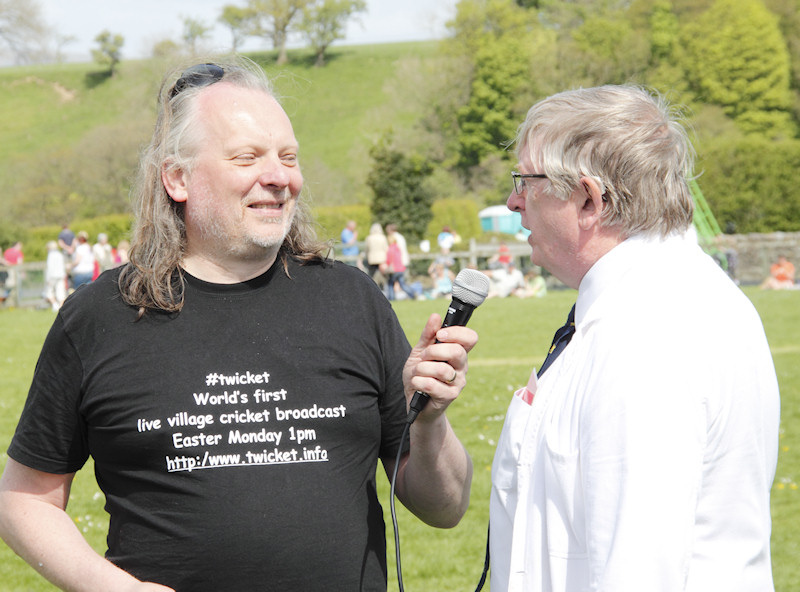
Live tweeting and streaming a village cricket match is another fun example of real time updates. The Twicket experiment in the Lancashire village of Wray drew a worldwide audience.

A Philadelphia local government blogger Jim Garrow talked this when he described how things like this are changing communications.

If we communicate so much more what we do through social media will there be a need for crisis communications? .

Here’s a scenario to consider.

Imagine a situation in local government where each department and each office had a social feed. That it would be as common as a telephone or an email address. That you could pick and choose the streams you wanted to tune into.

That an organisation could tap into those streams to tell people what it’s doing. That’s – for want of a better phrase – as linked social. As the number of smart phones in our pockets grow that’s where we’re headed in the long term. I’m sure of it.

Here’s what the local government social media evolution curve looks like to me. Because I’m fond of lists it’s in a list form and there’s eight steps.

The eight stages of local government social media evolution

1. Ignorance: We may have heard of the social web. Just. But we’ve never really heard of Facebook or if we have, we’ve not seen the film. We heard a caller to Nicky Cambell’s phone in saying it’s the worst thing ever invented. We agree with the Daily Mail. It gives you cancer.

2. Fear: We – or our boss – think we need to use it. We don’t know how to get started.

3. JFDI: The Dave Briggs rule of Just F***ing Do It. We’re experimenting. We’re not really asking much in the way of permission. It may grow into something bigger. We’re experimenting and innovating. In Dave’s axis, there’s a trade off between JFDI and being boring. You’ll get more done by JFDI but it’s far less sustainable.

4. Boring: It’s getting bigger. We need a social media strategy like this one from Wolverhampton Homes. It keeps people higher up happy. That makes people lower down happy too. We’re starting to mainstream things. Slooowly.

5. Lone social. We have a single Twitter account for the organisation. We have a single Facebook page. We’ve not heard of Flickr. Or Foursquare.

6. Chattering social. We’ve let others use digital platforms too. So long as they stick to the basic common sense advice. We have different voices talking about different things.

7. Linked social. We’re now talking on one offs about the same issue from a different perspective. Like Walsall 24. We’ve got something bigger than the sum of the parts.

8. Mainstream linked social: We’re doing this as routine. We have a stream on what the countryside ranger is doing at a nature reserve. And what the litter hit squad are doing at the same site. We’re using the same hashtag. Some of this is automated. For example, there’s an RSS feed linked to bin wagons. Ten days a year in the snow it really comes into it’s own.

That’s my map of where we’ve been and where we’re going. Feel free to disagree.

Creative commons credits:

Smiling man and woman http://www.flickr.com/photos/cyberuly/4742800632/sizes/l/in/photostream/

Smile http://www.flickr.com/photos/dahlstroms/4707142552/

Matterhorn http://www.flickr.com/photos/pave_m/283503710/

Twicket by Mike Ashton http://en.wikipedia.org/wiki/File:John_Popham_and_umpire_at_Twicket.jpg

The JFDI versus Boring axis by Dave Briggs.

Creative Commons Licence
This work is licensed under a Creative Commons Attribution-NonCommercial-ShareAlike 3.0 Unported License.

CASE STUDIES: The place of social media in the marketing mix

Traditional comms is as dead as the boozy lunch with the Town Hall reporter.

Back in the old days a few beers with the right person may have been enough.

Not in 2011 it isn’t.

Not just because that reporter may now be based in an industrial estate 20 miles away.

The changing face of communications is something I’ve blogged about before.

There’s a whole list of things a press officer needs to do.

For some nice people at LG Comms Scotland I distilled much of this thinking into a presentation.

At their seminar in Dalkeith it was good to see people realising times have changed.

There were some excellent resources posted afterwards to the Communities of Practice site – log in is required.

Here’s my presentation too.

Basically, it covers the following ground:

  • Basic principles – What is social media? How does it work. Some basics.
  • Creating your media map – to see how things have changed on your patch. So you can work out where to put your resources. Not least a cunning way to get stats from Facebook.
  • Some case studies – What works in Twitter, Flickr and Foursquare and Facebook.

It’s not about abandoning the traditional approach that puts print journalists first. More it’s a long overdue re-calibration.

Social media should be part of everything that we do and the last thing it should be is an obstacle.

Or a bit scary.

It should be part of everything that we do.

DIGITAL MELTDOWN: How we should all learn to switch off digital

Infobesity. Such a brilliant word for digital overload.

It’s true using the internet is like taking a cup to a fire hydrant.

Think you’ll get on top of everything?

You won’t.

So pace yourself.

Relax.

It’s dawning on me that I need to make some time to get to know a small area well.

It’s also clear to me that switching off from digital tools from time to time is vital. To recharge. To think. Heck, even to take your six-year-old to the Stoke City club shop to buy him a scarf.

Here’s two excellent pieces that made me stop and think.

In the first posted on the superbly titled Think Quarterly, Hal Varian, Google’s chief economist talks of the amount of digital content. You can read the original here.

In 2010, the human race created 800 exabytes of information.

To put that into context, between the dawn of civilisation and 2003, we only created five exabytes; now we’re creating that amount every two days.

Data is like food, says Varian. “We used to be calorie poor and now the problem is obesity. We used to be data poor, now the problem is data obesity.”

For businesses that are gorging on a surfeit of information, Varian says the fix is clear. It’s the same for data as food: “You need to focus on quality. You’ll be better off with a small but carefully structured sample rather than a large sloppy sample,” he says. More locally sourced fine dining, then, less all-you-can-eat buffet.

Oliver Bukeman in The Guardian’s the SXSWi round-up brought this wake-up call to overwork:

A related danger of the merging of online and offline life, says business thinker Tony Schwartz, is that we come to treat ourselves, in subtle ways, like computers.

We drive ourselves to cope with ever-increasing workloads by working longer hours, sucking down coffee and spurning recuperation.

But “we were not meant to operate as computers do,” Schwartz says.

“We are meant to pulse.” When it comes to managing our own energy, he insists, we must replace a linear perspective with a cyclical one: “We live by the myth that the best way to get more work done is to work longer hours.”

Schwartz cites research suggesting that we should work in periods of no greater than 90 minutes before seeking rest.

Whatever you might have been led to imagine by the seeping of digital culture into every aspect of daily life – and at times this week in Austin it was easy to forget this – you are not, ultimately, a computer.

CASE STUDY: How Yammer can help local government innovate

“Yammer?” a colleague once asked, “isn’t that a Black Country word?”

Actually, no. It’s a web-based platform to allow people from the same organisation to talk to each other.

Used by 80,000 comanies as of Septrember 2010, it’s a way of sharing ideas, links to useful websites and for asking for help to crack a problem.

You need your organisation’s email address to access it so it’s a walled garden to allow discussion that cuts across directorates and teams.

The best thing of all?

It’s free.

It’s been used at Walsall Council since October last year when members of the communications team Kev Dwyer and Mel Lee came across it at the Hyperlocal Govcamp held in Walsall. Our head of communications Darren Caveney saw the value in it straight away.

In the first five months more than 600 people have signed up from around 8,000 employees.

Isn’t this just a glorified water cooler where people talk about last night’s telly?

Actually, no.

There’s a string of useful discussions.

  • Webteam members asking for feedback on how our website header should look like.
  • Transport asking what people thought of bus lanes.
  • A link to a Guardian Society piece on what hyperlocal blogs are.
  • A link to a blog written by a Cambridgeshire County Council officer on localism.
  • A thread on heavy imminent snow and best routes out Walsall.
  • A discussion on what planning pages should look like.

STATS ON HOW YAMMER IS WORKING…

We took a snapshot of 27 days of Yammer activity at Walsall Council from December 2010 and January 2011.

What we found were people busily innovating. Of the sample of 188 posts and comments:

82 per cent were work related

17 per cent were non-work.

Of the non-work posts, a third were about snow, information they’d seen in the staff e-mail Weekly Bulletin, on the intranet or were New Year greetings.

Not one was about Saturday night TV. Not one.

That compares favourably to the amount of time spent off-topic in some meetings.

Of all activity:

37 per cent were posts

63 per cent were comments.

What were the work-related topics about?

61 per cent were about proposed policy ideas.

For example, how a new operating model should look or what should happen to a new initiative should look.

Some were happy to ask for input while others were an update on what their team were working on.

22 per cent were on actual policy.

Such as an update on new sickness arrangements.

10 per cent were posting links.

A useful website, page on the council website or blog, such as a news story on how smart phones are having an impact.

0 per cent were abusive.

Not a single post on any subject was intemperate or even remotely threatening the code of conduct. That’s important to know and shoots down an early worry.

The regular cry ‘we need to be better at communicating with each other’ has never been louder.

Yammer is proving one way to do it. It won’t do it on it’s own but it is a powerful tool.

Links:

Yammer on Wikipedia.

Why Yammer failed at my organisation.

A Yammer experiment in local government.

LGC Comms Yammer thread with an account of the Kent County Council Yammer network.

HISTORY TWEET: Connecting over cornflakes with @manal in Tahrir Square

So, there I was one morning watching TV coverage of protests in Egypt.

Across the cornflakes I’m seeing a bulletin with overnight pitched battles in Tahrir Square on the news.

This square in Cairo has been the symbolic battleground. Pro-democracy protestors hold it. The President’s men want them out.

Stones, bottles get thrown to dislodge them. Snipers too but the protestors hold on by their finger tips.

Checking Twitter the hashtag #egypt is filled with news reports, pictures and messages.

One catches my eye. A man proud that he knows one of the protestors who is there on the ground.

I retweet it thinking there may be people who follow me  interested.

Minutes later one of those whose name I retweeted thanks me and several others for this act.

Let’s get this straight.

One of the protestors in Tahrir Square who has been fighting for what he believes in sends me a tweet to say ‘thank you.’.

The historian in me can’t handle that.

The geek in me is amazed.

What would a tweet from the French Revolution look like? Would @marieantoinette RT Let them eat #cake…?

But this is the 21st century, baby.

Now, those protestors are not figures on a screen. I know one of their names and contact – fleetingly – has been made. It’s Manal Hassan. His Twitter name is @manal. He is from Cairo.

I know in years to come what I’m saying now will seem as naïve as the school teacher who marvels at the photograph from the Crimean War.

Twitter, Facebook, YouTube and Twitpics are the first draft of history.

I see that.

I’m now just hoping for a peaceful outcome. And I’m hoping Manal is alright.

Pic: Twitpic http://twitpic.com/3whv3g

CASE STUDY: ‘I’m showing two colleagues Twitter. They say they don’t get it…’

It’s always good to show people Twitter when they don’t use it themselves.

Isn’t Twitter Stephen Fry talking about his tea? Isn’t it a load of noise? Isn’t it a waste of time?

I was sat with two people who don’t get Twitter.

Instead of explaining, I asked Twitter a question. It’s sometimes amazing the response you get.

I posted the following question:

Then several people started to chip in with what they thought.

@Mike_Rawlins posted something daft about #brewcamp. This is an event I’m looking to do with Mike and a few others.

Then @adrielhampton posted. It can amplify what matters to you. When I showed them his Twitter profile they started to get interested.

“He’s from America,” one said. “How do you know him?”

Through Twitter I told them.

“So who is Will Perrin?” they ask.

“Oh, he created the e-petition platform at 10 Downing Street. He does Talk About Local. They support hyperlocal blogs.”

I show them some hyperlocal sites they’ve not seen before.

I talk about Pits n Pots in Stoke-on-Trent and a few others.

We talked about how we could use the platform for the council.

Minutes passed.

I log back onto Twitter and there were a stack more replies waiting.

“Are they interested in anything?” one posted. “Find experts in that. Fast. Find their friends. Find themselves.”

It’s all good stuff.

Their faces change from confusion to awe.

“I’m starting to see the point now,” one said.

I show them hashtags. I show them how I can find out what’s happening at Stoke City, in local government and I show them the UK Govcamp hashtag #ukgc11.

I show them #xfactor because that’s a TV show that one likes.

I tell them that you can watch TV and get a real time running commentary on the programme you are watching via Twitter.

That gypsy wessing fly-on-the-wall programme they were talking about. I heard all that on Twitter and I hadn’t even got the telly on.

I navigate back to Twitter.

US people who specialise in emergency planning had started to contribute.

“Situational awareness, direct connectivity to public, better engagement,” one tweeted.

“Wow,” my colleague said.

One tweeter reminded me of the @savebenno campaign on Twitter.

What was that?

That was a campaign to highlight the unfair dismissal of a 2nd XI village cricket skipper.

It ended up with the team I was playing for playing a Save Benno XI.

“Wow,” my other colleague said.

“It’s starting to make sense now.”

TWELVE STEPS: Twelve lessons for using Twitter in local government


It’s now not why local government uses Twitter but how.

More than a hundred UK councils are on the micro-blogging platform.
That’s progress.

Since late 2008 we’ve been using Twitter at Walsall Council to inform and engage.

We’re fortunate our head of communications Darren Caveney and head of press and PR Kim Neville were quick to spot the potential.

More than 6,000 tweets on and there are a series of lessons we’ve learned.

In one of the first blogs I ever wrote I talked of the 27 things that work on a local government Twitter stream.

For a presentation at LG Comms in Nottingham I boiled that down to 12 key lessons.

The slides are available on slideshare (click the link above).

#12 LESSONS FOR USING TWITTER IN LOCAL GOVERNMENT

#1: Realise that the landscape has changed (and your skills need to too.) You know that a few years ago that writing a press release and booking a photo call was enough? That’s still a great skill. But you need other things too.

#2: The channels of communication have changed. In the old days there was the newspapers. Maybe the radio. Every now and then TV would show up and it would be a really big thing. They’re still there. In some cases just or not at all. It’s just that people get their news in different ways now. Remember, Facebook is the fourth biggest news site on the internet.

#3: Learn the language of the platform first (by messing about with it yourself.) When you start to use Twitter – or any other platform – you’ll notice that there is a different way of talking to people. It’s a lot more relaxed and conversational. Get to know how things work under your own name. Once you build some confidence up you’ll be up to speed on how to use it for your organisation.

#4: You can’t control the message. It’s a big one for press officers this. In the old days there may have been key messages. There’s still things you want to say. Just realise that this stuff works as a conversation. So be conversational.

#5: It’s okay to be a human voice. What works best on Twitter is a relaxed tone. It’s not about linking to an RSS feed and tweeting the first 140 characters of a press release. That’s just shouting. A police officer once told me that as a beat officer he would start conversations with people. Then he’d slip in some information he thought may be of help. That’s what Twitter does. It’s probably why many police officers are very good at it.

#6: Link. Share. Retweet. Be web 2.0. It’s okay to retweet. So long as it’s third sector or public sector. Spotted a police witness appeal on Twitter? Link to it. Charity car wash in your borough? Link. Share. Earn social capital. Be a responsible council. Share interesting content.

#7: Take the argument offline. It’s never a good idea to have a row in public. Point people to the place where they can get information that can help. Most non-trolls are fine with this.

#8: Take the re-buttal online. Is your local paper circulating via Twitter a link you have a major issue with? Have they failed to include your statement adequately? Post the statement online. Link to it. Tweet it to them – and your followers.

#9: Service areas work well on Twitter (so be prepared to share). It’s fine for comms to use it. Others can too. There’s no-one better at knowing what’s popular with libraries than librarians. So if your library want to use it, let them. Give them some pointers first.

#10: Have a simple to understand social media policy. A hundred pages won’t work. Something that fits into a screen does. Make it simple.

#11:  Make sure it connects with other channels of communications. Write the press release. Send it. But also send it via your other channels too.

#12: Cut, past and send your positive feedback to off-line officers. It’s amazing how effective this is at breaking down barriers to social media. If you are doing something residents approve of they will thank you for it.

Hat tip: Nick Booth who first told us about Twitter and what it could do.

FINE PIX: A basic guide to Flickr in local government

Brighton beach shot posted to the Brighton and Hove City Council

You know why Flickr is great? Because all you need is an ability to look at a good picture and say ‘wow.’

Slowly but surely Flickr is starting to spread across local government.

It’s a site that’s a brilliant mix of social and creative.

It’s also a place to celebrate the place where people live.

It’s something I’ve blogged about before with 11 suggestions how it can be used in local government.

This is a basic explanation sprinkled with a few good examples.

What is a Flickr photostream?

Anyone can take out an account free of charge. This let’s you post around 200 images.

Go past 200 and it starts to get trickier and you can’t always see your shots in the one place. Here’s mine as an example. There’s lots of pictures of a place called Beer in Devon. I went there for a week and went a bit bananas with my cheap Fuji camera that cost £70.

Fisherman's cottages posted to the 'Proud of Devon' group.

What’s a Flickr pro account?

For less than £20 a year you get analytics, better tools to upload and the ability to keep your shots in the one place.

How does the social part work?

First, when you create a Flickr stream you can make ‘contacts’. That’s the photo equivalent of a follower on Twitter. Thanks to this route you can see the image stream of your contacts. You can also comment on pictures and favourite them.

What’s a Flickr group?

Anyone with a an account can create a Flickr group on any subject or geographical area they care to. There really are some varied ones that cover all types of hobbies and interest. Big fan of canals, Roman history or gritters? There are groups for you, believe it or not.

Should a council create a geographical Flickr group?

There’s no reason why not but you may want to check to see if there’s not already one.
In Walsall, where I work, there is an excellent Flickr group who work with the council already. There’s no need to create an area-themed one.

But, heck. What do we call it?

Try and avoid the word ‘council’ if at all possible. It turns people off. Proud of Devon which is set up by Devon County Council is a perfect name with some great images.

What does a good geographical council Flickr group look like?

Brighton & Hove City Council with more than 1,100 items and more than 80 members is a worth a look. Not sure about including the word ‘council’ in the title.

However, it also runs in parallel to the long established Brighton group with almost four times as many members and a staggering 56,000 images.

There is the argument that if there is a residents’ group already then don’t muscle in and set your own ‘official’ one up.

A good user generated Flickr group is almost always the best one.

Go to where the crowd is if you possibly can.

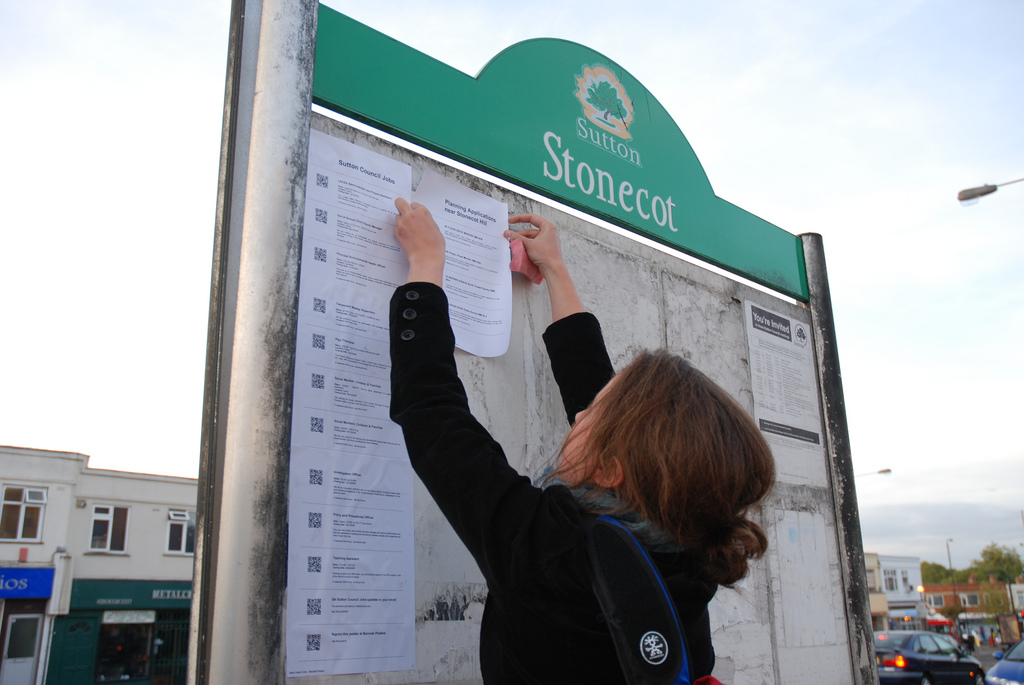
There’s a fine example of a geographical Flickr group created by residents themselves. It’s packed with creative commons images of the borough of Sutton.

What if there is no geographical Flickr group?

Sandwell Council was formed in the 1970s merging West Bromwich, Wednesbury, Tipton, Cradley Heath, Old Hill and Oldbury. While people are proud of their town borough pride is slower to develop.

A Sandwell Council Flickr group works because it fills a gap.

How about a themed group?

The Winter Photos of Dudley Borough is excellent. With 160 members it has captured popular imagination.

It’s also a source of photographs with the clearly marked disclaimer telling people that submitting an image means Dudley Council can use it on the web or in print.

What about content forn our photostream? What can we post?

You can post stock images and commissioned shots – if the freelancer who has taken them is fine with it. You can post pics taken by staff. You can post pictures taken by residen ts for competitions too. That’s something Barnet do.

Can a public sector employee use Flickr?

Absolutely. San Fransisco Attorney Dennis Herrera has a Flickr stream which aims captures his office’s work.

What other areas of local government work on Flickr?

Unsurprisingly, its the visual that works well. Finance scrutiny do a fabulous job. They just don’t make interesting pictures.

The Black Country Museums sees museums across Wolverhampton, Dudley, Walsall and Sandwell join together for an interesting and varies collection.

Walsall Museum also has its own stream. It’s a great way to capture exhibitions to showcase what is on offer.

Wolves Parkies – the Wolverhampton parks stream – has an excellent stream with shots capturing nature and the seasonal changes.

Can it be used as a photo library?

Coventry City Council – real innovative users of social media – use Flickr well. They have a photo stream that acts as a photo library and a storehouse of stock images. When commercial image libraries cost thousands to use and operate every use theirs cost less than twenty quid. Hows that for value?

Media outlets as well as hyperlocal sites can go straight to the Flickr page rather than use poor quality images.

Coventry’s shots are largely tagged ‘creative commons.’ This means that they are available for re-use under certain circumstances.

How about campaigns?

Lancashire County Council’s libraries have a Flickr stream linked to the Lancashire Lantern initiative. This puts old pictures over current views rather like the rather brilliant History Pin.

Creative commons

Brighton: Henrike Godoy http://www.flickr.com/photos/godoypk/3912195480/

Notice board: http://www.flickr.com/photos/adrianshort/3962666155/in/pool-1038828@N20

Horse:  http://www.flickr.com/photos/gnuckx/4276963503/sizes/s/in/photostream/

TRUE GRIT: A localgov winter social media case study

Every mile is two in winter, the Elizabethan poet George Herbert wisely said.

True words then and true today and he never had to drive a Vauxhall Astra on the M6 in minus five degree weather.

In local government its worth going the extra mile in wintry weather.

Get things right in sub zero weather and you’re laughing.

Get it wrong and you’re not. Just ask the Scottish transport minister who resigned after scathing criticism.

For the past two weeks Walsall Council – the council I work for –  has been using social media as a key way to keep people updated on wintry weather.

It’s not the first time. Last year, we were one of a small number to use social media. We used Twitter to flag up gritting and service disruption.

This time, we expanded a touch. During the icy period of November 26 to December 11 2010 we used the council website, Twitter, Facebook and Flickr.

What did we do this year?

Staff were primed to email the communications unit, members of the team by 8am every day as well as individuals. When the gritters went out the engineers e-mailed and even called to flag up what they were up to.

Council website www.walsall.gov.uk

With new digital channels taking all the attention you’d be forgiven for overlooking your website. Don’t. It’s where a lot of your content can go.

We used one page on the website as a links directory to more than half a dozen potential service areas so people didn’t have to search around the website.

It’s where most people will go first.

Twitter @walsallcouncil

Stats: 2,200 followers (a five per cent rise in two weeks)

261 tweets at almost 19 a day.

Content: Updates on gritting, school closures, service disruption.
Links to council gritting pages, school closure page organised by education provider Serco.

Links to winter shots taken by residents and posted on Twitpic and Flickr.

Links to BBC weather.

Link to the @mappamercia grit map.

Did we RT?: Of course. Social media is supposed to be social. We retweeted the Met Office weather forecasts, neighbouring authority grit updates and advice on

Facebook: Our Walsall fan page

Stats: 345 likes (up 10 per cent in two weeks)

Daily post views up 3,105 or 82 per cent.

Updates: 27

Each status update received between 159 and 783 page impressions.

Content: Three to four updates a day with links to a general page.

Flickr and Twitpic

Stats: 6 pics posted on Flickr and 12 pics crowdsourced and retweeted on Twitter to provide content from residents themselves. Shots varied from the amateur twitpic to the almost professional here.

A set of pics were posted of the gritters in action at a training event in late autumn designed to test out the routes. These were posted to Flickr but the best pics came from residents themselves. In the spirit of web 2.0 we posted links to good shots.

One pic was crowdsourced for the council website header shot.

Content: snowy scenes taken by residents as well as shots of gritters posted by the press office.

Open data

It’s one of the great jobs of this winter to see a mapping project really take off in Walsall. The Mappa Mercia group are people I’ce blogged about previously. Last winter they drew-up a grit map on open street map for Birmingham. You can take a look here. They spotted the grit routes for Walsall and Solihull too and quietly added them. So, when winter came we were quite happy to link to their map. It shows residents spotting a need and doing it themselves.

Content: grit routes.

EIGHT things we’d suggest:

  • Get service areas to tell you what they are doing.
  • Communicate to residents in good time.
  • Monitor, respond and communicate every four hours. Have a rota to do this.
  • Put the same message across different channels. But in the language of the platform. Don’t RSS it across everything. It won’t work.
  • You can crowdsource good picture content.
  • Have an idea what the frequently asked questions are and think about the answers before you are asked.
  • Take a screen shot of the positive and negative comments from Facebook and Twitter. It gives the service areas an idea of what is being said if you email it to them. The positive stuff will go down very well and make them more supportive of what you are doing.
  • You can reply to negative comments. But if people swear or are sarcastic think twice. You may not have a constructive conversation.

SOCIAL FIGURES: A cunning way to find cool Facebook stats

An amazing statistic like a battering ram breaks down doors.

Here’s a good one.

For every one person who buys a copy of the Express & Star in the West Midlands borough of Walsall there are 10 on Facebook.

That’s print outnumbered by digital by a rate of 10 to one.

It’s the single most powerful argument to use social media in local government you can ever have. Why? Because it shows it’s mainstream. In fact, so mainstream it dwarfs what used to be the colossus of the printed Press.

It’s a cunning wheeze I first came across at the landmark LocalGovCamp in Birmingham in summer 2009.

Paul Cole, a talented man from Derby, spoke about how he did it. People never fail to be impressed by the idea.

You create a Facebook advert — but before you hand over cash you are given the chance to narrow down who you want to advertise to.

It’s at this point that you can get the juicy stats.

Here’s how to come up with one than your community:

1. Log on to Facebook.

2. Click the link that says ‘create an advert.’

3. Fill in the advert. Just type ‘hghghg’ if you like.

4.Upload an image. Any will do. This gets you to the place where you can access figures.

5. Look at the figure in the far right of the screen. That’s the figure of people registered on Facebook for the UK.

6. Add your town or city.

7. Select the radius you want to search from from the centre of your area with 16 km the shortest distance.

8. Click search and you have a figure for your own community.

9. Add an age demographic if you like.

10. Add an interest – like football, knitting or fishing – and search on that term too.

Enjoy!

Creative Commons

Measuring http://www.flickr.com/photos/darrenhester/3989949630/sizes/l/in/photostream/