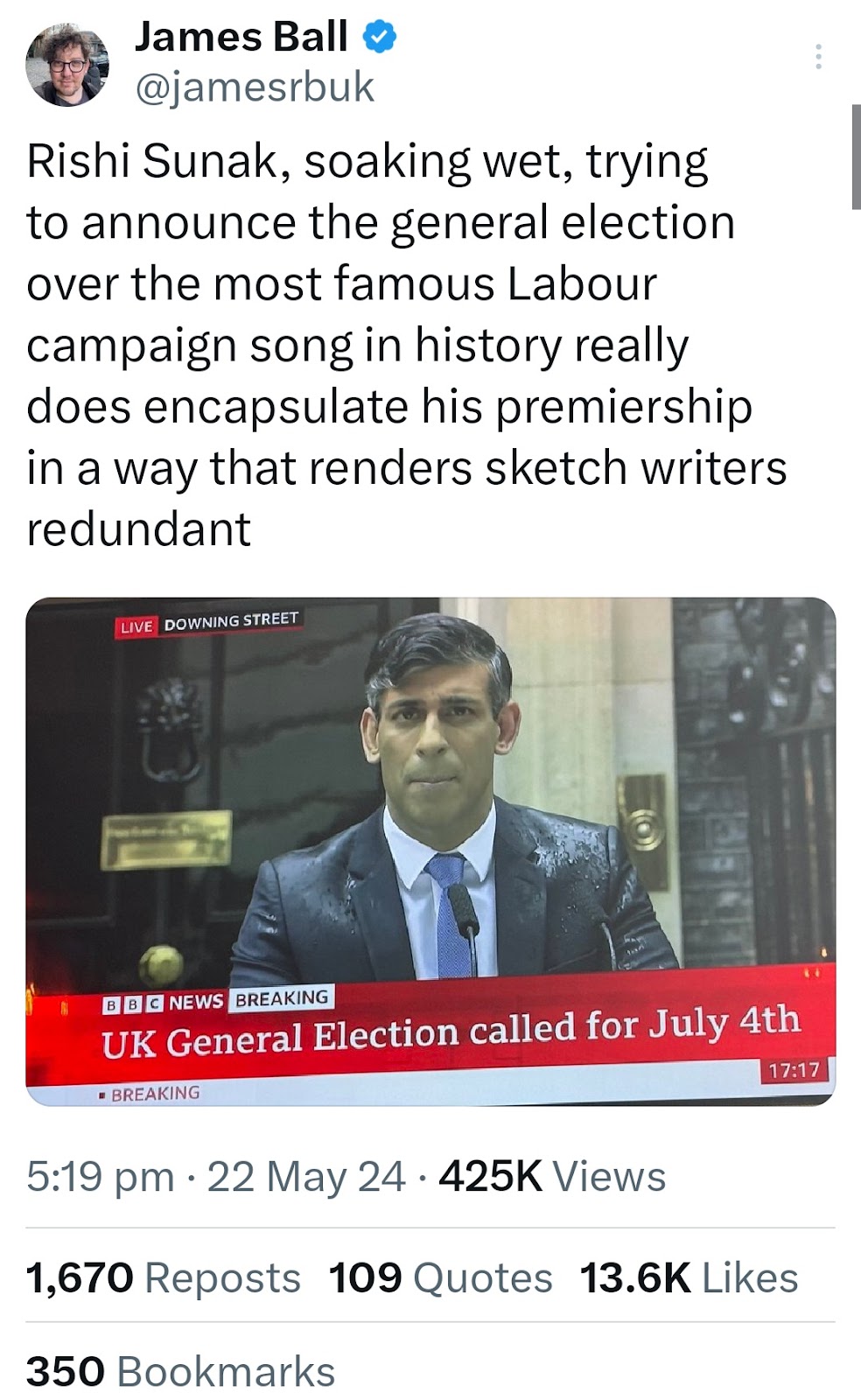
‘A new dawn has broken, has it not,’ Tony Blair famously said as he addressed supporters at Royal Festival Hall in London as its new Prime Minister.
The Labour operation had deliberately waited until the first golden rays of the morning sun had reached over the Thames to brighten the shot that framed the 1997 Labour landslide.
Their approaches of message discipline and news management became the textbook of how to communicate.
Yet, everything changes, as Take That once pointed out. In 2007, The Sun sold 3.1 million copies and the News of the World shifted 3.5 million. Today, one doesn’t exist and the other no longer publishes circulation figures.
In 2024, The Sun’s intervention to support Labour with a lame football-themed frontpage that called for a new manager was met with general indifference and a shrug. It was a bulletin from another era.
Eighty per cent of the UK population has a social media account where we will graze our entertainment and news will come and find you if its important enough. The very idea of cycling to the paper shop to find out what’s happened belongs in the 20th century.
My General Election from a different perspective
In 2024, free of being politically restricted I volunteered to work on Labour’s campaign in Halesowen. It was professionally eye opening.
My first General Election was that Blair Labour triumph of 1997 where I covered it as a reporter for the Halesowen News. Labour fought and won that Black Country seat that fringes the Worcestershire countryside.
As a reporter, the phone would be ringing with calls from candidates most days in the six months beforehand. In the last six weeks, we would have a theme and invite the candidates to tell us what they’d do to handle crime, the NHS, jobs and other perennials. One week, we even got each candidate to submit an example of handwriting with their permission to a retired company director who was the UK head of a graphoanalyst society.
In 2024, The Halesowen News, is no longer based in the town, featured the Labour candidate a handful of times. Print media was an after thought to the campaign.
This was the meme election
But if it wasn’t local media driving the debate what was? I think I’ve got a meme that can tackle that.
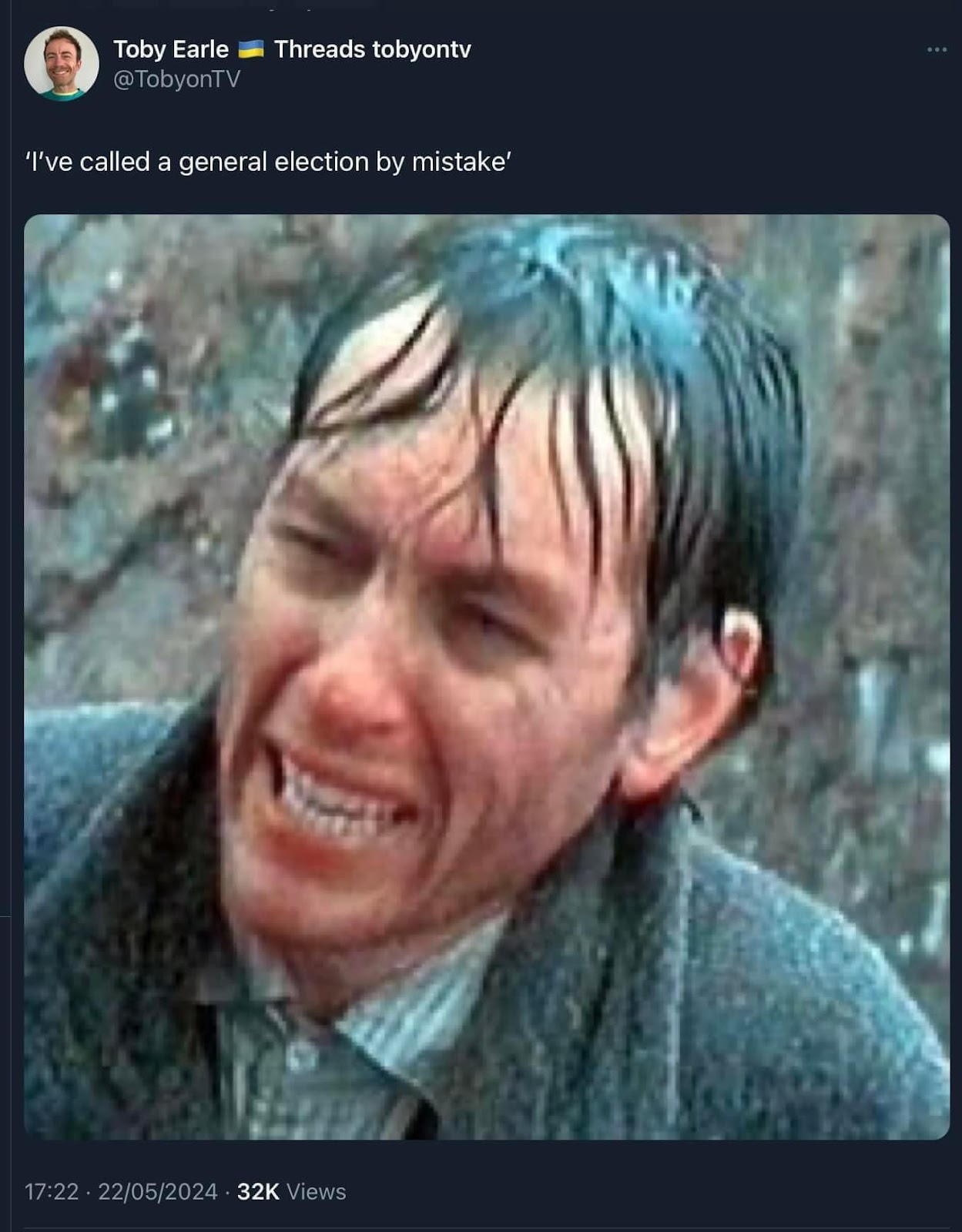
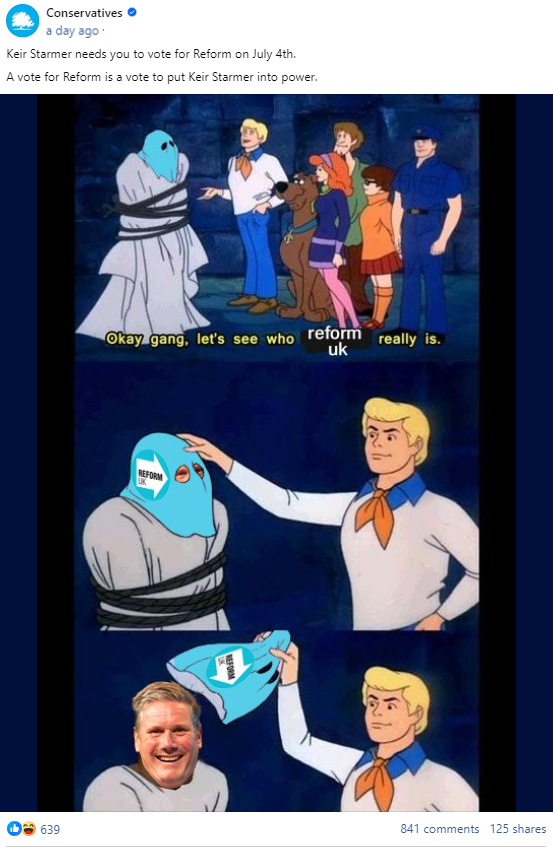
Memes are sharable pieces of content that can make an observation, crack a joke or make a point. Agree? Hit like. Disagree? Fall into the trap and start an argument that will boost the original post with the algorithm.
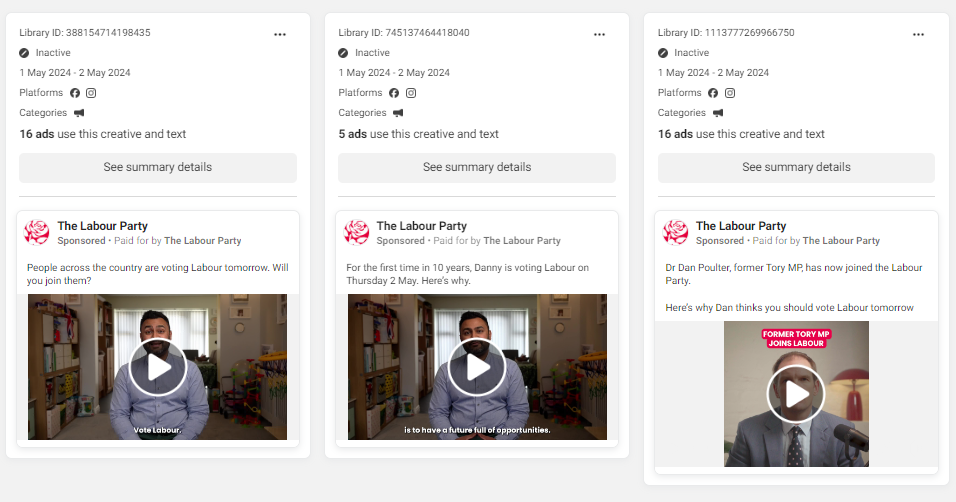
Both Labour and Conservatives used memes as the sharp spear point of their election message. Activists were signed-up to spread local-themed and national messages across their networks.
Politics has long moved on from 19th century beer-laced election festivals to hustings to newspapers to the mobile phone that you scroll through. Had Blair, Churchill or Attlee being campaigning today they would be all across the meme.
The Conservatives had an app while Labour had a website with downloadable imagery.

But for all the officially-shaped content there was also a blizzard of combative unofficial content that would never have got past the approval process. Reform have a downloadable profile picture that’s all about spreading the branding.
The Sun boasted in 1992 that ‘it was The Sun wot won it.’ In 2024, if there was one thing more important than another maybe it was the meme election.
But…
This was also the anti-meme meme election
Need a message? Here, have one. Then move onto the next thread. To counter that there’s the anti-meme meme. You’re making this point? Here’s a meme that pricks your balloon.
There was plenty of this in the meme wars that raged across the internet and in particular in community Facebook groups and Nextdoor.

Back in 2019, I ran some research that showed big ‘P’ politics did not sit well in community Facebook groups in the run-up to the General Election which Boris Johnson won for the Conservatives. However, small ‘p’ politics was often fine and the angle to approach the national issue. The person complaining about not being able to get a GP appointment was the wedge to start talking about which side of the argument you’d favour.
As the campaign went on, it was clear that even more subtle ways to get past the admin gatekeepers was needed. In particular I was impressed at the Stourbridge resident who offered the olive branch that this really was all about love and used the highly incendiary shot of Matt Hancock kissing an aide during COVID in breach of COVID regulations.

Nextdoor were particularly adept at throttling the algorithm on content that may have mentioned elections.
This was the AI election (sort of)
In 1924, the Daily Mail printed the Zinoviev letter. This quoted an emissary from the newly-formed Soviet Union that spoke in support of the Labour Party which was knocking on the gates of Downing Street. It alarmed Middle England. It was a fake. But the public didn’t know this until after the election.
A century later, there was no AI-generated equivalent that pointed an accusing finger at a Labour Leader poised to take power in then last few days. This doesn’t mean that there wasn’t AI if you went looking for it.
The big warning that AI was going to flood our timelines with misinformation and disinformation didn’t land this time.
What we did see was a lot of ‘patriotic’ right wing AI art of Reform’s Nigel Farage and more racist content that was also called out. It was clearly artificial. But both Conservative and Labour also created memes that showed opposition figures in unreal scenarios. Labour using Rees-Mogg’s face to show what it would look like to wake up next to him if there was five more years of a Conservative government.

Was the Rees-Mogg image made with AI or just PhotoShop? I don’t know. It’s hard to tell. But that’s just it. It’s supposed to be hard to tell. It was definitely not real.
There was also the fake TikTok videos of leading politicians playing and commentating on Minecraft. To be really effective in their manipulation they have to carry a grain of truth. This couldn’t have pulled the wool over anyone. So, harmless then? Yes, largely. But it does nothing for building up politics as a worthwhile and noble profession.
More worryingly, The Guardian pointed to one example of AI tools being used to manipulate audio recorded on a Ring camera. This footage was shot which captured Labour supporters calling to deliver a leaflet. The candidate who posted it alleged a racial slur. An analysis of the recording showed anomalies.
This was the TikTok election
Big noise was made about the role TikTok would play. The Guardian have written this excellent balanced piece which puts the platform into context. Ten per cent of people get their news from TikTok and this could be a traditional broadcaster such as the BBC, a new entrant like ‘Oh, God What Now?’ or The News Agents or a citizen journalist.
Aside from that, the parties themselves were active creating content specifically for TikTok that looked and felt unlike video from other places.
This was the podcast approach election
I heard an episode of Radio 4’s ‘The Westminster Hour’ during the campaign. It was dreadful. Set piece lines to take deployed against each other by rival MPs not yet famous enough to have won their spurs.
The only Leaders’ debates that looked anything other than painful was Sky News in front of an audience whose laughter stripped past the lacquer of pre-prepared interviews. I cannot think that the set piece interview as it stands has any life left. It has been sanitised to death buried with a green pharmacy cross on its grave.
Yet, the informal podcast approach taken by programmes such as Electoral Dysfunction with Beth Rigby, Tory Ruth Davidson and Labour MP Jess Phillips or the genre-defining The Rest is Politics with Alastair Campbell and Rory Stewart are far more engaging.
It was the clipped-up news election
So, if print media is largely irrelevant does this mean that journalism is dead? Of course it doesn’t. It just means that the news will find people in clips that are seen online by far more who watched the original.
Keir Starmer’s stumble on Bangladeshi immigration cost his Party a big chunk of the Bangladeshi population across Britain, for example. Even the local journalism turned into sharable content.
And finally
If you think all this is just political communication and it won’t affect you as a communicator think again. Political campaigns, as I’ve said many times, are a petri dish for innovation.
The memes played a role but so did other factors. I can focus on the digital element but the door knocking, data gathering and get the vote out operation was all part of it.
Several of these approaches with a degree of imagination I can see working across the public sector. History shows that new tools which are at the bow wave in an election often become firmly part of the toolkit.