SESSION LESSON: A DIY guide to running your own small Barcamp

There’s a great quote about learning not being compulsory, but neither is survival.

For the public sector learning and survival are vital in 2011.

No doubt, there’s a place for paid training.

But 2011 will be the year unconference as they expand in size and number.

What’s a barcamp? It’s bright like minded people coming together, booking a venue and running some sessions to exchange ideas.

UK Govcamp in London drew more than 170. It created an explosion of inspiring thinking on the day and after.

For this organisers Dave Briggs and Steph Gray need to be revered as heroes.
But that’s not enough for them. Oh, no. They’ve gone and created More Open. A fund to help start-up barcamps in other parts of the country. What a pair of dazzling gents.

Shropcamp is one of the first to benefit. Others will follow.

Last October I joined Si Whitehouse, Stuart Harrison, Andy Mabbett and Mike Rawlins to put on the comfortably laid back and low level Hyperlocal Govcamp West Midlands.

Around 70 people came on a Wednesday afternoon to Walsall College with tweets and reaching a potential audience through the #hyperwm hashtag we were surprised to learn of 56,000.

Now, I don’t for one minute suggest we’re now fully fledged event planners after one gig. Nor is what we did remotely in the same ballpark as UK Govcamp.

But that’s the point. It wasn’t trying to be. We just fancied doing something in our part of the world that we’d want to go to.

So, in the spirit of doing and sharing here are some things we learned. It feels like the right time to post this.

PLAN AN IDEA

1) Have an idea. Kick it around with some conspirators. If it stands up to the scrutiny of a couple of people you’re on a winner. Rope them in too. It’s good to share.

2) Think of a list of people you’d like to be there. Get their support for the idea. Now you’re on your way.

3) Check Dave Briggs’ 10 things to do for a barcamp. It’s indispensible.

START TALKING ABOUT IT

4) Think of a name for your event. Get yourself a Twitter account. Spread the word. Don’t wait until you have a venue or location. A name will do at first.

5) Get yourself a presence on the UK govcamps site that requires sign-up. There’s already a community of people there.

6) Get yourself a basic WordPress site to host a Google map with venue, parking and other locations.

7) Use your Twitter to flag up potential sessions and sponsors. Build momentum.

8.  Use your offline contacts to raise interest. Email. Talk. Cajole. Enthuse.

PLAN A VENUE

9) Get a venue within striking distance of a train station if you possibly can.

10) Use any contacts you may have to get it at cheap rate or free. Is there a public sector venue that fits the bill?

11) Rolling tea and coffee is a must. Catering is a cherry on top bonus, frankly. It’s 2011.

12) If it’s a public sector thing, think of a venue near a council building.

13) Having it away from the council itself is liberating. It helps people loosen up and makes it a slightly non-work thing.

PLAN SPONSORS

14) Briggs’ guide wisely suggests banging the drum with web companies. There may be some public sector cash knocking around too.
PLAN A DATE

15) There’s a debate on what works best. A Saturday? You may get people who can’t come along midweek. Midweek? You’ll make it part of the day job for less committed nine to fivers. There’s a role for both. Friday isn’t always great, apparently.

16) How about the length of it? All day or half day? How about a post event drink too? You may find people want to chat a bit afterwards.

PLAN TO GET PEOPLE TO COME

17) Use Eventbrite for tickets. Release them in batches to build up a sense of momentum. Give a build-up via Twitter to each release.

18) DM people to invite them to sign up. Don’t think that just because its posted on Twitter at 9am the world is all watching at 9am.

PLAN FOR ON THE DAY

19) Venues often have wifi on lockdown banning access to social media sites. Test what they may offer beforehand.

20) Bring lots of extension cables.

21) Bring sticky labels people can write names on.

22) Have one of your organising team always floating around to sort any problems.

23) Do something different. We invited people to bake a cake.

24) Have a couple of volunteers signing people in. Sounds obvious.

25) You’ll need someone like Andy Mabbett to compare. He’s loud. He has a big beard. He’s good at explaining.

AFTER THE EVENT

26) You’ll need to take the next day off. To recover, but also to capture the resources that have come out of it.

27) You may want to pay for a Tweetreach report to get a seven day snapshot of tweets with your hashtag. It’s handy to see the size of things. It’s also handy to pass on when you’re thanking sponsors.

28) You may want to capture some of the things that came out of the event too. Like Pelsall Common People blog that started in the wake of ours.

29) Have fun. Have fun. Have fun. It’s fun. A bit of work but mainly fun.

Creative Commons credits:

Agile session http://www.flickr.com/photos/paul_clarke/5380789354/sizes/l/in/set-72157625758104141/

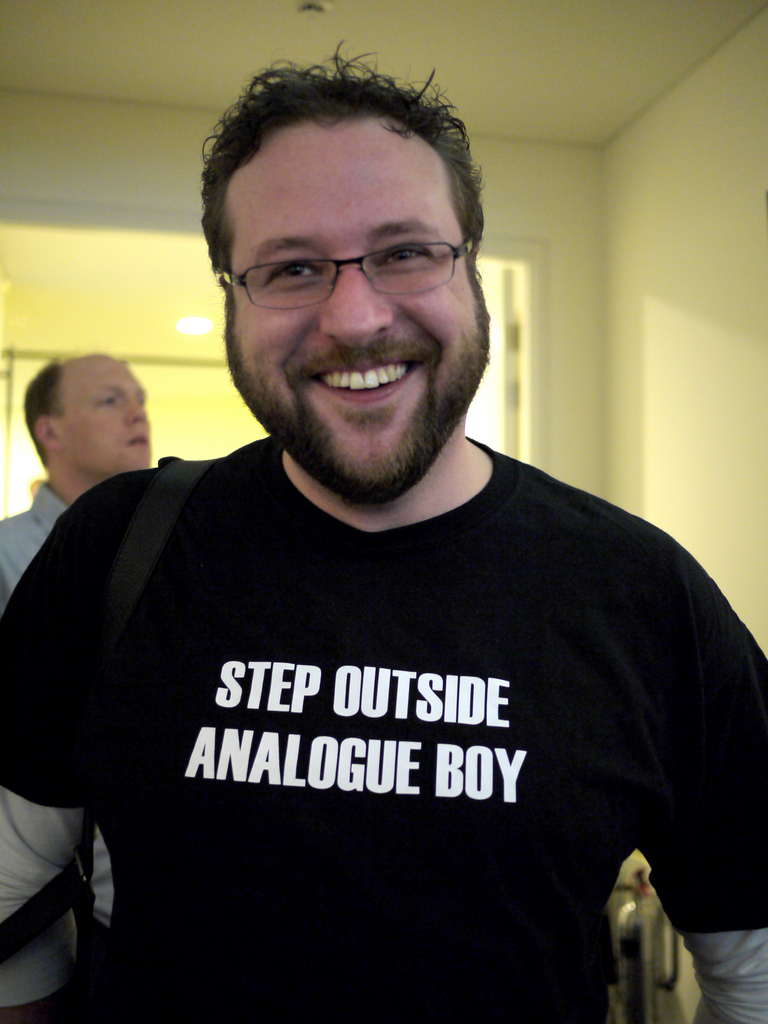
Analogue boy http://www.flickr.com/photos/jenniferpoole/5379048924/sizes/l/in/pool-1638817@N22/

Applause http://www.flickr.com/photos/paul_clarke/5382076388/sizes/l/in/contacts/

BOSTIN SOCIAL: Is it time for a #hyperlocalgovcamp?

As brilliant ideas go the ‘unconference’ is as good as tea and a slice of cake on a summers day.

Get like-minded people in one place and then decide what you are going to talk about on the day. You’d be amazed at the hot house ideas that emerge.

Believe it or not the first event described by such a term was the XML Developers Conference of 1998 in Montreal in Canada.

How does an unconference – or Barcamp – work? Basically, four or five rooms are used with different subjects being discussed in each in hour long slots. Feel like saying something? Just chip in. It’s as simple as that.

They work brilliantly in and around government where there is a willingness to share ideas without being hampered by private sector hang up about competition and bottom lines.

They work well in the hyperlocal community too – Talk About Local have run excellent events – and they’ve even gravitated into the travel industry.

Some of the most exciting thinking I’ve come across has been at unconferences. It’s not exaggeration to say Localgovcamp Birmingham in 2009 utterly revolutionised the way I think and approach my job.

Elsewhere, UKgovcamp in January saw around 120 people with five rooms and eight slots. That’s 32,000 possible combinations. In other words, a lot of knowledge and conversations. Coming back from one such event in London as the train was passing through the Oxfordshire countryside one clear thought struck me.

Isn’t it about time we made the brilliance of the unconference fit into the day job?

Invariably, those who go are innovators. This is great. In local government, there is a need for these key events every few months if for nothing else than the sanity of those who blaze a trail sometimes with little support. But how do you get the message through to the 9 to 5-ers and policy makers who would also really benefit?

It’s an idea I’ve kicked around idly with a few people. Myself and Si Whitehouse mulled this over at the London Localgovcamp. I like the phrase ‘Locallocalgovcamp’ he came up with. It has the spirit of localgovcamp but it’s a lite version.

What it may be is this: A space where ideas could be kicked around in the informal, unconference style.

But crucially, there maybe an item or a hook pre-advertised that may encourage slightly less adept to come along. Besides,  it’s easier to convince your boss to let you go to an event if you know you’ll get something out of it. The pitch of ‘Cheerio boss, I’m off now to drink coffee with geeks and I may just learn something’ is not as compelling as ‘Cheerio, boss, I’m going to this event to learn x and if y and z too.’

The idea of the local meet-up  itself is not especially something new.

London digital people in government do something called ‘Tea Camp’. A 4-6pm slot in a department store cafe. Tea. Cake. Conversation. All seems dashed civilised idea. Besides, there’s a critical mass all working in a small area.

Perhaps it’s time for a regional version of this. The West Midlands where I live and work sees an inspiringly vibrant digital community. There is also seven councils within a 30 mile radius.

So what would an as-part-of-the-day-job West Midlands bostin social event look like? 

Two hours? Two rooms? Two sessions? Or is that too short?

Pork scratchings?

What do you think?

Creative commons photo credit: Barcamp: Scott Beale / Laughing Squid laughingsquid.com.

SOCIAL MEDIA: Your EIGHT step guide to getting started…

This blog post was inspired by #ukgc10’s local government hug session where one person asked for help in how to get started with social media. Some good pieces of advice came out. Here are some from the session and some that struck me afterwards…


THE 8 STEP APPROACH FOR GETTING STARTED….

You’ve read about social media. You may have thought it was a fad. Now you’ve been waking up at 3am with the gnawing thought that you’ll have to do something.

If you’re at this stage. Congratulations. You’re sharp. You’ve seen which way the wind is blowing. And, yes, it’s only going to blow harder.

So what to do?

Here’s some thoughts on how to go about turning your organisation into something fit for the 21st century.

It’s simply not enough to say that you must do it because Steven Fry does it. Or because it’s cool.

You need to construct a cohesive and persuasive argument backed by figures that will work with people who look on digital with the suspicious eye of a Daily Mail reader.


Step 1 – Look at the national picture.

More than 30 million people use social media in the UK, according to the most recent figures. Clicky Media’s figures are a good starting point.

You can compare this to national and local newspaper figures.

Locally, a 20 per cent dip in local papers is predicted by 2012 in weekly papers. In regional daily papers it’s more like 30 per cent.

In short: If you’ve always relied on your local paper to get your message out then think again.

Step 2 – Have a look at the sites.

There are dozens of social media sites.

For the sake of argument, look at six of the most popular sites.

YouTube, Facebook, Twitter and Flickr all do different things. For blogging, WordPress and Blogspot are key.

Don’t worry if it all looks an unclimbable. Rome wasn’t built in a day. Anyway, Microsoft billionaire Bill Gates has only just got round to joining Twitter himself. So, relax.

Join one if you like. See how it works. Get to know it.   

In short: Don’t worry about not getting your head around all of them.
Get your head around them one at a time.

Dive in! That water is great….


Step 3 – See what some inspired people say.

All you need is out there on the internet. The trick is, like anything, knowing where to look. You’ll find it a creative, inspiring and sharing place if you choose to join.

Check Mashable for basic guides to all this stuff. The guide to social media is a must. Follow the link and click download for Learning Pool Twitter guide.

There are some quality blog posts on the subject. Michelle Ide-Smith recently wrote a post that nails how to construct an argument in favour.

Have a look at these blogs for ideas an inspiration:

Nick Booth, Dave Briggs, Sarah Lay, Carl Haggerty.

If you join Twitter – and I’ve learned so much from it I’d seriously recommend it – I’d also recommend these:

@sarahlay – Derbyshire webbie.
@alncl – Alastair Smith, Newcastle web man.
@davebriggs – Local government social media specialist.
@timesjoanna – Former Birmingham Post reporter turned Times writer. Great for links.
@liz_azyan – Lives and breathes local government and social media.

@gecko84 – Teckie Arsenal fan.
@abeeken – Lincolnshire webbie.

@mmmmmmcake – A stream about cake, believe it or not.

@pezholio – Local gov webbie from Staffordshire who is borderline genius. Also likes real ale.

@talkaboutlocal – a window into the amazing world of hyperlocal blogs that can serve a town or even a housing estate.
@wv11 – a hyperlocal blog based in Wednesfield, Wolverhampton. Shows how a local site can use it.
@philipjohn – a website developer who is a useful font of information.
@mashable – the Twitter version of the social media blog.
@doristhecow – Anchor butter’s well judged use of Twitter. I love it.
@scobleiser – Silicon Valley geek who writes about tech news.
@walsallcouncil – Because their use of social media is really, really, really inspired (disclaimer: I help write it).


Step 4 – Create a social media map.

Work out what activity there is in your area. These figures are a clincher so take an afternoon out to build this picture.

Paul Cole and Tim Cooper in Derbyshire did one for their area. They used mindmeister although you could use an exercise book. It’s just as good and you don’t have to re-boot it. It lists all trhe social media activity they could find.

How?

Before you do, I’d find out the circulation figures for newspapers in your area. This is good to compare and contrast. The Walsall edition of the Express & Star, for example has sales of around 22,000.

For Facebook, there are 23 million users as of January 2010. Want to see how many are local to you? Log onto Facebook, then click the button marked ‘advertising’. Fill out an ad. Don’t worry you won’t get charged just yet. It’s then you reach the section that gets really interesting.

Here, you can ask Facebook how many people are registered within a 10 mile radius of a town. This gives some staggering figures. Click the box marked ‘location’ and put in the town you want to aim at.

In Walsall, in January 2010 there are 170,000 people on Facebook within 10 miles of the town. The population of the borough is around 250,000 and the 10 mile radius also spills out into part of Staffordshire, Birmingham and Wolverhampton. But, you get the picture.

There are therefore, around eight times as many Facebook users as buy copies of the Express & Star in the wider Walsall area, you may argue.

For Twitter, it’s harder to work out your area’s figure. Nationally, by November 2009 there are 5.5 million UK users. You’ll have to work out your area’s percentage of the national population, then divide the Twitter users by that percentage.

For YouTube, log on and search for your area or town. You’ll be surprised. Using the keyword ‘Walsall’ gave just less than 5,000 clips.

Same with Flickr. This is a photo sharing website. Count how many images of your patch there are. The Walsall Flickr group of more than 80 members, for example have around 5,000 iamges of their home borough.

WordPress and Blogspot. Search for your areas and they’ll crop up on blogs.


Step 5 – Get your arguments ready

There’s a brilliant few resources online with the most common arguments against social media and the counter arguments to deploy.

They work a treat.

Jeff Bullas’ blog on the subject is useful. So is this from SEO Blog. Google the word ‘reasons to use social media


Step 6 – JFDI Just flipping do it.

Now, if you are particularly brave you can cut to this one skipping step four entirely.

The argument goes like this. Just flipping do it. By the time anyone important notices it’ll have reached critical mass and harder to close down.

It’s not something I’ve done but other far braver people have and with great success. Will Perrin – @willperrin on Twitter – often talks about how he deliberately avoided asking permission to launch Downing Street’s petition site.


Step 7 – Call in an expert.

There’s a good quote about a Prophet never being recognised in his own land.

The translation of this is if you think they won’t listen to you they may listen to someone from outside.

It’s worked on several occasions with local authorities who have called in Nick Booth’s Podnosh company. Dave Briggs and Simon Wakeman from Medway Council have done similar jobs.

However, do be careful of people who call themselves social media experts. Or ninjas. Or any such rot. They’re almost certainly not and there are plenty of snake oil salesmen about right now.


Step 8 – Keep winning the internal argument.

Now you are up and running as nobody will be able to counter such stunning arguments it doesn’t end there. No, sir.

The social media head of one of Britain’s main parties once said that up to half his job is taken up with winning the internal argument.

Report back progress and keep a measure of followers and activity.

Banning social media is rather like trying to outlaw the telephone in the 19th century.

It’s a communications channel. We need to embrace it. Smile. It’s the future. And your children’s.


Pics: Used under a creative commons licence, Amit Gupta (Facebook), Badjonni (swimmers),  Dan Slee (Newlands Valley), Sean Dreilinger (mobiles) and the Little Tea Cup (Dan Slee).

Exit mobile version