TRUE GRIT: A localgov winter social media case study

Every mile is two in winter, the Elizabethan poet George Herbert wisely said.

True words then and true today and he never had to drive a Vauxhall Astra on the M6 in minus five degree weather.

In local government its worth going the extra mile in wintry weather.

Get things right in sub zero weather and you’re laughing.

Get it wrong and you’re not. Just ask the Scottish transport minister who resigned after scathing criticism.

For the past two weeks Walsall Council – the council I work for –  has been using social media as a key way to keep people updated on wintry weather.

It’s not the first time. Last year, we were one of a small number to use social media. We used Twitter to flag up gritting and service disruption.

This time, we expanded a touch. During the icy period of November 26 to December 11 2010 we used the council website, Twitter, Facebook and Flickr.

What did we do this year?

Staff were primed to email the communications unit, members of the team by 8am every day as well as individuals. When the gritters went out the engineers e-mailed and even called to flag up what they were up to.

Council website www.walsall.gov.uk

With new digital channels taking all the attention you’d be forgiven for overlooking your website. Don’t. It’s where a lot of your content can go.

We used one page on the website as a links directory to more than half a dozen potential service areas so people didn’t have to search around the website.

It’s where most people will go first.

Twitter @walsallcouncil

Stats: 2,200 followers (a five per cent rise in two weeks)

261 tweets at almost 19 a day.

Content: Updates on gritting, school closures, service disruption.
Links to council gritting pages, school closure page organised by education provider Serco.

Links to winter shots taken by residents and posted on Twitpic and Flickr.

Links to BBC weather.

Link to the @mappamercia grit map.

Did we RT?: Of course. Social media is supposed to be social. We retweeted the Met Office weather forecasts, neighbouring authority grit updates and advice on

Facebook: Our Walsall fan page

Stats: 345 likes (up 10 per cent in two weeks)

Daily post views up 3,105 or 82 per cent.

Updates: 27

Each status update received between 159 and 783 page impressions.

Content: Three to four updates a day with links to a general page.

Flickr and Twitpic

Stats: 6 pics posted on Flickr and 12 pics crowdsourced and retweeted on Twitter to provide content from residents themselves. Shots varied from the amateur twitpic to the almost professional here.

A set of pics were posted of the gritters in action at a training event in late autumn designed to test out the routes. These were posted to Flickr but the best pics came from residents themselves. In the spirit of web 2.0 we posted links to good shots.

One pic was crowdsourced for the council website header shot.

Content: snowy scenes taken by residents as well as shots of gritters posted by the press office.

Open data

It’s one of the great jobs of this winter to see a mapping project really take off in Walsall. The Mappa Mercia group are people I’ce blogged about previously. Last winter they drew-up a grit map on open street map for Birmingham. You can take a look here. They spotted the grit routes for Walsall and Solihull too and quietly added them. So, when winter came we were quite happy to link to their map. It shows residents spotting a need and doing it themselves.

Content: grit routes.

EIGHT things we’d suggest:

  • Get service areas to tell you what they are doing.
  • Communicate to residents in good time.
  • Monitor, respond and communicate every four hours. Have a rota to do this.
  • Put the same message across different channels. But in the language of the platform. Don’t RSS it across everything. It won’t work.
  • You can crowdsource good picture content.
  • Have an idea what the frequently asked questions are and think about the answers before you are asked.
  • Take a screen shot of the positive and negative comments from Facebook and Twitter. It gives the service areas an idea of what is being said if you email it to them. The positive stuff will go down very well and make them more supportive of what you are doing.
  • You can reply to negative comments. But if people swear or are sarcastic think twice. You may not have a constructive conversation.

SOCIAL FIGURES: A cunning way to find cool Facebook stats

An amazing statistic like a battering ram breaks down doors.

Here’s a good one.

For every one person who buys a copy of the Express & Star in the West Midlands borough of Walsall there are 10 on Facebook.

That’s print outnumbered by digital by a rate of 10 to one.

It’s the single most powerful argument to use social media in local government you can ever have. Why? Because it shows it’s mainstream. In fact, so mainstream it dwarfs what used to be the colossus of the printed Press.

It’s a cunning wheeze I first came across at the landmark LocalGovCamp in Birmingham in summer 2009.

Paul Cole, a talented man from Derby, spoke about how he did it. People never fail to be impressed by the idea.

You create a Facebook advert — but before you hand over cash you are given the chance to narrow down who you want to advertise to.

It’s at this point that you can get the juicy stats.

Here’s how to come up with one than your community:

1. Log on to Facebook.

2. Click the link that says ‘create an advert.’

3. Fill in the advert. Just type ‘hghghg’ if you like.

4.Upload an image. Any will do. This gets you to the place where you can access figures.

5. Look at the figure in the far right of the screen. That’s the figure of people registered on Facebook for the UK.

6. Add your town or city.

7. Select the radius you want to search from from the centre of your area with 16 km the shortest distance.

8. Click search and you have a figure for your own community.

9. Add an age demographic if you like.

10. Add an interest – like football, knitting or fishing – and search on that term too.

Enjoy!

Creative Commons

Measuring http://www.flickr.com/photos/darrenhester/3989949630/sizes/l/in/photostream/

ICE INNOVATION: Ten case studies and ideas to innovate in the winter

Oh, the weather outside is frightful but the idea of doing cool things is always delightful.

Last year, the idea of tweeting when your gritters was going out was revolutionary.

Around half a dozen councils were leftfield enough to do it and the idea spread.

Public sector web standards organisation SOCITM picked up on it making it mainstream with their report for subscribers.

Is that enough?

Can we stand still now?

The fact is local government needs to innovate like never before.

Someone famous once said when you innovate, you’ve got to be prepared for everyone telling you you’re nuts.

So, where’s the innovation this year? Here’s some ideas and pointers on how straight forward they are…

1. MAP YOUR GRIT ROUTES

In the West Midlands, there’s some amazing innovation from mapping geeks.

Bright people from Mappa Mercia including the excellent Andy Mabbett last year built a grit map on Open Street Map to show grit routes in Birmingham. They dug out the routes from pdfs on the council website.

Now, they’re adding Solihull and Walsall too ready for the winter onslaught.


Birmingham City Council have linked to it from their transport pages and we at Walsall Council are tweeting it when the weather gets bad.

That’s a good example of working with a talented and community-minded online community.

Advantage: Community engagement.

Disadvantage: You need mapping geeks to be grit geeks too.

2. TWITTER GRITTER

Everytime you go out you tweet the fact. If you’re not doing it you should. It’s not enough to provide a service at 2am. You need to tell people. Why? Because they won’t know your council tax is being spent in such a way and they may well ring your harrassed staff at a time when they are thinly stretched.

It’s something I blogged about last year with a case study mapping more than 70 tweets.

Advantage: Community engagement. Cuts down unneccesary contact.

Disadvantage: You’ll need some kind of rota or it’ll all fall on one person’s shoulders.

3. YOUTUBE

A short clip to explain what the gritting service is all about. Shot on a Flip video It’s a good way of communicating what is being done.

Embedding the video in the service’s pages should be straight forward. Linking to YouTube and posting via Twitter and Facebook is easy. Tweet the link when you’re team are hitting the road

Advantage: Creates blog-friendly web 2.0 video content.

Disadvantage: You need a Flip video. The process isn’t instant.

4. MAP GRIT BIN LOCATIONS

Publish grit routes as open data? Why not.

But beware the perils of derived data that quicksand argument that means anything based on Ordnance Survey is mired in dispute.

Advantage: Publishing open data increases transparency

Disadvantages: It can’t be based on OS maps.

5 FACEBOOK

As local government Facebook sites mature and grow there’s more reason to post grit updates there too.

Drawbacks? Not all phones will allow you to post to fan pages and you may have to log on at a PC or a laptop.

Advantage: You reach the massive Facebook demographic.

Disadvantage: Your Facebook fanpage is harder to update than a profile.

6. LIVE TWEET

A trip around the borough in a gritter with a camera phone geo-tagging your tweets. It works as a one off and builds a direct connection.

At Walsall, we tweeted the testing of the gritters in a dry-run for winter including geotagged shots from the cab itself as it trundled around the streets.

Advantage: A service from a different perspective.

Disadvantage: Labour and time intensive.

7. TEXT AND EMAIL ALERTS

Sometimes we can be so struck by new gadgets that we can forget the platforms your Dad and mother-in-law have.

Simply speaking, there are more mobile phones in the UK than people.

Many councils are charged around 8p a text to issue an SMS. That’s a cost that has to be picked up from somewhere. But using the standard costs per enquiry of around £7 face-to-face and £5 over the phone the 8p charge starts to look viable.

Advantage: You can reach large numbers of people and cut down potentially on unavoidable contact.

Disadvantage: It costs.

8. BIG SOCIETY TWITTER GRITTER

Not every council has the resources to tweet its gritting. In Cumbria, the community of Alsthom high in the dales regularly gets cut off in the snow. Fed-up with the council response the town clubbed together to buy their own gritter.

Community and digital innovator John Popham floated the interesting idea of the community stepping in to tweet gritting activity. In effect, a Big Society Twitter Gritter It’s a fascinating idea, would share the burden and may fill the gap where a council doesn’t have the digital skills or the staff.

Advantage: If there are residents willing it’s a good partnership potentially.

Disadvantage: It’s dependent on volunteer power.

9. QR CODES

What are they? Funny square things that your mobile phone can identify and can download some information about. I don’t pretend to fully understand them and I’m not sure if they’ve reached a tipping point in society just yet. However, Sarah Lay of Derbyshire County Council is looking at adding QR codes to grit bins to allow people to report problems. It’s a fascinating idea that needs looking at.

Advantages: Tech-savvy citizens can use them to pinpoint problems.

Disadvantages: A format that is still finding traction amongst the rest of the population.

10. OPEN DATA

What can you publish as open data? Wrack your brains and consult the winter service plan. There’s grit routes themselves. There’s the amount of grit stockpiled. There’s the amount of grit spread day-by-day.

Advantage: Open data is good for transparency.

Disadvantages: Day-by-day updating could be tricky as engineers are snowed under. If you’ll forgive the pun.

Links:

Creative commons:

Walsall grit pile Dan Slee http://www.flickr.com/photos/danieldslee/5087392858/

Four Seasons bridge http://www.flickr.com/photos/fourseasonsgarden/2340923499/sizes/l/in/photostream/

Twitter gritter Dan Slee http://www.flickr.com/photos/danieldslee/5115786276/

Road m4tik http://www.flickr.com/photos/m4tik/4259599913/sizes/o/in/photostream/

GOAL: What a Turkish football team’s Facebook can teach local government

It should be a quiz question: ‘Who is the biggest football team in the world on Facebook?’

You’d be forgiven for thinking it’s a major power of world football like Barcelona, Manchester United or Stoke City.

Here’s the surprise answer: Galatasaray.

Galatasaray? They’re a Turkish team formed in 1905. They’ve never won the European Cup but have a passionate army of supporters.

A third of all Turks support the team in a country that is the fourth largest on Facebook. That’s not even counting the huge world wide diaspora of Turks.

In 1993, Galatasaray supporters in a firey stadium of noise, flags, chants and flares met Manchester United with the banner: ‘Welcome To Hell!

In September 2010, 16 months after they set-up a Facebook page they had 4.5 million followers.

There’s a great blog in The Independent on how they did it. You can read the original here.

But whats this got to do with local government?

Because a Turkish football team and its fans have come across some universal truths that can work for other areas.

Here are four killer quotes from one of the club’s online team Ebubekir Kaplan that sum up the success….

INFORMATION: “They trust in us to give them information directly we respect their need and desire to know things directly from the club.”

SOCIAL: “Turkish people want to be socialable via Facebook and we’re using the right tools to reach them.”

FANS: “Players come and go, managers come and go, club officials come and go, but fans are constant. They’re the most important people.”

LISTEN: “We have to listen to supporters under all circumstances. So the main value is an outlet for the fans, and for communication with the fans.”

Okay, so maybe people aren’t quite as passionate on the face of it about local government as a football team.

But people DO form a passionate bond with places and that’s where the lessons start to come into play.

People may love their park, love their favourite bit of countryside or maybe their library.

Maybe they’re passionate about a venue or a museum or more to the point an exhibition at the museum.

Would activity on Facebook before and during help capture memories on an exhibition on coal mining in the Black Country, for example?

EDIT: From Istanbul on Twitter @kaanozkan_ wishes to point out that Galatasaray won the UEFA Cup beating Arsenal in 2000. Disliking Arsenal as I do – but not all their supporters – I’m happy to point that fact out : )

Creative Commons:

Curoninja: Fan Cop http://www.flickr.com/photos/curoninja/777611157/in/faves-danieldslee/#

Dan Slee: Pompey http://www.flickr.com/photos/danieldslee/4396957091/in/set-72157624572975462/

Striker Buzz Matrix: Galatasaray fire writing system http://commons.wikimedia.org/wiki/File:Galatasaray_fire_writing_system.jpg

I LIKE: How Local Government can do Facebook

Heard the one about the council Facebook group with two friends?

It’s up there with forgetting the rings on your own wedding day for how not to do it.

Back in the day you had to be a fan of a council if you wanted to see what your council was doing on Facebook. Thing is, not everyone did.

As a platform, it’s a behemoth. Theres 500 million registered globally and more than 20 million in the UK.

Today there’s some brilliant examples of how Local Government can use it.

If you believe in the argument that you go where the debate is – and everyone sensible does – then Facebook is a must.

How to do it well as an organisation?  Go to Coventry. They do it brilliantly. Look, observe and learn.

The story of just how they do it is well covered in this blog by Steve Woodward from a talk given by Ally Hook at the Coventry and Warwickshire Social Media Cafe. There’s also this natty video of her talk if you want it direct.

Ally Hook is one of the good people on Twitter. I’d spoken to her before launching our own council’s Facebook fan page.

What’s her secret? Simple. The main messages I took are:

  1. Use the language of the platform.
  2. Be laid back.
  3. Don’t call yourself  ‘Council.’ Call yourself  after the area you represent, if you can.
  4. Don’t have a logo. They switch people off.  Have a nice picture of the place you represent.
  5. Don’t update too much. People will get bored and stop ‘liking’ you.
  6. You can delete abusive posts.
  7. Use a fan page not a Facebook group. You’ll get a breakdown of amazing stats on people who like you.
  8. Interact. Talk to people. They’ll talk back.

Coventry went from 300 to 11,000 in weeks when they started to use Facebook as an outlet for school closure updates.

There are other examples of good work too. Check out this exhaustive study by Ben Proctor . Belfast City Council do good things, as Ben quite rightly points out.

Should this be the only way Local Government uses Facebook? Of course not.

For venues and events it works brilliantly. Anywhere where there is a community it can work. People respond strongly to bricks and mortar far more than they do to institutions. Have a look at the Warwick Arts Centre, New York Public library or Solihull libraries.

Enjoy…

Creative commons: Facebook wants a new face SM Lions 12

GOT, GOT, NEED?: Panini stickers as social media

Like a salmon returning to the river it was born Panini World Cup stickers are back. Irrestible. Alluring. Exciting.

And like those fish battling up stream it sparks something deep inside many men – and yes, it is largely men.

It’s a deep seated yearning to hunt and gather Honduras midfielders. Then stick them into a book.

It’s a desire to tell the world: “Switzerland? Yes, I have the complete team. Even their star midfielder  Hakan Yakan.”

What are Panini stickers? They’re adhesive pictures of footballers. But they’re far more than that.

Growing up in the 1980s Panini stickers were the social media of their day.

Armed with a pile of doubles – or swaps – children would show them to other fellow collectors. The ‘got, got, need, NEED!’ commentary gave a status update.

They brought people together. They still do.

Here are some tales of the power of Panini.

1 My brother Paul’s best present

Somewhere on my brother Paul’s book shelf is a tattered Europa 80 Panini sticker book from the European Championships. It cost thirty quid on ebay.

Paul is a reserved man. He’s not given to flights of fancy. The album was the only present I’ve ever given that has caused him to leap from his chair and smile as broad as Marco Tardelli.

It was my way of punching him on the shoulder and saying: ‘Good on you, brother.’

Why? Because it was the first sticker collection we both collected. Not together, of course, but as sibling rivals in a sticker arms race.

We would use a Subbutteo pitch to play tournaments with the stickers as players.

Our mum often asked us why we didn’t join forces and collect them together. Pah! What did she know?

She didn’t understand the thrill of opening a packet of stickers to find Karl Heinz Rumminigge or the Chile foil badge.

2 Panini West Midlands swaps Facebook

Facebook as a platform for swapping. This is inspired. And not just because Russ Cockburn – @dwarfio on Twitter – sent me Stoke City’s Thomas Sorensen.

It’s a case of a digital native using the platform her knows to create something using social media to bring people together. As the Facebook group says ‘bringing the playground to Facebook.’

Link: Black Country Facebook swaps

3 It costs £412 to collect a sticker album

Si Whitehouse is good at maths. He’s good at lots of things, actually. He worked out how much it would cost to collect a World Cup 2010 sticker album. It’s more than £400.

I’m not sure whether I should be amazed or frightened at the sums of money involved in collecting these things. You’d get better value for money from a Build HMS Victory in 100 easy to follow steps.

But you know what? I’m still collecting them.

Link: Si Whitehouse blog

4 Panini as Flickr set

Think of it as a photo love story fired by a passion for Panini. I like Dave Russon. He does good things with his camera.

Here he has captured brilliantly the 18-step process from buying, through anticipation, to sticking, to stocking the swaps pile.

LINK: 365 Days of Photos

5 Who is Senor Panini?

They are from Modena. They started in 1960. Two years later they were selling 29 million ‘units’. Their first World Cup collection was 1970. Thank you, Wikipedia.

LINK: Panini Wikipedia

GREEN DIGITAL: How parks and countryside can use social media…

If William Wordsworth was alive today he’d be using Twitter.

Not the old stick-in-the-mud he became but the young man fired by revolution.


Why? Because he celebrated the English countryside through the media of the day.

How we think of the landscape was shaped by Wordsworth. Before him, mountains were frightful places. After? Beautiful. And Willie cashed in with an 1810 Guide to the Lakes that was the iphone app of its day.

Exploring how our countryside team could use social media made me trawl through some examples.

Whoever said places work can really well on social media were bang on. That’s especially true of parks and countryside. So how is social media being used by to promote the countryside? There’s some really good ideas in patches out there but nothing fundamentally game changing that makes you sit up and write verse. That says to me that there is plenty of potential.

Photography should be at the heart of what the public sector does with countryside and parks. Why? Because a picture tells a 1,000 words. Because they can bring a splash of green into someone’s front room or phone at one click. Criminally, many sites should be promoting the countryside relegate images to a postage stamp picture.

Here are 10 interesting uses:

1. The British Countryside Flickr group has more than 4,000 members and some amazing images. It’s a place where enthusiastic amateur photographers can share pictures and ideas.

2. Peak District National Park chief executive Jim Dixon leads from the front. He blogs about his job at www.jimdixon.wordpress.com and tweets through @peakchief. It’s a good mix of retweeting interesting content and puts a human face on an organisation.

3. Foursquare, Walsall Council added a landmark in a park as a location. The Pit Head sculpture in Walsall Wood was added to encourage people to visit and check-in. You can also make good use of ‘tips’ by adding advice.

4. On Twitter, @uknationalparks represents 15 UK national parks run a traditional Twitter feed with press releases, RTs and some conversation. With 2,000 followers it’s on 145 lists.

5. But you don’t have to be in a national park to do a goods job. In Wolverhampton, @wolvesparkies have a brilliantly engagingly conversational Twitter stream. There is passion, wit and information that make most councils seem the RSS press release machine that they are.

6. National Trust have an excellent Facebook profile. You may get the impression that members are 65 and own a Land Rover. That doesn’t come across here. They observe one of the golden rules of social media. Use the language of the platform. It’s laid back and it’ll tell you when events are planned.

Yorkshire Dales by Chantrybee

7. Even more relaxed is the quite new I Love Lake District National Park is quite brilliant. It allows RSS, it blogs and it really encourages interaction. Heck, they even encourage people to post to the wall so they can move shots into albums.

8.  On YouTube, West Sussex County Council have a slick short film on tree wardens that deserves more than 45 views in five months. Or does this show how much take up there is on YouTube?

9. The rather wonderful parksandgardens.ac.uk is an ambitious online tool for images of 6,500 parks and gardens and the people who created and worked in them. @janetedavis flagged this up. It’s a project she worked on and she should be proud of it. There’s a school zone to to connect to young people too and is populated by google map addresses and photographs. Really and truly, council parks and countryside pages should look like this but mostly don’t.

10. Less a government project, or even social media Cumbria Live TV celebrate the landscape they work in utterly brilliantly. Slick and powerful broadcast quality three minute films do more than most to capture the jaw dropping awe of the fells. They self-host some brilliant films on a changing site. Check them out here.

EIGHT things you CAN do aside from write bad poetry about daffodils and shepherds called Michael…

1. A Facebook fan page to celebrate a park or open space. Call it I love Barr Beacon. Yes, the Friends group can use it as a meeting place. But naming it after the place not the organisation leaves the door open to the public too.

2. Give a countryside ranger a Twitter account. Use @hotelalpha9 as an inspiration. Let them update a few times a day with what they’ve been up to. Post mobile phone pictures too.

3. Despite a dearth of amateur good examples there’s potential in short films to promote countryside. You only have to point a camera at something photogenic for people to come over all Lake Poet.

Flowers by Vilseskogen

4. Start a Flickr group to celebrate your patch of countryside. Walsall has 1,000 acres of parks and countryside with amazing views and vistas.

5. Start a blog. WordPress takes minutes to set-up and after messing around only a short time to master. Tell people what you are up to. Whack up a few images. Lovely. For no cost.

6. Make your countryside and parks pages a bit more web 2.0. Use mapping to set out a location. Use Flickr images – with permission – to showcase the place.

7. Add your parks and countryside to a geo-location site such as Foursquare. If the future of social media is location, location, location then venues, landmarks and places will score big.

8. Text. With more mobile phones in the UK than people sometimes the humble text message can be overlooked as part of the package of ways to connect with people. Most councils are also text enabled. Create info boards around a park or countryside with numbers to text to recieve info on what they can see. Change it for the seasons to make best use.

Picture credits:

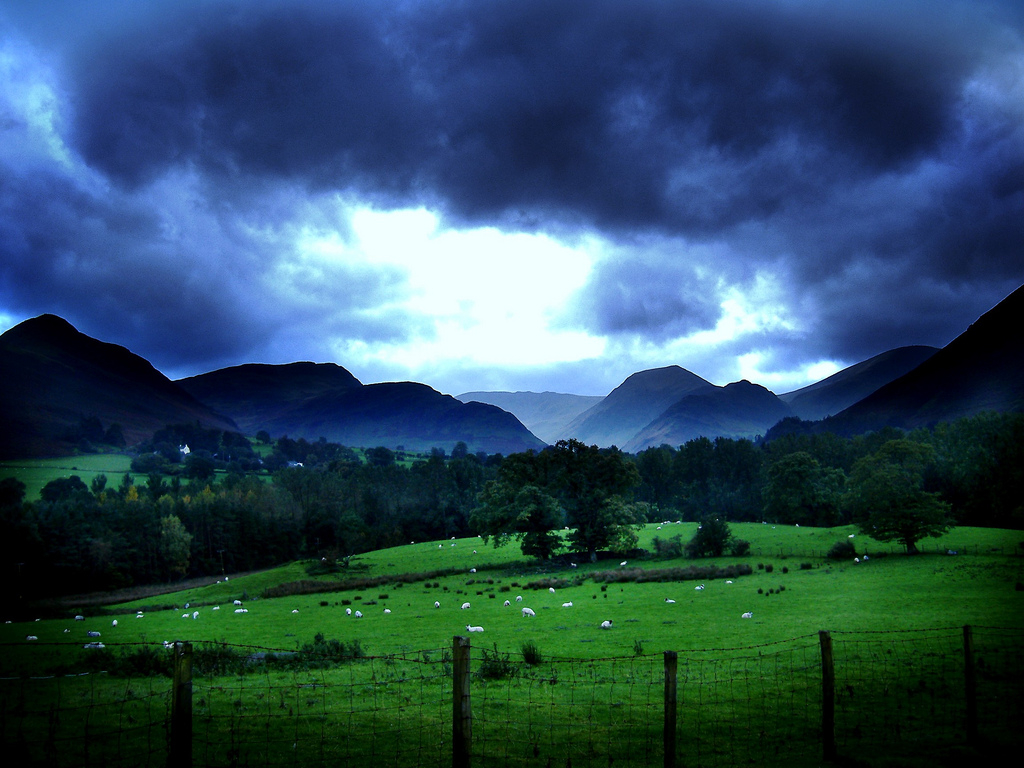
Newlands Valley, Lake District, UK: Dan Slee.

Wordsworth: Creative commons courtesy of the University of Texas Libraries, The University of Texas at Austin.

Yorkshire Dales: Creative commons courtesy of Chantrybee http://www.flickr.com/photos/chantrybee/2911840052/

Flowers: Creative commons courtesy of Vilseskogen http://www.flickr.com/photos/vilseskogen/4182443498/

SOCIAL MEDIA: Your EIGHT step guide to getting started…

This blog post was inspired by #ukgc10’s local government hug session where one person asked for help in how to get started with social media. Some good pieces of advice came out. Here are some from the session and some that struck me afterwards…


THE 8 STEP APPROACH FOR GETTING STARTED….

You’ve read about social media. You may have thought it was a fad. Now you’ve been waking up at 3am with the gnawing thought that you’ll have to do something.

If you’re at this stage. Congratulations. You’re sharp. You’ve seen which way the wind is blowing. And, yes, it’s only going to blow harder.

So what to do?

Here’s some thoughts on how to go about turning your organisation into something fit for the 21st century.

It’s simply not enough to say that you must do it because Steven Fry does it. Or because it’s cool.

You need to construct a cohesive and persuasive argument backed by figures that will work with people who look on digital with the suspicious eye of a Daily Mail reader.


Step 1 – Look at the national picture.

More than 30 million people use social media in the UK, according to the most recent figures. Clicky Media’s figures are a good starting point.

You can compare this to national and local newspaper figures.

Locally, a 20 per cent dip in local papers is predicted by 2012 in weekly papers. In regional daily papers it’s more like 30 per cent.

In short: If you’ve always relied on your local paper to get your message out then think again.

Step 2 – Have a look at the sites.

There are dozens of social media sites.

For the sake of argument, look at six of the most popular sites.

YouTube, Facebook, Twitter and Flickr all do different things. For blogging, WordPress and Blogspot are key.

Don’t worry if it all looks an unclimbable. Rome wasn’t built in a day. Anyway, Microsoft billionaire Bill Gates has only just got round to joining Twitter himself. So, relax.

Join one if you like. See how it works. Get to know it.   

In short: Don’t worry about not getting your head around all of them.
Get your head around them one at a time.

Dive in! That water is great….


Step 3 – See what some inspired people say.

All you need is out there on the internet. The trick is, like anything, knowing where to look. You’ll find it a creative, inspiring and sharing place if you choose to join.

Check Mashable for basic guides to all this stuff. The guide to social media is a must. Follow the link and click download for Learning Pool Twitter guide.

There are some quality blog posts on the subject. Michelle Ide-Smith recently wrote a post that nails how to construct an argument in favour.

Have a look at these blogs for ideas an inspiration:

Nick Booth, Dave Briggs, Sarah Lay, Carl Haggerty.

If you join Twitter – and I’ve learned so much from it I’d seriously recommend it – I’d also recommend these:

@sarahlay – Derbyshire webbie.
@alncl – Alastair Smith, Newcastle web man.
@davebriggs – Local government social media specialist.
@timesjoanna – Former Birmingham Post reporter turned Times writer. Great for links.
@liz_azyan – Lives and breathes local government and social media.

@gecko84 – Teckie Arsenal fan.
@abeeken – Lincolnshire webbie.

@mmmmmmcake – A stream about cake, believe it or not.

@pezholio – Local gov webbie from Staffordshire who is borderline genius. Also likes real ale.

@talkaboutlocal – a window into the amazing world of hyperlocal blogs that can serve a town or even a housing estate.
@wv11 – a hyperlocal blog based in Wednesfield, Wolverhampton. Shows how a local site can use it.
@philipjohn – a website developer who is a useful font of information.
@mashable – the Twitter version of the social media blog.
@doristhecow – Anchor butter’s well judged use of Twitter. I love it.
@scobleiser – Silicon Valley geek who writes about tech news.
@walsallcouncil – Because their use of social media is really, really, really inspired (disclaimer: I help write it).


Step 4 – Create a social media map.

Work out what activity there is in your area. These figures are a clincher so take an afternoon out to build this picture.

Paul Cole and Tim Cooper in Derbyshire did one for their area. They used mindmeister although you could use an exercise book. It’s just as good and you don’t have to re-boot it. It lists all trhe social media activity they could find.

How?

Before you do, I’d find out the circulation figures for newspapers in your area. This is good to compare and contrast. The Walsall edition of the Express & Star, for example has sales of around 22,000.

For Facebook, there are 23 million users as of January 2010. Want to see how many are local to you? Log onto Facebook, then click the button marked ‘advertising’. Fill out an ad. Don’t worry you won’t get charged just yet. It’s then you reach the section that gets really interesting.

Here, you can ask Facebook how many people are registered within a 10 mile radius of a town. This gives some staggering figures. Click the box marked ‘location’ and put in the town you want to aim at.

In Walsall, in January 2010 there are 170,000 people on Facebook within 10 miles of the town. The population of the borough is around 250,000 and the 10 mile radius also spills out into part of Staffordshire, Birmingham and Wolverhampton. But, you get the picture.

There are therefore, around eight times as many Facebook users as buy copies of the Express & Star in the wider Walsall area, you may argue.

For Twitter, it’s harder to work out your area’s figure. Nationally, by November 2009 there are 5.5 million UK users. You’ll have to work out your area’s percentage of the national population, then divide the Twitter users by that percentage.

For YouTube, log on and search for your area or town. You’ll be surprised. Using the keyword ‘Walsall’ gave just less than 5,000 clips.

Same with Flickr. This is a photo sharing website. Count how many images of your patch there are. The Walsall Flickr group of more than 80 members, for example have around 5,000 iamges of their home borough.

WordPress and Blogspot. Search for your areas and they’ll crop up on blogs.


Step 5 – Get your arguments ready

There’s a brilliant few resources online with the most common arguments against social media and the counter arguments to deploy.

They work a treat.

Jeff Bullas’ blog on the subject is useful. So is this from SEO Blog. Google the word ‘reasons to use social media


Step 6 – JFDI Just flipping do it.

Now, if you are particularly brave you can cut to this one skipping step four entirely.

The argument goes like this. Just flipping do it. By the time anyone important notices it’ll have reached critical mass and harder to close down.

It’s not something I’ve done but other far braver people have and with great success. Will Perrin – @willperrin on Twitter – often talks about how he deliberately avoided asking permission to launch Downing Street’s petition site.


Step 7 – Call in an expert.

There’s a good quote about a Prophet never being recognised in his own land.

The translation of this is if you think they won’t listen to you they may listen to someone from outside.

It’s worked on several occasions with local authorities who have called in Nick Booth’s Podnosh company. Dave Briggs and Simon Wakeman from Medway Council have done similar jobs.

However, do be careful of people who call themselves social media experts. Or ninjas. Or any such rot. They’re almost certainly not and there are plenty of snake oil salesmen about right now.


Step 8 – Keep winning the internal argument.

Now you are up and running as nobody will be able to counter such stunning arguments it doesn’t end there. No, sir.

The social media head of one of Britain’s main parties once said that up to half his job is taken up with winning the internal argument.

Report back progress and keep a measure of followers and activity.

Banning social media is rather like trying to outlaw the telephone in the 19th century.

It’s a communications channel. We need to embrace it. Smile. It’s the future. And your children’s.


Pics: Used under a creative commons licence, Amit Gupta (Facebook), Badjonni (swimmers),  Dan Slee (Newlands Valley), Sean Dreilinger (mobiles) and the Little Tea Cup (Dan Slee).

Exit mobile version