GUEST POST: Eurovision in Liverpool: United by music and United by praise 

Eurovision in Liverpool was an astounding success. A welcoming party city hosting a party event was always going to work. Here’s what Liverpool City Council’s director of communications Camilla Mankabady made of it all.

Standing by the banks of the River Mersey, with the sun beating down and the Three Graces enveloped by the azure sky, I was listening to the most sublime sound.  

The English National Opera in full voice as they breathed new life into Eurovision classics from Australia, Austria and Sweden. Alongside them, the ENO Chorus and Orchestra, and in front of them thousands of people wrapped in flags, fancy dress and the largest of smiles. 

It’s an image I could not have imagined, even in the most extreme and exaggerated version of the desired outcomes for my Communications campaign. 

For six months, Communications colleagues from across Liverpool City Council and the city have been planning for Eurovision. We have met, we have discussed, we have written, we have navigated and we have planned. We planned for the worst – that’s what you do as a seasoned Communications professional – and we planned for the best. But no one could have foreseen the reality that was to pass. 

The positivity and warmth of Liverpool became the narrative as many journalists and influencers started to rewrite their own view of the city and its people. Hosting a global event brings with it risks, but when you get it right, it brings with it untold benefits. 

Thousands of people visited our city for the first time; they will be back. Thousands of others saw our city on their social feeds, or on their TV screens, and many of them will be choosing Liverpool as their next mini break destination. Thousands of others were too busy attending the Eurovision shows to see much of the city, they too will be back, to explore our city some more. 
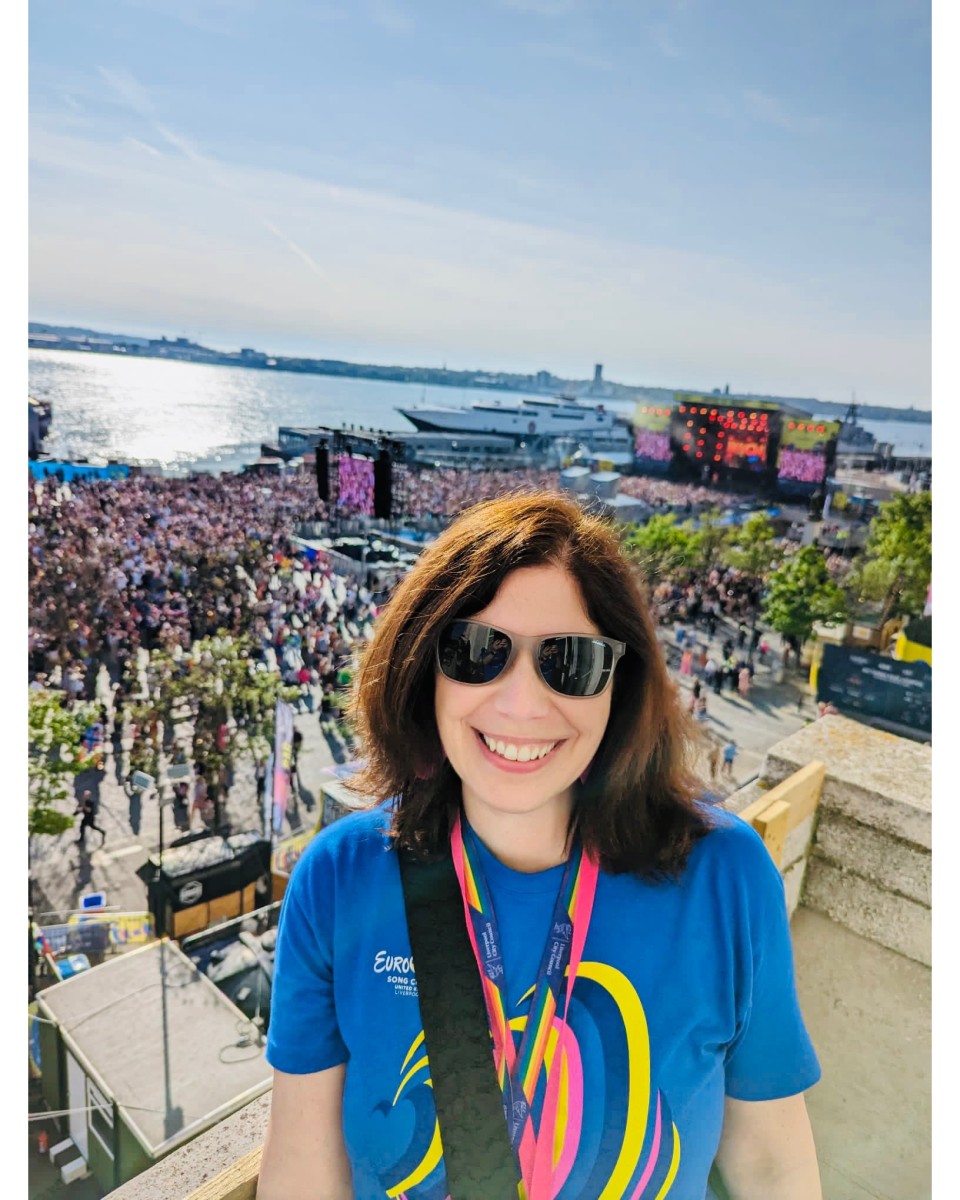
Camilla Mankabady at Eurovision in Liverpool.

Their experiences, their photos and their testimonies are the most effective communications and marketing campaign anyone could have wished for.  There is no commercial price that can be placed on that campaign. 

We’re working hard on our next steps, we want to understand the social, cultural and economic impact of hosting Eurovision in our city. Early indicators reveal that residents are feeling more positive now than before the song contest arrived in our city, that businesses prospered and that our identity as a UNESCO City of music has been deepened. 

Many more Eurovision-inspired events and installations are planned in the coming weeks so that we can build on the positivity we have all experienced. 

But for now, the critics, the visitors and the organisers are united in praise and thanks: ‘Thanks to all of you for an amazing time’, ‘The best production and host city we have ever seen’, ‘Please can Liverpool host every year’ and ’Douze points goes to Liverpool’.

We truly have been United by Music in Liverpool and across the Liverpool City Region.

Camilla Mankabady is director of commuications at Liverpool City Council. 

FUTURE COMMS HELP: Four workshops to help your future comms 

Summer is in the air and I’m nailing down the last workshop dates before people head off on holiday. 

Normally, I’ll blog about research, findings or other things and I can’t remember the last time I just brought together in one place a list of what I do.

I’m very mindful this year that the pace of change in communications and PR has quickened. Most people at the coalface don’t have chance to put in the time to research the important stuff.

I know I’m lucky in having the time to be people’s spare brain to research the data, look at trends and play back the stuff that’s going to work and gently point out the things that no longer is. 

The decline of Twitter really shows that the old certainties have gone and fresh eyes are needed. When I revamped my logo a while back it was suggested I came up with a strapline. I did. Then promptly put it to one side. That strapline is ‘Future comms made easy’ which is what my sincere hope is in offering training. Change is tricky. The future is worrying. Here’s a way to make it easier.

So, workshops.

ESSENTIAL COMMS SKILLS BOOSTER

This is the one that answered the plea for help: ‘If only there was one workshop that covered everything I need to know.’  It covers, comms planning, evaluation, the changing media landscape, how to create content that works, algorithms, WhatsApp for Business, TikTok, Nextdoor, ChatGPT, Facebook groups and dealing with snark.  

What: Five online sessions, four of 60 minutes and one of 90 minutes. 

Next start dates: 

programme #46 23.5.23

Programme #47 22.6.23

Programme #48 18.9.23

You can find out more here.

ESSENTIAL TIKTOK & REELS

This one looks at then language of TikTok and gives practical tips and strategies on approaching TikTok and also vertical video for Reels. These can be shared on Instagram and Facebook. We’ll show you how to shoot and edit, the risks, the benefits and how you can avoid legal pitfalls around GDPR and copyright. I’m joining by TV and filmmaker Julia Higginbottom.

What: Three online practical two hour sessions 

Next start dates:

Programme #8 24.5.23

Programme #9 26.6.23

You can find out more here.

ESSENTIAL VIDEO SKILLS REBOOTED 

This one looks at your video strategy and shows you the things you need to know in 2023. Highly practical, you’ll learn how to plan, shoot edit and post effective short form video. I’m joining by TV and filmmaker Julia Higginbottom.

What: Four online two hour sessions

Next start dates:

Programme #21 22.6.23 SOLD OUT

Programme #22 6.7.23 

Programme #23 22.9.23

You can find out more here

ESSENTIAL MEDIA RELATIONS 

This one looks at how you can better pitch ideas to reporters and to deal with incoming questions. We’ll look at what reporters want and processes with dealing with the trickiest questions to give you confidence. 

What: Three online two hour sessions

Next start dates:

Programme #15 15.5.23 LAST SPACES

Programme #16 18.9.23 

You can find out more here

IN-HOUSE SESSIONS

And yes, I can run the sessions in-house. Drop me a note through the contact form below.

← Back

Thank you for your response. ✨

HANDS, FACE… SPACE?: COVID is over and what did communications learn?


An important historical event happened this week. Did you miss it? 

Last Monday, it was Bank Holiday Monday. There were scenes of crowds and concerts as part of the country celebrated the Coronation of Charles III. 

Elsewhere, covered almost as an afterthought, the World Health Organisation announced the end of the global emergency phase of COVID-19. 

As humans, we look forward. When we look back we tend to remember the good memories not the bad.

What was COVID-19 to you? If you’re lucky, it was one long blur of lockdown, clapping the carers and queuing outside shops that only let three people in at a time.

Yet, if you’re not so lucky it was grieving the death of a loved one, debilitating long COVID and loss. During the pandemic, 20 million people worldwide died and in the UK 200,000 died. That death rate is five times as many who died in the Blitz that wartime marker of British national memory. 

Yet, right at the start of the pandemic, I remember hearing a radio documentary about the Spanish Flu of 1918 that killed 50 million. It’s predictions were clear. Don’t expect people to want to remember. After its over, they won’t look back. In towns and villages across the UK, there are memorials to the First and Second World War dead. There is not a single memorial to the victims of Spanish Flu.

The official end of Spanish Flu was recorded in a short piece on the inside pages of The Times in 1920.The feeling was in 1920 that the whole episode was so traumatic, so painful and so horrific that it hurt to recall it. Family members more often than not died at home in agony. No wonder the survivors looked to the future.

And so, it comes to pass that history repeats itself. For something so recent, the pandemic feels like a million miles away. Did we really have Tier 1 and Tier 2? And what did that mean? Can you remember? I can’t.

What does this mean for communications? 

During the pandemic the weight of responsibility fell on communications teams. There was so much to communicate to so many different people. Lives were at stake. It broke good people. It broke teams, too. Some truly great work was done by communications teams. Overall, the war was won to persuade the country to accept COVID-19 jabs that saved lives.

If there’s any lesson for the profession it’s this. People forget really quickly. People want to revert back to old ways. In communications, that’s the enemy. Now people have had the experience of taking communications seriously, you need to work at that and not let things slip back.

TWEET ZERO: It’s time to scroll away from Twitter

Albert Einstein once wrote that the measure of intelligence was an ability to change.

So, with news Twitter’s global traffic declined by 7.7 per cent in March it may be time to think about changing how you use the platform. 

We all know the red light on the Twitter dashboard is blinking. We all know what the problem with the platform is and it’s dawning that there’s no breakdown mechanics.

Twitter has had a good run. For me, it was my first taste of social media and it was thoroughly intoxicating. It connected me with people who I still count as friends. It made me laugh and it told me up-to-date football scores.

Just lately, it’s not been doing that. The algorithm has changed post-Elon Musk takeover so I’m met with a ‘For You’ page featuring divisive tweets from people I don’t follow on subjects I don’t care about.

That’s fine, Dan, you can say. That’s just you. Personal opinion really shouldn’t dictate what channels your organisation uses.

I can maybe live with the short-sighted petulant sacking of the Twitter communications team and auto sending poop emojis to questions emailed to their email. I can even live with the owner of Twitter insisting his tweets be artificially boosted

Others can’t live with how Twitter is playing out. Some news organisations in the US have halted new posts to Twitter.  

But in social media reviews after a great deal of reflection I’m starting to recommend organisations pare back on their use of Twitter. I’m suggesting keeping it as a crisis comms or emergency comms channel and to keep it ticking over with corporate messages.

Why? Well, for one I’m not convinced Twitter is a safer space anymore. There’s been a growing background noise of antagonism for a while. Stephen Fry who periodically quit Twitter left for good in late 2022.     

But it’s more than that. The BBC Panorama documentary concluded that Twitter insiders admitted that they can’t keep people safe from trolling anymore. If its not a safe space then why would anyone send their staff there? 

Then there’s the disinformation and misinformation and news that Twitter was no longer policing Chinese and Russian bots.  If that’s the case, there’s no way on your own you can take on vast armies of state-sponsored liars. 

Then there’s Twitter taking off the blue tick unless you pay for it. I’ve blogged about this here (TLDR: I’d pay for Facebook but not for Twitter). 

Is the answer Mastodon? No, I don’t believe it is. Platforms like Mastodon are pitched as Twitter alternatives but I don’t believe that or other platforms are part of a like-for-like audience swap just yet. 

There is already a fully formed eco-system of social media platforms that are well servicing audiences. The trend is firmly towards using a platform to reach a demographic rather than reach a universal audience. The sooner we realise this the better.

But should you carry on with Twitter?

The fact that you have a big number of followers listed in your Twitter bio isn’t a reason to carry on when audience is falling. Thanks to it being embraced by politicians and journalists Twitter has long had an influence that greatly exceeds its reach. 

But like any fading platform, it will happen slowly and in increments. The failure of Friends Reunited taught us that

It’s better to act when there’s warning signs and for Twitter the red dashboard light is flashing. 

I’ve blogged before on how to run a social media review. It’s time to start one if you haven’t already.

BALLOT TOX: In praise of a council smashing the election TikToks

A quick shout for West Suffolk Council, ladies and gentlemen, who are doing great work with TikTok.

While others dither the team here are doing great work with the platform with a series of videos to communicate the need to register to vote, voter ID, postal vote deadlines and a whole lot of other stuff.

On the face of it, electoral rolls are pretty dry. The team at West Suffolk have made it anything but.

Absolutely, this is a work in progress. The local government elections haven’t happened yet and there is work to be done. But as a concept their series of videos is a great way to tackle the issue.

TikTok is not one-and-done. It’s not make one video and you’ve magically communicated with everyone. It can take time and a list of content. It’s also using the trends available and repurposing the language of the platform.

Do you speak TikTok? West Suffolk do

Here’s a flavour…

VIDEO: How I expect everyone to react when I’ve registered to vote and applied for a voter authority certificate.

VIDEO: POV: You forgot to register to vote and all your friends are at the polling station having their say without you when all it would have taken was five minutes and your National Insurance number.

VIDEO: Do I need to have photo ID to vote by post?

VIDEO: Will you be my proxy?

VIDEO: The comms team waiting to see the influx of newly registered voters after all their incredible election TikToks.

I’ve linked rather than embedded because TikTok and WordPress don’t play that nicely together.

Now, I expect two reactions on watching these. The first, if you’re not used to TikTok is confusion and fear that these are too informal. If that’s you, that’s fine. But you’re probably not the audience.

If you are used to TikTok you’ll appreciate their use of the platform.

It all serves to illustrate a point I consistently make in training. Make content for the individual platform not to stuff on every available platform.

Great work.

GUEST POST: Lights, camera action: North Somerset Council and film locations

Granting permission can be an income generator for a council as well as an economic lever that can boost the economy. Lucy Harris and Gerard Gineika show how it helped generate £500,000 for the economy of North Somerset and helped create TV gold.

North Somerset’s landmarks and scenery have long been used as locations for some of the nation’s best loved films and TV shows.

Recent examples include the HBO/BBC British comedy-drama series ‘Rain Dogs’, primetime BBC One hit starring Christopher Walken and Stephen Merchant ‘The Outlaws’, ‘Broadchurch’ (ITV) and ‘Sandylands’ (Gold). North Somerset Council is also currently working with Disney+.

Before 2020, the council’s corporate communications team handled all filming requests, regardless of whether commercial or news. Commercial filming requests were moved into the council’s economy team as they were seen a potential form of inward investment and visitor economy. Indeed, filming generated over £500,000 in value to the North Somerset economy in 2021-22.

Having seen the economic benefits that filming can bring into the area, North Somerset Council officially launched a registered film office and accompanying dedicated website last summer.

This saw North Somerset Film Office signing up to the Filming in England Partnership. Created by Creative England, the partnership connects organisations ranging from local authorities and studios to national organisations such as British Film Commission, National Trust and English Heritage to make sure that England has the most film friendly environment possible.

The council launched a dedicated new website (www.nsfilmoffice.co.uk) where production companies can find everything they need to know, including a list of published fees, and can apply to film.

Residents and businesses can also use the website to register their properties as potential filming locations. It can be financially rewarding too – if your location is used, you can earn up to £1,000 a day!

North Somerset Film Office believes that production companies are attracted by the strong infrastructure, diversity of locations, fair production costs and the positive filming experience. Over 100 filming shoots take place each year in locations across the area from Abbots Pool and Portishead to Clevedon, the Mendips and Weston-super-Mare.

Charlotte Wood, Production Liaison Manager (South West) at Creative England, said: “Creative England’s production services team works closely with Film Offices across the English regions to facilitate the filming needs of feature film and high-end TV drama productions.

“The UK Film and TV industry is booming and the South West region has a lot to offer to industry. North Somerset is within close proximity to the main production hubs and provides a fantastic addition of on location filming options, including coastal landscapes, rural villages and seaside towns.

“The amount of filming that takes place in the area is testament to the film-friendly attitude of the North Somerset Film Office in welcoming production and providing a professional and efficient service to industry.”

It’s important to remember that the film office provides a statutory service. As such, the North Somerset Film Office:

  • Has a duty to authorise film permits for any commercial filming that takes place at council-owned or managed buildings (for example its offices, libraries and children’s centres) as well as in public spaces (for example in parks, on seafronts and on public roads).
  • Checks that production locations/times do not clash with any other filming, events or planned works (for example roadworks on public highways).
  • Grants film permits only once satisfied that:
  • the production company has the necessary permission granted by relevant departments, and 
  • their work will be carried out in a safe way and adheres to legal requirements. This includes obtaining details of Public Liability Insurance, risk assessments and Civil Aviation Authority (CAA) drone licenses.

North Somerset Council has seen an increase in the use of drones, or Unmanned Aerial Vehicles (UAV), for filming in recent years. A copy of its procedure, first published in March 2021, is available on its film office website. It doesn’t grant permission to hobbyists to take off or land on council owned land or property.

Reactive media enquiries – including broadcast TV and filming requests for news –are still handled by the council’s corporate communications team (communications@n-somerset.gov.uk).

Lucy Harris is Marketing and Communications Officer (Communications Team) and Gerard Gineika is Business Engagement Apprentice (Economy Team) at North Somerset Council.

TWEET DOWN: If Twitter is embedded on your website you may want to check it

Quick shout if you’ve got a Twitter feed embedded on your website… you may want to check it.

Twitter has changed free access to its API which is the way the platform communicates with web tools.

One result is that websites that have an embedded Twitter stream may see it not working.

Big thank you to NHS communicator and weekly email subscriber Dan Love for spotting this and the link that explains what the impact is.

For example, apps and websites that used Twitter’s API to enable sharing of content to and from Twitter are now seeing that functionality break. WordPress reported Tuesday that it was no longer able to access the API, rendering its websites unable to automatically share posts to Twitter.

Engaget.com

As an overall point, Twitter are making it really hard for the public sector to use the platform. One BBC documentary ended with the conclusion that it can no longer protect users from trolling.

FRESH THINKING: With trust low maybe it’s better to take the barber route 

A report every public sector communicator needs to be aware of has been published and the findings are grim.

According to the UK in the World Values Survey, the UK is suffering from a collapse in trust in the public institutions of Government and media. Not just a small fall but a whopping great big one. 

If you live in the UK, regardless of how you vote you can probably reel off a list of reasons as to why this is. But as a public sector community the reality of this feels important to look in the face.

Let’s look at the data. Firstly, this is a piece of academic rigour. This comes from Kings College London’s Policy Institute. Part think tank, part consultancy this operates in the field of public policy.

The numbers in the report are bleak and can be read in full here.

As a summary: 

Confidence in Parliament has halved in the past 30-years while confidence in the EU since Brexit has increased.

  • Trust in Government is 24 per cent
  • Trust in political parties is at 23 per cent.
  • Trust in the EU in the UK is around 40 per cent which is double the position of 2009. 
  • Trust in police has fallen to 67 per cent from 81 per cent three decades ago.
  • Trust in the press lies at 14 per cent.
  • Trust in institutions is even lower in Northern Ireland with just 10 per cent trusting political parties. 

All this compares unfavourably to other countries with the UK’s residents on 18th in a league table of 24 in trust in government.

So what does this mean for communicators? 

For me, it means that public sector communicators have a harder task to communicate with people. Police and central government can take lots from this. Local government and NHS can’t shrug off what is a deep seated malaise. 

It means that corporate communications through corporate communications channels may not be the way to go. If something lands in your inbox from government it’s a harder hill to climb.

So, what’s to be done?

Robert Phillips, the late author of ‘Trust Me PR is Dead’, was asked by a burger chain to make a pitch for rebuilding reputation work after an undercover journalist found traces of manure in their burgers.

“You’ll be pleased to know this is very simple,” he told the room. “Stop putting crap in your burgers.” Then he sat down.

It’s not the job of comms to rebuild trust. It’s the job of the institution as the Metropolitan Police are finding out.  

Besides this. I can’t help but think the key to part of this is in another piece of research. The Ipsos Mori Veracity index looks at who the most trusted professions are in the UK. You’ll not be surprised to learn that the most recent set of figures show politicians generally bottom of the league table with 13 per cent trusting them. 

Look up the league table there is nurses on top trusted by 89 per cent, museum curators on 81 per cent and doctors on 85 per cent. Even the public is on 57 per cent a trust rate that institutions can only dream about.   

Once when I was training and I showed these figures someone said that their campaign to reach Afro Caribbean young men had failed using traditional routes. So, they used barbers instead because they see them every few weeks. 

Maybe, the answer is also to take the Afro Caribbean barber route a bit more.   

DATA & INSIGHT: The one public sector TikTok blog you’ll need in 2023

TikTok is a fascinating platform and is now a genuine contender for the most important channel you can use.

But what are the numbers? Who is using it? Isn’t the public sector banned from it?

In this post I’ll look to tackle those questions which are ones I often get asked.

How many TikTok users are there in the UK in 2023?

Fresh Ofcom data has put TikTok right at the heart of the social media landscape in the UK in surprising ways. 

It has moved from the fringe to become central to the social media landscape. The demographics are vital. A majority of under 35s use it and heading for a majority of under 44-year-olds.

16 to 24-year-olds 75 per cent use TikTok

25 to 34-year-olds 63 per cent use TikTok

35 to 44-year-olds 44 per cent use TikTok

45 to 54-year-olds 32 per cent use TikTok

55 to 64-year-olds 19 per cent use TikTok

65+ 5 per cent use use TikTok

Can you use TikTok when the UK Government have banned it from their devices? 

UK Government has banned the use of TikTok on UK Government phones. Does that mean they can’t use it? No. Grant Shapps says he’ll still use it as his TikTok is on a phone that his government emails aren’t on.  

You work in the public sector. Does that mean that you can’t use it? No.

What are good public sector TikTok accounts?

  1. South Yorkshire Fire & Rescue. With 150,000 followers they use trends as a starting point and weave in the messages they need about recruitment, fire safety and youth engagement. 
  2. Sandwell & West Birmingham NHS Trust. With 35,000 followers they are making a name for health advice aimed at young people. This shows you don’t have to follow the trends.
  3. Charlotte Maidment. An occupational therapist who uses TikTok in a private capacity where she talks about her husband’s struggles with depression and what that’s like for her. More influencer than corporate account. 
  4. Mayor of London. Sadiq Khan’s office which comments on news and makes announcements. A good corporate account with a human face.
  5. Doncaster Council. Strong local government content. 
  6. English Heritage. A charity with a strong heritage ethos that museums services can learn from.
  7. Dr Karan Raj. An NHS doctor who talks about medical things in an engaging way.
  8. Dr Julie Smith. A clinical psychologist for the NHS who creates teenager-friendly content. 
  9. Museumgirlemily. An American woman who works in a museum and talks about her job. 
  10. Palmerston North City Council. A really good New Zealand council that delivers messages as upright videos that work well on TikTok.

I help deliver training to help PR and comms people like you to make TikTok and Reels video. Have a look to see how I can help you too.

TWEET LIST: Here’s Twitter’s algorithm

There’s been no denying there has been changes at Twitter since Elon Musk took over.

This week, Twitter’s changes to reward subscribers come into effect. Where once the platform was a democratic real-time platform you could speak to famous people directly its morphed into something else.

I’ve blogged here on whether or not its worth paying for better access. But in the meantime here’s excerpts from a thread that analyses what algorithm now looks like.

There you go.

Act accordingly.

Exit mobile version