Who you feature in your content can have a MASSIVE impact on whether or not it will be a success.
We know this instinctively yet we pay very little attention to this in the actual delivery.
Often this is because of a long established framework that governs content and that has never been challenged. In local government when I workled there it was a) quote the cabinet member and b) quote the officer when the cabinet member isn’t around or doesn’t want to.
The impact of this is to have someone wholly unsuited fronting your communications.
I do remember listening to the local radio phone-in hearing an officer with the charisma of mud massacre what was a council reasonable position.
We trust ‘someone like me’ far more than the chief exec, government leaders or journalists
The screen shot from the Edelman Trust Barometer UK version shows 73 per cent trust scientists, 71 per cent someone like me, 59 per cent the company technical expert, 45 per cent non-hovernmental organisation representatives, 33 per cet the chief exec and government leaders and 31 per cent journalists.
In other words, we trust people who look like us.
So, if you are looking to reach new parents, use a new parent. If you are after members of the Polish community use a Pole.
UK Government has released a hugely document that sets a path for comms teams and others to use AI safely.
The Generative AI Framework for HM Government is 74-pages and published by the Central Digital and Central Data Office. It sets out exactly how you can and can’t use generative AI. On other words, tools like ChatGPT that create text, audio, video and images.
What’s also striking is that there is a commitment to update the document as our collective understanding changes and evolves. That’s really good to see so it won’t stay preserved in aspic.
Here’s what they say.
The 10 principles of ten common principles to guide the safe, responsible and effective use of generative AI in government organisations
Principle 1: You know what generative AI is and what its limitations are
This encourages people to learn about AI to understand what you can do, can’t do and what the risks are. Generative tools are not accurate but are designed to be plausible.
Principle 2: You use generative AI lawfully, ethically and responsibly
This puts a responsibility on you to act within the law whether that be copyright, data protection. It also makes the point about AI not replacing strategic decision making.
The principle also should also use the AI regulation white paper’s fairness principle which states that AI systems should not undermine the legal rights of individuals and organisations. And that they should not discriminate against individuals or create unfair market outcomes.
Principle: Fairness
Definition and explanation
AI systems should not undermine the legal rights of individuals or organisations, discriminate unfairly against individuals or create unfair market outcomes. Actors involved in all stages of the AI life cycle should consider definitions of fairness that are appropriate to a system’s use, outcomes and the application of relevant law.
Fairness is a concept embedded across many areas of law and regulation, including equality and human rights, data protection, consumer and competition law, public and common law, and rules protecting vulnerable people.
Regulators may need to develop and publish descriptions and illustrations of fairness that apply to AI systems within their regulatory domain, and develop guidance that takes into account relevant law, regulation, technical standards, and assurance techniques.
Regulators will need to ensure that AI systems in their domain are designed, deployed and used considering such descriptions of fairness. Where concepts of fairness are relevant in a broad range of intersecting regulatory domains, we anticipate that developing joint guidance will be a priority for regulators.
Principle 3: You know how to keep generative AI tools secure
This talks about the importance of allowing AI tools to use the data you want it to and not give it free reign across areas where sensitive personal data is stored. This recommends checks to guard against malicious intent and are not leaking data.
Principle 4: You have meaningful human control at the right stage
This talks about the need for humans in the process. Someone i needed to review the outputs to make sure they are producing as well as the tools and data that were fed into it in the first place.
Principle 5: You understand how to manage the full generative AI lifecycle
This looks at the importance of knowing what a number of terms are. Such as AI drift. This is the term that describes a loss in focus of the tool and deviation from the original purpose. It also covers hallucinations where fake newspaper stories or academic research, for example, can be conjured up to prove a point or argument.
Principle 6: You use the right tool for the job
This looks at the importance of selecting the right tool for the job. It encourages the use of generative AI when it is the best place tool. In order to do this it implicitly encourages the user learn and experiment in safe spaces. How else would you know what the best tool is if you don’t know how to use them?
Principle 7: You are open and collaborative
This encourages people to work with other parts of Government who are experimenting in the field.
Principle 8: You work with commercial colleagues from the start
This encourages working with people outside of Government to understand the limitations of generative AI tools. It shouldn’t just be people in Government playing into that decision making.
Principle 9: You have the skills and expertise that you need to build and use generative AI
Using generative AI needs skills like the ability to ask a question – also known as a prompt. Prompt engineering – or polishing the questions asked is one such skill that’s needed.
Principle 10: You use these principles alongside your organisation’s policies and have the right assurance in place
There needs to be governance of the AI process. You need to understand the risks and mitigate them early in the process.
Conclusion
UK Government has been keen to develop the UK as a place where AI innovation takes place. This document is a useful tool for it to be used responsibly and in a way that people inside and outside the organisation can be reassured by.
The 10 principles are available as an anchor point for responsible AI use.
You can use them in the rest of the public sector but you’ll probably have to explain them. But what you can do is point to a trusted organisation as the basis for what you are doing.
Of course, if you’re not in the UK you’ll have to look at your own home government’s approach.
Trust is the absolute issue when it comes to adopting AI. There is suspicion of AI in the wider population and using tools that people don’t understand with no safeguards in place is not only reckless it is also career limiting.
One dilemma does face me. People in the comms and PR community are not especially keen on AI. There is not the space and capacity for people to learn. There are no Google Fridays that allow self discovery and experimentation. With that in mind, learning under your own steam is to be encouraged no matter how difficult.
People of all ages are now turning to the web for what’s going on in the area they live in, research has revealed.
Overall, 89 per cent are using the web to find out what’s going on in their area.
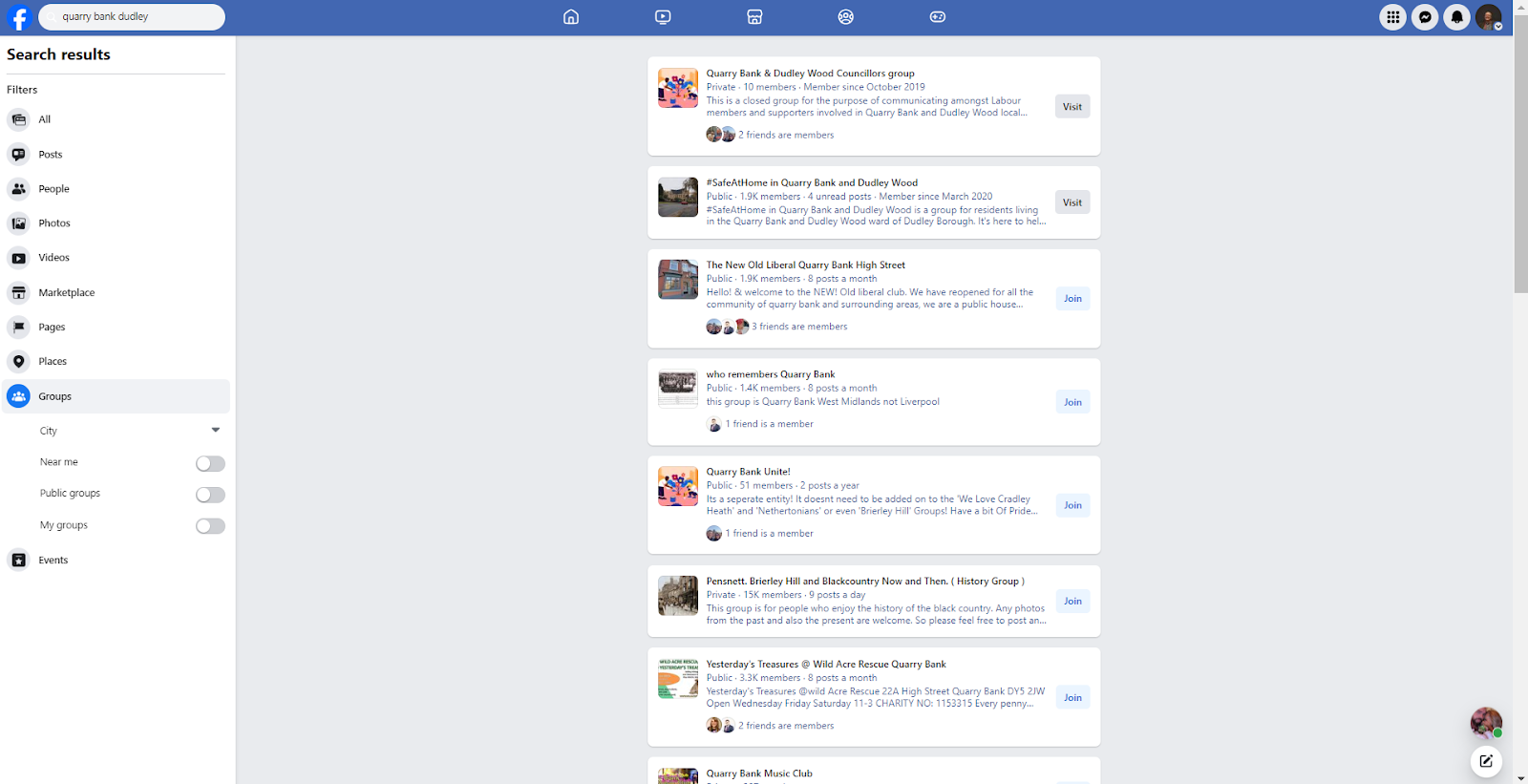
Facebook groups are the leading place for local government information on bin opening times, gritting, events and the other 1,200 services that local government offered in the Ofcom local news and information data release.
The lovely people at Ofcom have released 36,000 lines of data in their local news and information release. For public sector communicators who deal with a local area this is solid gold.
The good news is that nine out of 10 for all age demographics are interested in some kind of local news and information.
Times change
Back when I was a lad, it was maybe the local paper or word of mouth where you’d find out what was happening locally. Those days have gone. Where people get information is now a far more complex picture.
For public sector communicators, all this represents a mountain to climb. The good news is that the data can provide a route map up the north face. The Ofcom data provides a route to climb.
Sources of local news and information
First off, there’s a pile of useful data that maps the channels that each demographic uses.
What’s clear is that newspapers are losing the battle for local attention for local news even among older people. Print is declining out as a source of local news with around a fifth using that as a way to find things out.
Newspaper websites are marginally better and peak at 40 per cent with 45 to 54-year-olds.
Online is the preferred source for all demographics – even over 75s.
Sources of local information by age demographic and percentage
Channel
16-24
25-34
35-44
45-54
55-64
65-74
75+
Any online source
93
94
95
93
90
81
71
Social media
63
63
59
56
56
41
27
Print newspapers
17
18
19
22
25
27
21
Websites and apps of local newspapers
26
33
33
40
32
29
30
Messaging apps (WhatsApp, NextDoor)
14
19
23
21
26
28
28
Local magazines
10
9
12
12
15
26
34
Where people get local government data
In short, under 24s head to the BBC website for their local info with 36 per cent favouring this route and 21 per cent using search.
But it is local social media groups such as Facebook groups that dominates for 25 to 64-year-olds as the most important place to find local government info. Search plays a secondary role with TV being the local news source for over 65s.
Sources of local government information by age demographic and percentage
Channel
16-24
25-34
35-44
45-54
55-64
65-74
75+
Any radio
5
5
8
9
2
21
17
Local Facebook groups and other social media
19
50
23
26
32
26
13
BBC website
36
28
14
20
6
12
6
Search
21
23
9
18
15
14
15
Websites of newspapers
10
21
23
14
13
12
11
Messaging apps such as WhatsApp and Nextdoor
2
4
18
9
10
14
27
Email newsletters
6
3
8
11
12
16
21
Reach plc websites
8
13
3
8
1
5
4
TV
14
13
13
11
26
27
40
Free newspaper (printed)
5
1
3
9
8
9
10
Paid for newspaper (printed)
2
2
5
3
15
7
14
Eleswhere in the data there’s other useful insight.
What local news and information people are interested in
Of course the kind of things people will go for is going to be motivated by how old they are. I think we all instinctively know this without having see any data. Older people are more connected with their communities. Younger people less so. But they may want to know what they can do in the local area.
Younger people are least bothered by current affairs in theikr local area but the rate – 49 per cent – is maybe higher than I would have guessed. They are also more likely on 63 per cent to use social media to find it out.
Over 35 and two thirds are interested in local current affairs.
Interest in local news and information by age demographic and percentage
Channel
16-24
25-34
35-44
45-54
55-64
65-75
75+
Uses any online source
93
94
95
93
90
81
71
Local news and current affairs
49
56
65
67
73
72
74
Local events and what’s on
32
37
39
45
50
50
53
Local government info
20
38
32
38
41
43
53
Local life and community stories (history and nature)
17
22
22
28
34
28
41
Campaigns (crime, health, local issues)
16
21
20
18
25
22
26
I’m not aware of Ofcom producing local news data before. This is excellent to see. Often, data sets when dealing with news focus only on the national media which has limited value to many public sector people outside Whitehall.
Now to update training slides with this snapshot and other pearls.
It’s been 10 years since I went freelance and my aim wherever I’m working is always to do myself out of a job.
I’ve failed at this. Or I’ve succeeded depending on how you look at it.
Let me explain. My aim when working with people is to pass on knowledge and advice and to fire their imagination get them thinking. I want them to do their job much better, to win awards and to get on in their career. I don’t want to do their job. See? That’s what I mean about working to do myself out of a job.
Over Christmas and New Year, looking back not just on the last 10 years but further I’ve reflected that I’ve always been fascinated by story telling.
When I was a reporter in the Black Country, I was fascinated at how I could use my skills to unearth a story. How a chat with a contact could throw new light or a trawl through an agenda could find a front page. When I moved to local government, I was fascinated at how the internet could transform the stories I was trying to tell. As a freelancer I continue to be intoxicated at how people can use those ingredients to tell stories that make a material difference.
I have a strapline on my logo ‘Future comms made easy’. I probably should do more with that. I spend a lot of time trying to understand communications, what’s changing and what’s evolving so you don’t have to.
One incident sticks in my mind from the past 10 years. I was being sent a £50 Amazon voucher from someone who had been on a workshop. “Thanks so much,” the message read. “I wouldn’t have got that promotion without what I learned in your workshop.” I couldn’t have been happier. I love seeing a bit of teaching that’s taken root that’s really made a difference. The credit is entirely with them.
It hasn’t all been plain sailing in that time. One direction I believed in early in that decade came to a stressful end. Better ones emerged. I read once how freelancers work 70 hours a week for themselves so they don’t have to work 38 hours for someone else. How true.
Since 2013, I’ve worked with 1,052 organisations from very large ones to the very small. Eighty per cent of those I’ve worked with have been in the public sector. Every single one has been faced with the same challenge. In short, communications has been evolving fast but the rest of the organisation doesn’t realise.
In that time I’ve worked closely with or trained people from:
293 local government organisations
211 NHS Trusts
175 private sector organisations
74 third sector organisations
73 central and devolved government organisations
62 housing bodies
40 further education colleges
37 membership organisations
26 police forces
25 Universities
24 fire and rescue services
9 national parks
3 EU organisations
That also works out at 5,675 people I’ve trained in some way. If you’ve come to one of my sessions or if you’ve brought me in to help a very sincere ‘thank you’.
Thank you also to Elaine who has looked after my invoices diligently and workshop delivery colleagues Steven, Sophie, Julia, Ben, Sarah and David. Thank you to David and Sarah for making the Public Sector Comms Headspace Facebook group fly. Thank you also to Nick for inspiration in the early days. Thank you to everyone who has volunteered to make 12 commscamps fly including Kate, Anne, Bridget, David, Emma, Josephine, Kate, Leanne, Sweyn, Eddie, Albert and Lucy.
By way of thanks I’m giving away gratis 10 free training places to subscribers on my email. If you’re already on the email, thank you. If you’re not, now is the time to sign-up for it here by January 19. I’ll select names at randdom from my subscriber list.
As one year ends and another begins it is a good chance to pause and reflect.
How was your 2023?
How do you think your 2024 will be?
To help you, I’ve blogged a list of predictions for where public sector communications is headed. If I could sum up the year ahead in a sentence it would be this:
The old world is vanishing and if you hurry you can prepare for the new one.
But first, a look at last year’s predictions. I got 13 out of 16 right. Or 81.2 per cent.
What I got right from last year’s predictions
Turbulence with channels did accelerate – Twitter became X. Threads became Twitter. Facebook’s page plus link strategy collapsed, YouTube became the biggest channel in the UK and TikTok surged.
Permacrisis – That did too. Strikes in the NHS, Westminster turbulence and a quarter of local government in England, Wales and Scotland on the verge of bankruptcy and no sitting government in Northern Ireland.
More organisations did fall over – Nottingham, Birmingham and Woking councils went bankrupt with warnings more will follow.
Social media did ease away from the town square – The newly launched WhatsApp Channels was a one way broadcast. Instagram Broadcasts was literally that. New tools were given to Facebook groups and Facebook page post with a link reach collapsed. Goodbye town square and hello walled gardens.
Email lists did become more important. – Email lists which are not beholden to the whims of Elon Musk or algorithm changes.
The hegemony of Twitter, Facebook and YouTube did end.
The drift of staff to the private sector did increase.
Burn out has become institutionalised.
There was a two speed AI learning curve. Some are innovating and others haven’t even started.
TikTok did become mainstream. More organisations started using it.
Mastodon didn’t become a Twitter rival.
LinkedIn became helpful daily. From a professional perspective it’s where the conversations are.
Working with creators did become more important.
Here’s what I didn’t get right
SEO is back, baby. I’m not sure if it was.
Viva the generalist. I’m not sure if that did happen. Given the rise of AI a team with specialists just now seems the way to go. Have corse skills but learn a niche is what I’d do if I was in a team.
TikTok the end of organic reach. That didn’t happen, yet.
Predictions for 2024
Without retrenching social media there will be a ghetto of underperforming organisations with time intensive social media that doesn’t work. Teams will feel run ragged but they won’t be achieving. We are no longer in 2012. Everything needs to be re-thought.
X, formerly Twitter, won’t fall over it’ll just get less relevant. The platform is, as my daughter may say, a messy bitch that loves drama. While the noises it makes will influence the national news cycle it will continue to wither as an effective public sector channel. It won’t go away even if it becomes bankrupt. MySpace can still be found on the web even though its long since stopped being useful.
Subscriptions will be a key plank. Subscriptions for pro social media accounts will become more necessary to make accounts work anywhere near as well as they have in the past.
Fascism will become part of normal conversation. Bearing in mind what’s happening to X, formerly Twitter, the Overton window which marks what’s the norm will move globally to include overt fascism from mainstream parties. This will be unavoidable in America with a sidewash for the UK. How an individual and a profession responds to this will depend on their ethics.
Communicating bankruptcy and more cuts. This will become an important part of swathes of the public sector as more councils go bankrupt and NHS Trusts and government departments face cuts regardless of political party.
The most effective comms will be done by teams operating outside of social media management tools. While the ability to schedule and have graphs produced is attractive the pace of innovation and new tools added means there is already a welter of new tools and practices that exist outside of established social media management. These include adding a Facebook page link as a comment, engaging with Facebook groups and WhatsApp Channels. Teams that perform best will innovate using the platforms natively.
Election turbulence and the need to be politically restricted. In the UK, the public sector needs to closely read and carefully understand election law as a General Election looms. If you are elsewhere in the world there’s a fair chance you’ll have an election too. Voter ID had an uneasy start in England’s local elections but will be introduced in Westminster elections for Scotland and Wales. Unprepared teams will sink.
Teams need to spot and deal with misinformation and disinformation created by AI. Fake audio will be chief amongst this. How would you respond?
Messaging apps become more important with WhatsApp Channels leading the charge. There will be experimentation with WhatsApp.
No, there won’t be a Twitter replacement. Threads will build slowly. No, it won’t be the new Twitter. Yes, with the heft of owners Meta it will eventually become a significant player but this will take time. Not in 2024 it won’t. BlueSky and others will stay servicing a niche.
Teams that don’t accept the link is dead will struggle to provide effective comms. As we saw towards the end of 2023, Facebook page posts with a link are reaching 0.0 per cent of people. What Meta do today is what others do tomorrow. Indeed, other platforms are already doing it.
Teams that don’t educate the client will struggle to provide effective comms. Not a new thing but given accelerating changes in 2024 will prove fatal for some teams who have drifted into being unintentionally obsolete. Bring your organisation with you on how you communicate in 2024.
Facebook pages will be Reels, Facebook groups and ads… not organic content. In late 2023 half of time spent on Facebook was Reels. It is the safest prediction to say this trend will continue but for the public sector tapping into sharing into Facebook groups will also be the way they can cut through even more than ever.
For UK Fire and Rescue comms, there is a once in a generation opportunity to shape the future. The Home Office white paper on fire and rescue has moved fire from becoming a bizarre sub-set of police governance to re-establishing it as its own discipline with a College of Fire. Comms has a chance to play a central part in that.
For Police comms the Nicola Bulley case showed how TikTok detectives can make an investigation harder. The need to get up to speed with this, monitor, challenge and debunk in real time will be increasingly important.
The new direction of public sector social media will be defined by a cataclysmic event in 2024. In 2011, riots saw Twitter emerge as a key channel for the public sector. In 2024 a significant news effect will signpost the direction needed for the coming years.
Local news will continue to move from mass consumption and print to become a niche vanishing product. The example in the north of England are city-based email-first subscription platforms dealing with local news with low reader numbers. Print will continue to wither and what the heck, let’s say one local news group will end print entirely.
The wider internet as we know it will begin the process in earnest of drowning under a lorry load of AI-created sludge. Media companies and others in 2024 will jump for the AI creation escalator to make more noise to cut through.
Two speed AI adoption will continue. If we thought early social media adoption was two speed that’s nothing to teams who take the AI route and those who don’t. Content creation by volume can be increased by it but trust remains an issue.
Find your AI advocate in your team and let them read, discover and experiment. Never since the early days of social media has the need for an individual to use their own time to experiment and get to know AI in 2024. This investment of time for an individual will reap them medium and long term career dividends. Social media grew because there was one risk taker in the comms team. That needs to be the case with AI in 2024.
Build a network of AI knowledge. If there’s one person in a team be that person. If you are then connect with others. LinkedIn is useful for this. So is the CIPR AI in PR group.
Comms needs to shape their organisation’s AI guidelines. Using AI will happen but being the public sector it’ll need to have some parameters. The UK Government’s work on this will be critical in setting the pace.
Human comms and storytelling will cut through. As more content has an AI flavour what will have greater value is a trusted channel with recognisable humans at the centre.
Some earth shattering data was quietly posted by Facebook which confirms what many had been experiencing.
Facebook has now choked off entirely organic Facebook page content with a link. Exactly 0.0 per cent of people’s timelines are Facebook page posts with a link.
The table shows that posting to Facebook with a link in the post itself is practically pointless.
This has been the cornerstone of content strategy for more than a decade for many people. It needs re-thinking.
There is an argument that these figures are US. Facebook don’t release a similar breakdown for the UK and the broad trend won’t be a million miles away.
So, with that in mind, here’s some ideas to navigate away from the post and link tactic.
Facebook ads
If something is important then is it worth £100 to communicate it?
Sometimes, this is a yes and sometimes a no. If there’s a value in getting people to sign-up or do that call to action then Facebook ads need to be part of your strategy.
Better organic content
Do better with what you post.
Good organic content is video then its pictures then its text. It’s also most importantly of interest to the audience.
Tell the story on the page
That thing you want people to know, tell it on the page. This is no longer about driving traffic to your website. Facebook wants its audience to stay. It doesn’t want them to go to a website. That’s basic commercial sense.
Put the link in the comments or create an event
If you absolutely have to add a link add it to the comments or if you’ve got tickets to shift add the link to a Facebook event. Here. Facebook actually gives you leeway to add a link where people can sort a ticket. Use it.
Maybe Facebook is not the channel
There’s no reason why it has to be Facebook if the route no longer works. Maybe its an email list, TikTok, Instagram, a poster or a piece of print. Think about other routes.
It’s always good to see what works and what doesn’t.
Consistently, when I’m looking at content for a social media review the worst performing content has been generic campaign content shared by a tool kit.
If you work in comms you’ll know a toolkit is a pre-designed piece of content that may include a leaflet, a header image and social media content. The idea is great. It’s the centre recognising regions are hard pressed and could do with something on a plate. I can also imagine earnest conversations about ‘brand consistency’.
But here’s the truth. Tool kit content is failing. It ticks a box. It is it’s own metric but the audience doesn’t connect with it. They much prefer content with local voices.
“We’ve issued a toolkit to 100 organisations as part of the campaign,” the Teams call runs.
Everyone nods.
“The greatest danger about communication,” George Bernard Shaw once said “is the illusion that it’s taken place.”
He could have been talking about a whole host of national campaigns you’ve stepped over in the last few years.
But the danger isn’t just that communication hasn’t taken place it’s also if you’re posting to social media that you’re irritating your audience and harming your future reach. This is not a victimless crime. It’s an act of collective self-harm.
In 2006, journalist Tom Foremski wrote a blogpost ‘Die Press Release! Die! Die! Die!‘ after a bottle of red wine. In amongst the blood on the wall was an argument that words alone were pointless in a landscape where hyperlinks and images were more important.
Is it time for the same for toolkit social content?
There’s two big learning points from the latest Ipsos Iris UK social media data release… it’s good news for TikTok and really bad news for X, formerly Twitter.
The UK audience on the Elon Musk-owned app has collapsed by 17 per cent across 12-months.
For TikTok the landscape is far rosier with a 29 per cent increase.
In the public sector all this points to the pressing need to rethink your social media in 2024.
This may lead to dialling back in some areas and re-focusing and reskilling in others. This may feel daunting but like with any journey understanding the size of the task is paramount.
I’ll go through the data which has been commissioned by Ipsos Iris for UKOM which is the advertising industry’s body with the data also being used by Ofcom.
YouTube has deposed Facebook as the largest
One further surprise is that for the first time UK data puts YouTube with 45.5m users as the largest platform in the UK followed by Facebook on 45.1m. WhatsApp has pushed up to 3rd on 40.9m and Instagram 4th on 36.7m and
Elsewhere, X, formerly Twitter is 23.6m, TikTok on 23.5m, LinkedIn 18.4m, Pinterest 13.1m, Snapchat 11.7m and Nextdoor 8.1m.
Here’s what it all means for the public sector
Twitter, formerly X
This stands out most for public sector social media users. The platform has been a key part of content delivery since 2008. But with a 17 per cent decline in use that means its less important to people overall. The limit on the number of tweets anyone can see has limited its role on an emergency. It’s also suffering from a significant problem with defunct users making it a less attractive proposition.
Decline has been highest amongst 35 to 44-year-olds with a 19 per cent fall but the decline has been across the board,
However, it’s maybe time to dial back rather than to quit entirely.
TikTok
Start investing time with TikTok. The 27 per cent rise in 12 months is the largest by some distance. While the noise is with the video platform it’s worth remembering it still stands sixth on the list. But the pace of increase is well worth noting as is the 25 hours and eight minutes a month younger users spend monthly on the app.
It’s also worth noting that growth has been highest amongst older demographics. Leading the way has been over 55s with a 51 per cent increase with 35 to 44-year-olds increasing by 27 per cent and a 21 per cent rise for 45 to 54-year-olds,
YouTube
Funny how YouTube quietly hoovers up the audience without drawing too much attention to itself. The original video app has even more quietly become the UK’s largest platform. Content shared needs to have good metadata to really reach people but its powerful search engine means that it can still reach an audience.
Facebook
There’s been a three per cent decline in UK audience but it remains the heaviest used for 35 to 45-year-olds at 15 hours 13 minutes. These can be decision makers in a household and have a greater chance of voting than younger people. For the public sector this all matters.
WhatsApp
The platform is now the third most use platform with 40.9 million users in the UK. In previous years this has been classed as a social app by Ofcom. While now they show it as a messenger app its size demands attention. With the launch of WhatsApp Channels this behemoth is getting more attractive.
Snapchat
The public sector often overlooks this. Largely, because its used by younger people and in big numbers and we don’t get it. It’s in second place with under 34’s with 21 hours and seven minutes use a month. If you need to reach a younger audience in a space where they are comfortable this is a strong contender.
Pinterest
I know 18.4 million UK people use it but I can’t for the life of me find a compelling use for it for the public sector other than if there’s a wedding venue you’re looking to communicate I may doing it a disservice as there’s a big chunk of users.
Threads
It’s worth capturing some of the Threads data published by Ipsos Iris, too. Linked to Instagram and launched by Meta the channel drew 770,000 users at launch in the UK but he figure has flattened to 180,000 regular users. Keep an eye on it at this stage.
For the past two years I’ve been banging a drum for WhatsApp. It’s used by eighty per cent of 18 to 65-year-olds in the UK and I’ve long thought it’s only a matter of time before Meta launched a tool to allow organisations to meaningfully connect with their audiences.
So, when WhatsApp Channels was launched a few months ago I’ve been keeping close tabs on how it works. If I’m training and advising on the platform it makes sense to get hands on with it. So I am.
Why WhatsApp Channels
WhatsApp Channels is a broadcast GDPR-friendly platform where I’ll be able to broadcast and you can react with a reaction but not jump into the channel or see other people’s name or phone number and others won’t see yours either. Here’s a basic WhatsApp Channels guide.
Why one piece of content a day
Back in 2018, the Financial Times launched a pilot allowing one free link a day to WhatsApp subscribers. It was a huge success. I filed it away for future use.
I’m still sending a weekly email
I’ve been sending a weekly email for the past eight years. I’ll still be doing that. You’ll be able to get some content, blogs and research earlier through the WhatsApp Channel.
As I get to grips with WhatsApp Channels I’ll share the learning for you.
Not all new books but books I keep coming back to… here’s a list of books that you can go and buy for yourself.
Some I use as reference books that have been well thumbed and scribbled on for some years. One that is a brilliant perspective on the coming wave on Artificial Intelligence that bring people say will shape the next decades just as much as the wheel, fire and the internet has.
“The coming wave is defined by two core technologies: artificial intelligence (AI) and synthetic biology. Together they will usher in a new dawn for humanity creating wealth and surplus unlike anything ever seen. And yet their rapid proliferation also threatens to empower a diverse array of bad actors to unleash disruption, instability and even catastrophe on an unimaginable scale. The implications of these questions will ultimately affect everyone alive and every generation that follows us.”
“Atone as a humbly as possible. This is another place where the ego gets in the way of the apology. Don’t hedge, don’t quibble about details. Be sincere in your message. If you don’t want to say or write the words ‘I’m sorry,’ then be as empathetic to those accusing you as humanely possible.”
“TikTok’s algorithm works on what’s called the ‘content graph’ looking at what you’ve previously engaged with rather than a ‘social graph’ which accounts you follow. That makes it possible for a video to go super-viral from less than super surroundings. ‘We see things going viral all the time from people who have maybe, like 50 fans, who crack something,” says How. ‘There’s no recipe for it. There’s no magic formula.”
“One morning I received a courtesy call that my position was being cut. It wasn’t that I wasn’t doing the job I had been hired for I just couldn’t prove that I had done a good job – nor that doing a good job profited the organisation. I hadn’t bothered to benchmark the community when I joined. I hadn’t bothered to ascertain the metrics of growth, engagement, sense of community, nor ROI.”
“Nostalgia gets in the way of understanding the relation between teens and technology. Adults may idealise their childhoods and forget the trials and tribulations they faced. Many adults I meet assume that their own childhoods were better and richer, simpler and safer than the digitally mediated ones contemporary youth experience. They associate the rise of digital technology with decline – social, intellectual and moral. The research I present here suggests the opposite is true.”