TARGET NICHE: The Daily Mail multi-channel approach could be the way forward for public sector WhatsApp Channels

There’s no question that the launch of WhatsApp Channels is a huge shift on the public sector comms radar.

WhatsApp is used in the UK by around 80 per cent of people aged between 18 and 64, according to Ofcom. That’s as close as you can get to a universal soc ial app.

The platform also chimes with the trend away from shouty public squares to quieter walled gardens where groups of people can chat.

But how to use this new channel?

In the early weeks of WhatsApp Channels it became clear that text on images was the way forward for tactics

But how about the big picture? 

Using WhatsApp Channels strategically 

The big strategic picture is how to use them as an organisation. One channel to rule them all? Or multiple? In many ways we’re repeating the head scratching of the early years of social media. Should we have just one Facebook channel for everything? Or should there be multiple channels?

For me, one channel with multiple audiences never really works. I’m always reminded of the council I worked with in quite a tourist-friendly area. They recruited loads of German tourists to follow their page in the summer. Then in the autumn they drove them away with dog mess messaging. If you live in Hannover, this is not the messaging that you signed up for.

But multiple channels only works when there are audiences and a willingness to create content.

The Daily Mail approach of multiple channels

As WhatsApp Channels use begins to solidify an interesting use is emerging. The Daily Mail.

Daily Mail has 265,000 followers on WhatsApp for the Match of the Day highlights package of a broad spread of content.

But also…

Daily Mail I’m A Celebrity 19,000

Daily Mail Royals 17,000

Daily Mail Australia 3,000

Daily Mail US Sport  18,000

Daily Mail Strictly News 5,000

Daily Mail Politics 6,000

Daily Mail Mr Beast News 12,000

Daily Mail Harry Styles News 7,000

Daily Mail Best Shopping 6,000

Daily Mail Kate Middleton News 6,000

Daily Mail Black Friday Deals 3,000

Daily Mail Kardashians News 3.8 million

Daily Mail Netflix News 39,000

Daily Mail Britney Spears News 11,000

Daily Mail Taylor Swift 303,000

Daily Mail Bravo TV 13,000

Daily Mail Australia MAFS 7,000

Daily Mail Australia Cricket 3,000

Daily Mail Australia Politics 1,000

Daily Mail Jake and Logan 5,000

Daily Mail Ukraine – Russia War 26,000

So, multi-channel approach sees the Daily Mail with 20 channels with more than 200,000 followers between them, one of 300,000 and one of 3.8 million. That’s serious numbers.

It also makes sense. If the Ukraine war is your bag you may not be wanting the Kardashians. If you’re all about Harry Styles you may not be so keen on Australian cricket. That’s fine. Back in the days of print you simply opened the paper up on the back page for sport or the gossip pages for celeb news. I think we forget this sometimes and think people will wear an everything channel. I’m not so convinced they will.

How a public sector organisation can use it 

Now, you could be looking at that list and be thinking that you’re not a purveyor of celeb gossip and you’d be right. But the 1,100 services that local government does has multiple audiences, for example.

So, would there be an audience for events? And a separate one for families? Or for parks and countryside? Or news? Or emergency planning?

This cuts to the heart of the insoluble public sector issue. They have lots of things to tell people the thing is people don’t want to hear it all.

I can certainly see this working with emergency planning with partners, Councillors and community leaders signed-up for a specific public-facing emergency channel. In an emergency, they can all be useful players in getting the warning and informing message out, for example.

The Daily Mail approach shows that multiple WhatsApp Channels can be used for multiple audiences. 

I’m looking forward to seeing who will experiment with this approach in the public sector.

LONG READ: If you are in public sector and wrestling with AI, here’s what you can learn from journalism

One day when I was a journo the deadline had passed and we were killing time the subject turned to our favourite intros.

If you have never been a hack, an intro is the first paragraph of a news story, and it tends to be. Back then, it was handy to have few tried and tested intros that you can pull out of the bag. There is no such thing as writer’s block in journalism only a lack of professionalism.

My own stock intro for minor stories – better known as news in brief or nibs – was the classic ‘X fans are jumping for job because Y’. Fill in the blanks and you have your instant story. Bingo. 

During this newsroom chat we agreed that if someone works out a computer programme to write nibs we’ll all be out of a job.

You may not have noticed but there’s been a shift in the landscape of local journalism… and it’s only a matter of time before it filters into public sector comms.

The tool we imagined back on that lazy afternoon in the West Bromwich newsroom that has since closed down is AI. AI has been steadily moving into the newsrooms across the UK. Over the fence in my own profession there are lessons for public sector comms.

We’re maybe used to the big players in journalism talking about how they are using artificial intelligence tools but how about Berrow’s Worcester Journal? Or the Hexham Courant?   

Newsquest, who have 250 titles across the UK, now have seven AI-assisted reporters who use the tool to create content. Under the scheme, the human reporter pastes in a comment and some facts and asks the robot tool to come up with a news story. It’s down for the reporter to fact check the piece before sending it along the production process for it to be used in print and online.

“We’ve produced thousands of articles this way,” the relevant Newsquest executive said, “and we haven’t had any major errors reach the publishing stage.”

It’s probably canny that they’re trialled it Off Broadway at some relative backwater. 

Over at Reach plc, they’ve been trialling a tool which helps the very Reach art of re-writing a piece for different websites.  Recent work I’ve carried out shows the amount of content shared on local newspaper Facebook pages can be classed as ‘local’. This does not feel like reinforcing a strength if the comments are anything to go by.   

Across the industry, journalism is looking at how guidelines for titles can be drawn-up. This makes bags of sense. Have a framework so there can be no comeback to the reporter from the newsdesk or from any people in the newspaper’s front office. Only, the people who may be complaining may not be the man objecting to having his name printed in the drink drive court report but it may be a copyright holder of a large website. 

Over in the public sector, there is the knowledge that the ICO’s office is ready and willing to investigate what you are doing with AI and how you are doing it. 

When AI went wrong 

The former journo side of my brain was fascinated at how using AI blew-up in the face of those behind the Bournemouth Observer. This online news site emerged with a full rosta of named staff none of who really existed.  

We can say that the fallout was started by rival news outlets angry at an interloper stealing their turf. Or we could say that there was genuine concern at how trust would be eroded once people found out.

But that’s a really good red flag for public sector comms to consider.  I’ve sat in enough Full Council meetings to know how this may sound to a councillor whose knowledge of technology comes shaped by the Daily Express. You have one crack it and if you get that wrong you are stuffed.

Not creating efficiencies but new products

One of the key benefits of AI in public sector comms is to streamline the process and to have something like ChatGPT as a ‘spare brain’. Journalism is looking at much more than that. David Caswell, who has advised 40 different newsrooms across the globe, thinks that innovation in journalism is back. So, new products for new times.

That’s interesting because the public sector after a decade of austerity, a global pandemic and the chance of more austerity knows it should be experimenting but actually doesn’t have much head space.

If you’re experimenting, should you label it? 

What’s interesting is a check on the two featured Newsquest newspapers online doesn’t show a mention content is created with the help of AI. No doubt the company would point at the publicity the jobs generated. But most of this was within the trade press rather than in the pubs and bus stops of Hexham and Worcester. I’m not sop sure their readers would be so happy.  

Indeed the trend is for labelling. Meta are moving towards labelling content created by AI, as does TikTok and the EU are pressing big tech companies to label AI-generated images, audio and video.  

Not only that, but UK Government has been really clear that any organisation using AI should be clear how the tools were used. The UK Government’s ‘Generative AI Framework for HM Government’ says that it should be clear that content has been created with the help of AI. While this stops short of badging everything with an AI label this would point as a minimum for declaring policies and frameworks:

“Transparency is a cornerstone of the ethical development, deployment and use of AI systems. A lack of transparency can lead to harmful outcomes, public distrust, a lack of accountability and ability to appeal.

“Public transparency: where possible from a sensitivity and security perspective, you should be open and transparent about your department’s use of generative AI systems to the general public.”

The authentic stands out 

For all I can see the usefulness of AI, early experiments with AI tools show a remarkable insincerity. The video voiced by a generic AI by a Midlands council is remarkably insincere. Make a tool with an accent from your patch and you could be onto something. 

Only a few weeks back I blogged at how pics of people were the most effective public sector content on Facebook right now. Why? Because people connect with people. People have Facebook accounts and their own networks, too. That’s where the engagement starts from.

Conclusion 

Looking over the fence at journalism, many of the same challenges are being explored that also face public sector comms. The only thing is over there is more urgency. Mass journalism is dying in the UK with fewer reporters and fewer titles. Journalism needs to crack AI as a lifeline for the future.

But public sector comms people would be wrong to sit back in complacency. If we are not shaping change we will be changed at. Find out who needs to be looking at all this and shape the discussion. This feels like a report to Full Council if you are in local government. Or something to be signed off, stamped and agreed if you are in another part of the public sector.

The bad news for the public sector is that without guidelines – just as news companies have – then AI won’t safely get off the launchpad.  

Setting up social media in the public sector was at times a struggle. It’s going to look like that was a cake walk. 

Better get going.

CAREER CHALLENGE: Put a finger down… if you’re knackered / overworked / undervalued / fed-up being abused online?

There’s been a trend on TikTok called ‘put a finger down if…’ and it makes me think of public sector comms. 

In the style of the video making someone puts a hand up and says to put a finger down if something specific has happened to you.

It’s a playground game commandeered for a real world challenge.

But the playground game for public sector comms right now feels a whole lot darker.

So, try this would you?

Put a finger down if… you’re feeling overworked?

The number of people I’ve spoken to who are trying to fit 12 things into the day is legion. 

… underpaid? 

Like the rest of the public sector, salaries have decreased in real terms. Recently, I saw a job that I had when I entered public sector comms in 2005 being advertised at exactly the same rate. The buying power of £31k back then was the equivalent to £52k today. That’s a 40 per cent drop.

… falling behind?

The pace of change has got faster. Think of these three 15-year cycles. If you started work in 1990, you’ll have seen the advent of the internet. If you started in 2005, you’ll have seen the advent of social media and if you started in 2020 you’ll have seen the rise in AI.  

But when can you catch up? 

In 2008, a network of like minded people pushed the envelope on social media but did so largely in their spare time at work and at home. This has evaporated now. 

… as though you’ve had enough re-structures, thanks?

Ideally, a restructure can be a positive thing. But like ‘budget efficiencies’ it’s a phrase that has lost its sheen for people who’ve gone through it. I did one and it let to me leaving local government through choice which was absolutely fine by me. It enabled me to go freelance but I know not everyone is in that position.

… fed-up being abused online?

Either by name, job title or by association. There’s a bingo card that says ‘I pay your wages’, ‘jobsworth’, ‘lazy’ or ‘idle’. Austerity has seen 40 per cent cut – not efficiency saved – from local government budgets and Council Tax has drifted up. The target for people’s spleen has often been to go to the council’s social media account rather than to the ballot box. 

… undervalued?

You’d not be alone if you were. There’s something unique about people thinking that anyone can do comms. Try telling town planners that it’s okay, there’s no need to write that committee report because you’ve already had a stab at it. 

Good comms look so simple and effortless. So, maybe people can be forgiven into thinking that it’s all simple.

… feeling fed-up at being asked to sprinkle fairy dust, weave your magic or put out a clip art poster?  

If you haven’t are you even a comms person? 

… knackered?

There has been little lull since COVID and before that there was years of austerity. If you’re knackered you’re not alone.  

Has it ever been harder?

The worst of COVID did for many people and many teams. Long hours and an uncertain future was hard. But the motivation to communicate to save lives had its own wind in its sails. Is it easier to communicate cuts when you’re already knackered? Maybe not. 

But what is there to do?

Well, as an individual, you still have autonomy. You can join the flow of people leaving the public sector and when each one goes I feel slightly sad but also a feeling that they deserve something else. You can also join a union, too. As a member since 1993 of the NUJ I look at it as insurance policy. 

As a team, this is where it can get interesting. There are some levers the team can push. It can actively learn and actively review what it does and does not do. I have a mental image of teams carrying boxes and when I’m suggesting doing something different in training it’s instead of rather than as well as.   

How many fingers did you put down? 

VIEW & REVIEW: Six tools for a social media review

There’s been more change in 12-months than the past 12 years and it’s high time for a social media review.

What probably noticed that your numbers have been declining and the tactics that once worked aren’t.

So what can you do? You can run a social media review.

What this is a chance to take stock and refocus what you’re doing. This could be doing less of something and more of something else. But if you’ve got the data then you can bring the team, your boss and the organisation along with you. 

If you are public sector, I’m running a Zoom session on the Public Sector Comms Headspace Facebook group at 12pm on 6.3.24. You can sign-up here

Here’s six tools out of may to use. 

How old is your audience? 

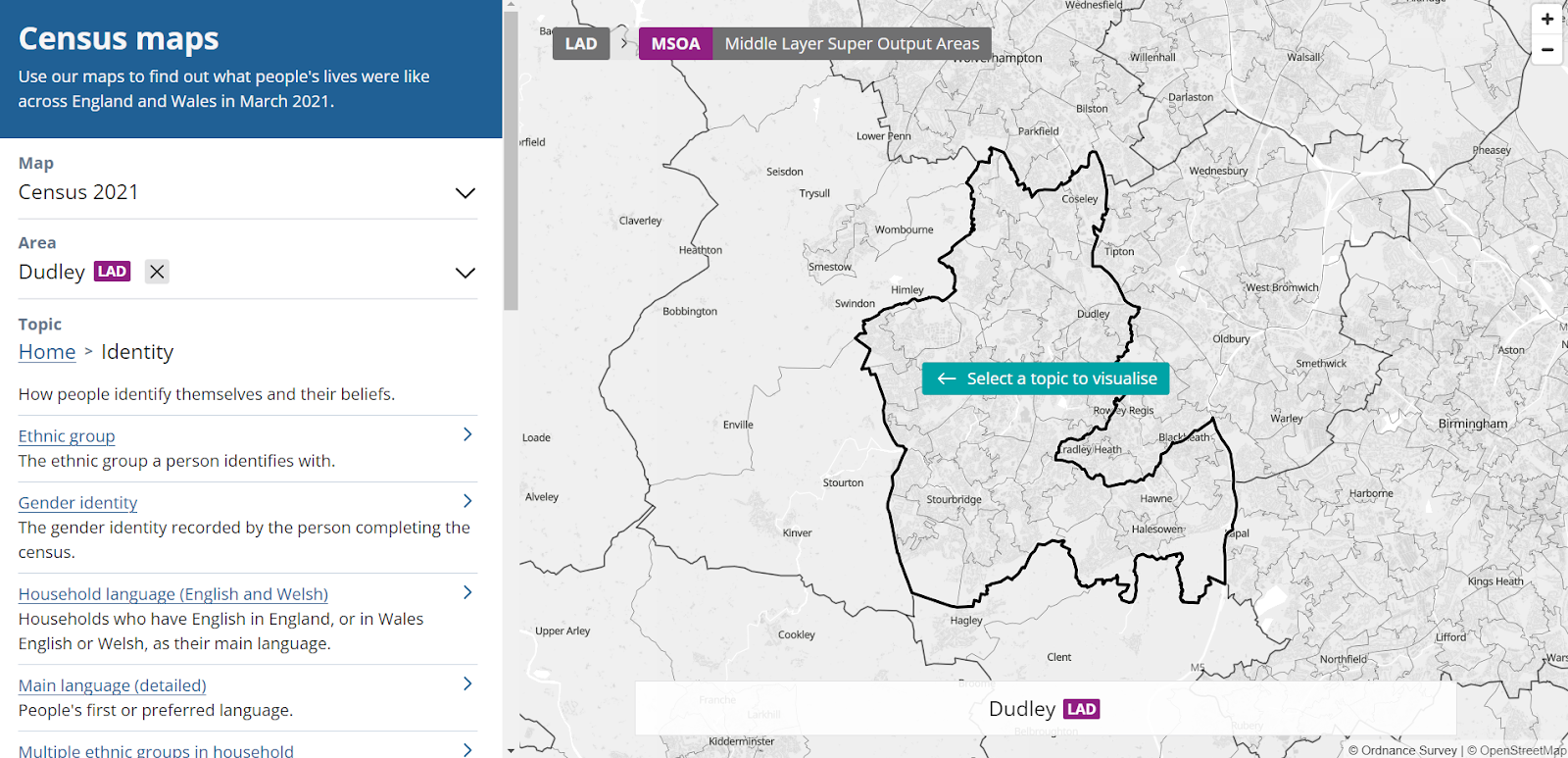
If you are England & Wales the Office of National Statistics have a brilliant tool. is a pile of ward, borough, city and county-level data that gives you masses of data on population. 

Knowing how old people are will play through into what channels they are likely to be using. 

What channels are your audience using?

Once you know how old they are start delving into Ofcom data that will trace what channels they are using. Tools like the Communications Market Report and the other resources they have.

Where are your audience across Facebook groups?

If you are public sector, you’ll have got used to the feeling that people aren’t always beating down your website or your socials.

So where are they?

One of the largest channels is Facebook. Facebook say that two thirds of that big chunk of population are using community Facebook groups. They also say that on average they are members of five groups.

Some of those groups I have to say are surprisingly huge. If that’s where the eyeballs are then you need to be there too. 

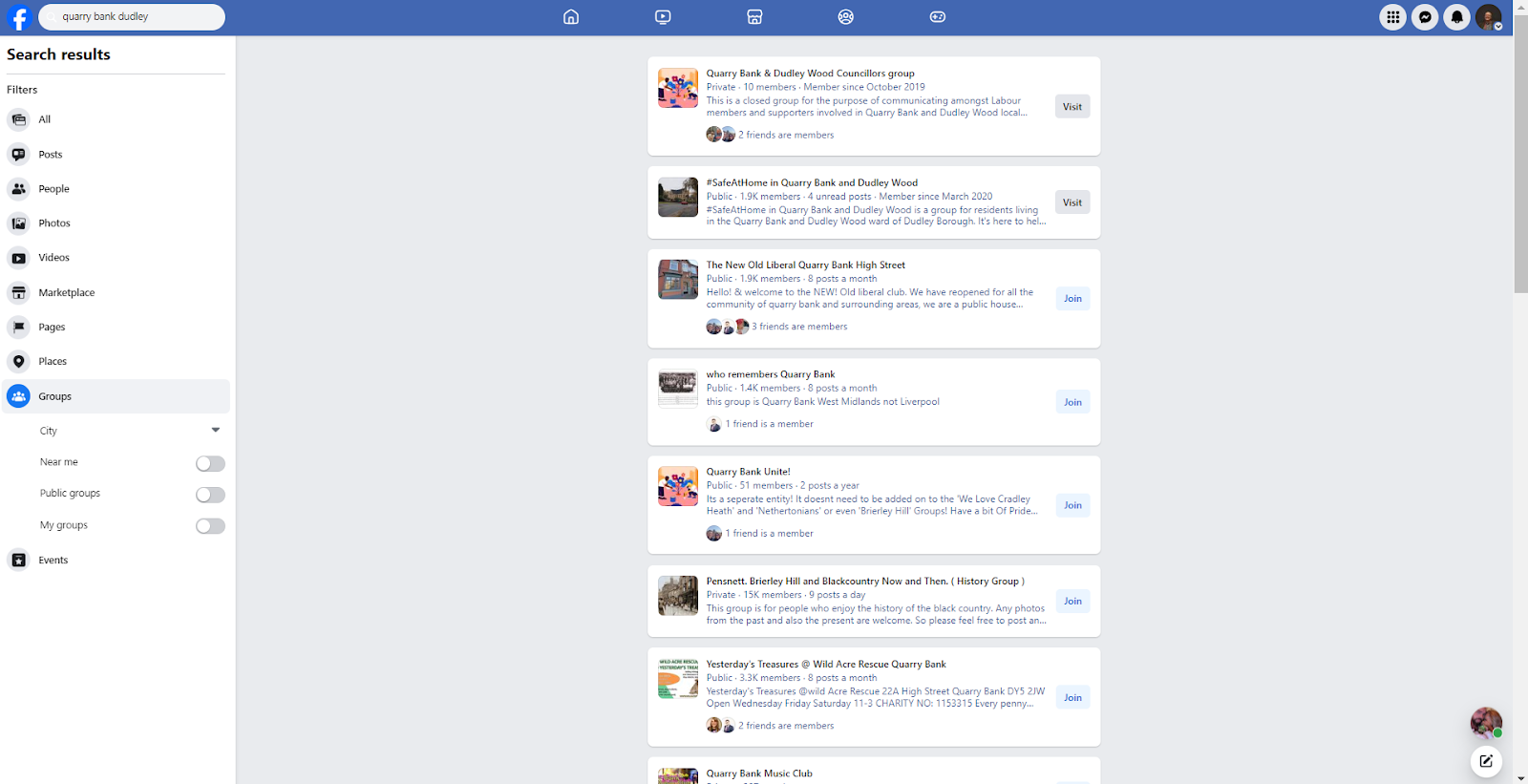
The bad news is there’s no quick way to count Facebook groups.

You’ve got to get Google maps out, search for your boundaries.

Then add the list of communities on that map to a spreadsheet and add council wards too. Then use Facebook search to look for groups, how often they post every week and what type of group it is.

They may be a community noticeboard or maybe they’ll be a community campaign, local history, photography or a club or society

By listing the Facebook groups you’ll get a sense of how significant they are. 

What does good engagement with your audience and your channels look like?

Now you’ve found out how old your audience is and what channel they’ll be using it’s time to get to grips with your own list of channels.

How are they performing?

How many followers are there? 

Then I pick a seven day window to review the content. I’m keen to see how much engagement there is. As its social media this is the killer metric to see how well the content is landing. 

Adobe some good research about what good looks like in engagement terms. For X, formerly Twitter its now quite low. For LinkedIn its as high as 6 per cent compared to follower numbers.

This will help you understand what is working and what is not.

It’s going to take some time for you to complete this. It can feel like going through invoices when you are a student. You know it needs doing and some of the findings will be a surprise.

But it’s always better to do it.

The organisation that’s all about MySpace and Friends Reunited isn’t one going in a forward direction.

I run SOCIAL MEDIA REVIEWS. Drop me a line. I’d love to chat to see how I can help.

PIC POST: A handy tip to boost your Instagram

Years ago when I worked in local government I had a chance conversation with an amateur photographer.

“If only we could have access,” he said, “Maybe a group of us, to the museum, we could take some great pictures.”

So we did and eight photographers took more than 150 images of the town museum’s which was in a converted industrial workshop.

We ended up using some of them on council channels and the response was overwhelmingly positive. Local people taking pictures of local things posted to the local council channel.

This has now evolved. Amateur photographers now congregate on Instagram but the idea of asking to use amateur pictures and share them with credit to a council channel still stands.

It was Argyll & Bute Council who I first noticed using this. Local government’s Sarah Lay, a regular visitor, had flagged this up.

They searched hashtags like #argyll #bute and #abplace2b which gathers images together that celebrate the place.

It remains a great idea.

And here’s the image…

But can other people do it? Of course.

Here’s Dartmoor National Park.

Look at that engagement…

And look at the picture…

But is this just a technique that can be used by visually attractive areas?

Not at all. It works in urban areas, too.

Would you look at that?

I particularly like how multiple pictures are gathered together as a carousel. A carousel is a form of content that algorithms will like.

You are also going to get engagement from the original photographer and their network.

Here’s another…

And a picture of early Spring in Bristol…

If it can work in visually beautiful places like the west coast of Scotland it can also work in urban areas too. In many ways, the photography in built-up places is even more creative.

How to do it

Approach people on Instagram itself.

Always ask permission.

Always give credit to the person whio took it if they agree for you to use it.

Enjoy.

AI OMG: Strengths and weaknesses of Open AI’s Sora text to video for the public sector

Every week I’m reading, listening and updatunbg my knowledge on AI tools that public sector comms people can use.

Up till now I’ve not been that impressed by the video production tools I’ve come across.

They can be clunky and tend to miss the point.

However, OpenAIs new tool Sora looks truly astonishing.

It takes text prompts and turns them into video.

First, I’d like to show you some and then I’d like to weigh-up the pros and cons.

Example 1: a Tokyo street

In this clip, the prompt is quite detailed.

Prompt: A stylish woman walks down a Tokyo street filled with warm glowing neon and animated city signage. She wears a black leather jacket, a long red dress, and black boots, and carries a black purse. She wears sunglasses and red lipstick. She walks confidently and casually. The street is damp and reflective, creating a mirror effect of the colorful lights. Many pedestrians walk about.

It’s amazing isn’t it?

Example 2: A spaceman in a knitted motorbike helmet

While the first example hung back from the subject the second goes close in.

Prompt: A movie trailer featuring the adventures of the 30 year old space man wearing a red wool knitted motorcycle helmet, blue sky, salt desert, cinematic style, shot on 35mm film, vivid colors.

Again, astounding.

Example 3: Reflections in a train window

I’m sure that some things are easier to produce than not. The difficult of replicating reflections in a window I’d imagine is towards the top of the hardest list.

Prompt: Reflections in the window of a train traveling through the Tokyo suburbs.

And it achieves the look beautifully.

Example 4: Grandma’s birthday

While the other examples have dealt with people in different ways this looks at a group.

Prompt: A grandmother with neatly combed grey hair stands behind a colorful birthday cake with numerous candles at a wood dining room table, expression is one of pure joy and happiness, with a happy glow in her eye. She leans forward and blows out the candles with a gentle puff, the cake has pink frosting and sprinkles and the candles cease to flicker, the grandmother wears a light blue blouse adorned with floral patterns, several happy friends and family sitting at the table can be seen celebrating, out of focus. The scene is beautifully captured, cinematic, showing a 3/4 view of the grandmother and the dining room. Warm color tones and soft lighting enhance the mood..Prompt: A grandmother with neatly combed grey hair stands behind a colorful birthday cake with numerous candles at a wood dining room table, expression is one of pure joy and happiness, with a happy glow in her eye. She leans forward and blows out the candles with a gentle puff, the cake has pink frosting and sprinkles and the candles cease to flicker, the grandmother wears a light blue blouse adorned with floral patterns, several happy friends and family sitting at the table can be seen celebrating, out of focus. The scene is beautifully captured, cinematic, showing a 3/4 view of the grandmother and the dining room. Warm color tones and soft lighting enhance the mood.

Weakness: Simulating complex interactions between objects and multiple characters is often challenging for the model, sometimes resulting in humorous generations.

Interestingly, OpenAI have also set out the weaknesses of such an approach.

Conclusion

The quality of the images are astounding in their quality. They look like video wheras previous tools didn’t quite ring true.

The visual clues you may look for, like reflections on windows, easily confound the brain.

That’s real, isn’t it?

Only, it isn’t.

Right now OpenAI are pulling a blinder by teasing amazing content but regulating the use of the product. People are talking but not able to use it right now but this will change.

As we can’t use it we can’t see how hard it is to experiment with good content.

The pitfalls of Sora AI video

For the public sector, the flaw isn’t yet cost or even a pathway to start using it. UK Government have released some guidelines to encourage the use of it.

I feel like looking a gifthorse in the mouth when I say this but the issue for the public sector maybe that right now the content is too generic.

A campaign for a commercial could do something enlightening. Filmmakers I suspect will make something useful with this.

I’ve seen an AI how to video made by a council neasr me with a generic English accent and I hated it for its insincerity. I was left feeling played.

One issue with web content for a council, NHS Trust, police force or fire and rescue is that generic content doesn’t do so well. As I’ve blogged this week people pictures work really well. They are both real and of people. They also capture the area. So, generic shots of Tokyo, yes. Shots of Dudley in the West Midlands, probably not.

Right now, shooting your own content of people and landmarks tops it. But can AI-made content be used to supplement it? We wear futuristic artist impressions of new developments. Will we go for AI-made content of a new town centre development? Or what a new hospital ward would look like? I’m guessing yes.

Of course, such is the onward pace of AI this hurdle may well become surmountable. What I’ve just written may seen laughable quite quickly, I accept that. An interface with Google Street View and Google Photos could be one way to do that, I’m speculating. But wouldn’t Google be building their own equivalent?

Oh, heck, my head hurts.

SMILE NUMBERS: How people (and animal) pictures work best on Facebook

Last week I blogged some data which showed how pictures worked out best on public sector Facebook pages.

Images, especially those with people, outperformed everything and were more than 30 times more effective than toolkit content with artwork or in-house designed artwork. Video is close behind.

Social media, it seems, works better when it is social and not trying to replicate a busy GP’s waiting room noticeboard. You can read the original post with the survey findings here.

But what does good picture content look like?

I thought I’d gather 10 examples.

They’re a mix of police, council, NHS and fire and rescue and show how images with people can cut through and get people to react, comment and share. These actions are a tried and tested way of seeing how well content performs.

Content like this also is good for the health of the page as it leads to a greater reach, more followers and a greater pool of people to recieve that all-important message that’s just around the corner.

As a former journo, I know the value of people pictures. I’m just pleasantly surprised that the numbers also show the value on Facebook. Back when I worked on newspapers it was to generate sales from people buying extra copies as well as looking visually engaging. Now people lead to clicks and engagement. Why? Because they have Facebook accounts and their own networks who will connect with it.

There has been more change in the past 12-months with social media than the last 12 years. Adapting what you do is mission critical.

Celebrating cute

Oh, all right, then. This isn’t a person at all. It’s a cute dog.

I’ve often found police comms people as being quite open about their deployment of dogs and horses on Facebook.

People like them so there’s more chance of reaching them when there’s a missing person report or something vital.

Original post here.

Celebrating people for a campaign

In this South Wales Police Special Constable recruitment campaign real officers put a human face on the force.

Celebrating people in an emergency

Toddbrook Reservoir in Derbyshire almost collapsed flooding hundreds of homes below. That it didn’t was because of police, fire and rescue, RAF, mountain rescue, ambulance and council staff.

Praisimg staff, and here a member of staff shortsted for an award, shows the human face.

Original post here.

Celebrating the people who use the service

Dartmoor National Park is a beautiful wilderness that is a balance between residents, business, the environment and visitors.

Here a travel writer raising money is celebrated.

Celebrating everyday staff

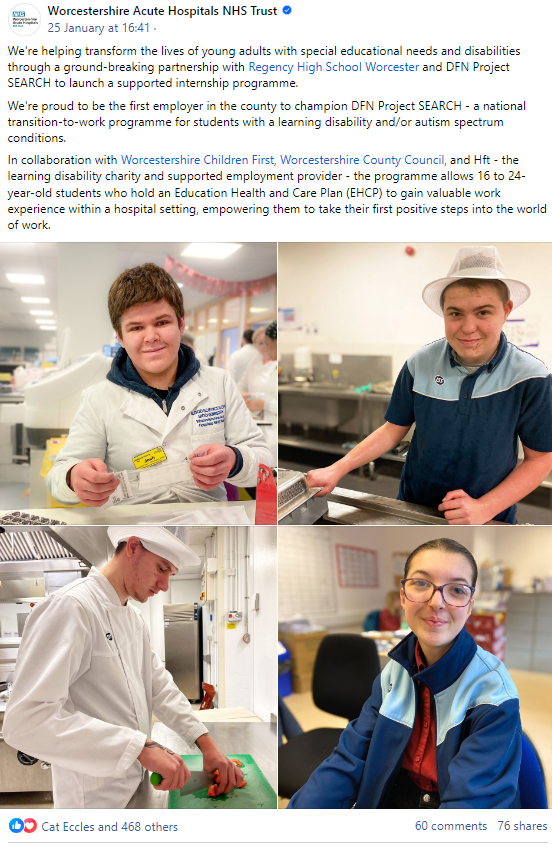
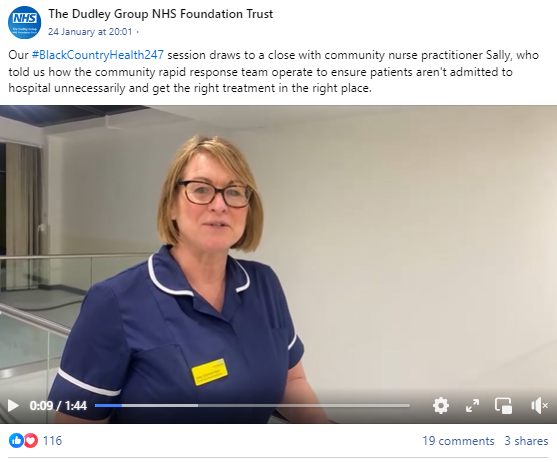
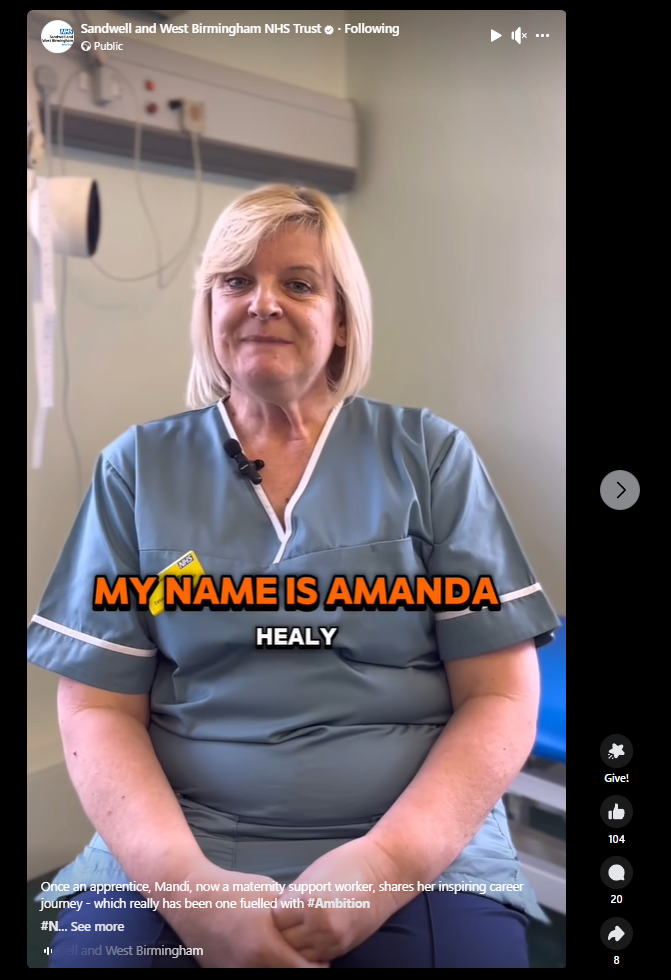
The #BlackCountryHealth247 initative saw NHS in the Black Country celebrate frontline staff. This is one of several from Sandwell and West Birmingham NHS Trust.

Original post here.

Celebrating cute

Look at baby Rupert. Tell me you can’t like that.

This is from a page run by Mersey and West Lancashire NHS Trust.

Original post here.

Celebrating people from years gone by

People love old pictures. In Walsall, the leather industry has employed people for 250 years and the heritage is part of the town. Here’s people from the past.

Original post here.

Celebrating the extra mile

I love these shots from NHS Highland which show the extremes people had to go to to provide a service.

Original post here.

Celebrating users’ happy faces

The joy on the faces of the children taking part in the event show the worth of Belfast Cioty Council running it.

Original post here.

I run SOCIAL MEDIA REVIEWS for organisations and train people to create more effective content on ESSENTIAL COMMS SKILLS BOOSTER training courses.

[RESOURCE] Power of words: shifting the dynamic through inclusive language

Language matters. We all use it and getting it right can unlock doors to reach communities we can unwittingly lock out. Bradford District & Craven Healthcare Partnership have published a superb resource on accessible language that can work across the public sector. Sophie DiMauro and Shak Rafiq explain why and what it does.

As communicators we have a crucial role to play in fostering a culture of inclusion and belonging, this starts with understanding the power of language and making sure we are the conscience for our organisations and the wider systems we work in. 

As communicators our outputs should be outcome focused and this means focusing on getting people to think or act differently based on the messages we craft and the way we get these to our audiences. In an increasingly volatile and, at times, polarised world we have a duty to get it right especially for those groups where assumptions and stereotypes lead to marginalisation and disempowerment.

Language matters and by using inclusive and empowering language we can help to tackle conscious and unconscious biases.

Language can build trust

There is power in words and language. In any organisation, it is crucial that the language and words we use reflect our values, beliefs and work as a system. Language and the way we communicate is an important aspect in building trust and connection, helping to empower and include people if we get it right. 

“Inclusive language has the power to bring underrepresented voices to the forefront while making people feel included and valued.”

– Emily Lennon, King’s Fund.

Inclusive language teaches us to value other people for who they are, more than this it is about understanding our audiences and talking to them in a way that builds credibility and trust. The language we use has an impact, and we need to move beyond simply thinking about a list of acceptable words and communicating with sensitivity, accurately and celebrating the differences that defines us as humans.

As communicators we are driven by purpose and we as professionals provide corporate conscience. Inclusive language is everyone’s business but as the strategic function responsible for setting the tone and developing narratives it starts with us, and we must lead the way…

Learning the impact of words

As communication professionals, it’s important to understand the impact of the words and phrases we use and how, when used incorrectly or in the wrong context, they can exclude groups and individuals. How people chose to identify is a personal choice and always needs to be respected. We have a responsibility for the language we use and we must be deliberate in eliminating words that oppress people.

Language matters, but we also recognise that it is complex and ever-changing. There is a wealth of information out there that can advise us on the right language to use but it can be overwhelming and difficult to know where to start. That’s why, together with partners, representatives and allies specialising in race, gender, LGBTQ+ and disability, we codesigned our ‘Inclusive language – your reference guide’.

We wanted something specific for the public sector and wanted to start locally. Our inspiration came from a fantastic guide developed by Oxfam as well as our own conscience as communicators telling us that we can and must do more. Across West Yorkshire we are committed to being anti-racist as signalled by our Root Out Racism movement but we knew we must do more for other groups and communities that can be excluded, marginalised and be misrepresented – often starting with language that excludes. Our individual values aligned with our partnership’s vision of creating a fair society for all, was the catalyst to make this happen. 

A need for a national document

Having circulated the guide, it is clear from colleagues across many organisations locally but also nationally, that there was a strong need for a document like this. When people have no guidance or support, they can say the wrong things and marginalise others. For any marketeers out there, this could be seen as spotting a gap in the market, albeit through the lens of inclusion, belonging and corporate (and personal) conscience

The inclusive language guide is primarily for communications and involvement professionals but can be used by wider workforce colleagues. It may be helpful to use this guide when onboarding new staff, or as a reference point when communicating with our diverse audiences and communities, with a focus on inclusion and belonging.

The power of words can change lives, let’s make sure this is for the better and change the way we, and the people we are communicating with, view the world. Inclusivity starts with language – is inclusive language part of your communications?

You can view the Inclusive language – your reference guide here: www.bit.ly/InclusiveLanguageBDC 

Sophie DiMauro is communications manager at NHS Bradford Districts Clinical Commissioning Group and Shak Rafiq is strategic communications and stakeholder engagement lead – Act as One programme at Bradford Teaching Hospitals NHS Foundation Trust.

[RESEARCH]: What’s the most effective content for a Facebook page? Here’s the numbers

Here’s a thing… what’s the most effective content on Facebook?

Facebook’s own data confirms the death of posting links directly to an update from a page. A fatal 0.0 per cent of people’s timeline is made up of this content.   

So what will work?

Well, firstly, there’s a few work-arounds.  Post the link in the comments, tell the story on the platform, take out an ad, cross-post to a Facebook group or using a different channel can all work.

But beyond that, what content works best as a post?

I decided to take a look to the a snapshot. I looked at 197 posts from public sector pages in the Midlands. Some rural and some urban to give it a mix. 

I looked at the amount of engagement for every post. That’s likes, reactions, shares and comments as a marker of how engaged people are with it. The yardstick for good content according to Adobe is 2 per cent engagement.  

The findings when I crunched the data were pretty clear cut. 

Some kinds of content like artwork and toolkit content just don’t work.

The basic numbers are that pictures came out top engaging 0.81 on average of overall followers. Reels came second on 0.65 per cent, video on 0.60 per cent and toolkit content – that’s the generic national messages – reached a paltry 0.05 per cent. Locally generated artwork reached 0.02 per cent.

That’s poor.

Content with artwork doesn’t work

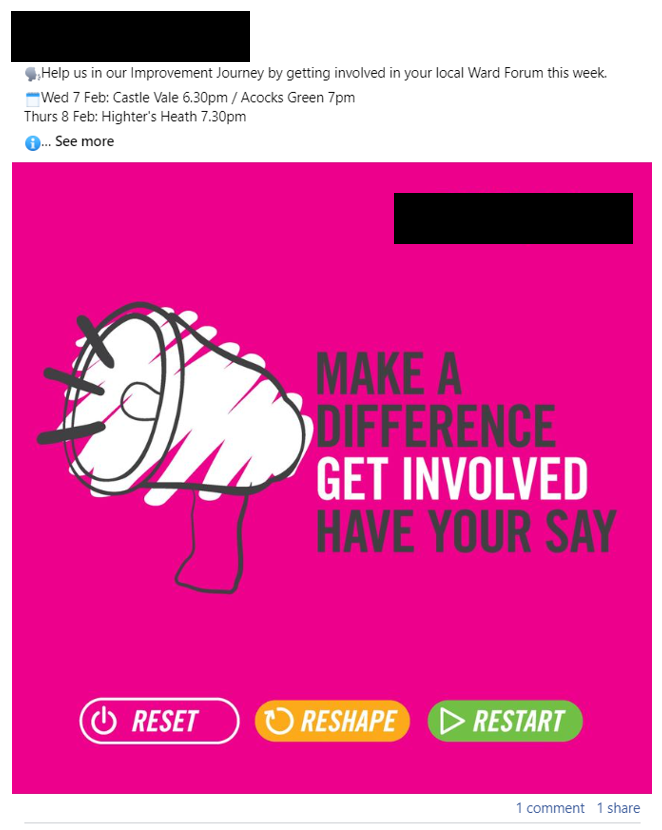
Chief amongst the failing content in 2024 is artwork. This is content often with logo, dates, times and a key message. It’s starting point is print and it often applies the rules of print to the social web. It’s often not accessible without ALT text.

It’s easy to see why this is done. It is branded-up. It ticks a marketing box but the level of engagement in the study at just 0.02 per cent against an Adobe yardstick of two per cent for what makes this ‘good’ tells a story. It ticks a box. 

It is social media as bus shelter and I’d love to see some evidence that it works. 

Here’s an example. I’ve anonymised the example. 

Content with pictures works especially if they tell a human story   

What does work is unbranded pictures. They’re often of real people such as staff and they can be celebratory.

This taps straight into the heart of the tried and tested rule that news is people that served newspapers well for more than a century. People like people. On social media people really like people. 

On average there is 0.81 per cent engagement the healthiest in the survey. 

Reels video can work 

Next to Reels video which is Meta’s portrait-shaped reply to the powerful rise of TikTok. 

This is used far less in the study. No doubt it takes longer to create. But at 0.65 per cent it is 32 times more effective than the disappointing numbers for artwork updates.

Reels is also content that is strongly rewarded by the algorithm.  

Video also works

Half of all time spent on Facebook is spent watching video so it’s highly likely you need to be doing more with video. 

In the study, this reached 0.6 per cent measured against a benchmark of good being two per cent. It’s neck-and-neck with Reels as the most effective content. 

But you do need to be creative and hook people from the opening second and you do need subtitles to make it accessible.

Toolkit content really doesn’t work 

I’ve been noticing for some time the worst performing content of all is toolkit content. Nationally-generated very often these missives are posted without local colour or flavour. 
Engagement is poor and here they reached 0.05 per cent. 

Often when I’m talking in a social media review people will roll their eyes and admit they know it doesn’t work but are pressed to do it. Often they’d be better off not bothering posting the toolkit content. It is a false economy. It swaps the reward of speed for poorly performing content that does not connect. This harms the algorithm for the next pieces of content that are posted so it is in the page admin’s interest to be a gatekeeper by and large for this.

If the campaign in question is worth doing make your own with a local voice to deliver it.    

Conclusion

In short, the content that is posted can make or break the message.

This data is a snapshot and I’d ask everyone looking at delivering their own to look closely how their own is performing. The numbers don’t lie. Use that data to insist on high standards.  

Toolkit content and its near neighbour artwork don’t work. It is a relic of a bygone age. Worse than anything it gives the illusion of having worked when the numbers would suggest it is not connecting with people.

You have a national campaign aimed at encouraging people to visit their pharmacy? Get someone on video telling why this is important, Better still a pharmacist from your area. The lessons learnt during the worst of COVID were hard won and easily forgotten. For it to work, it takes work. The Afro Caribbean GP addressing the Afro Caribbean community connected. The national poster did not.

Of course, time is precious and resources are scarce. I suspect the answer is less is more when it comes to pumping out Facebook – and other – content.       

I carry out TRAINING and SOCIAL MEDIA REVIEWS to help you improve what you do.

CRISIS COMMS: A social care story of ignorance and anger played out online


When I started as a press officer in local government I used to think that I needed to protect the good name of the council at all times… and then I met councillors. 

Now, I don’t mean this as disparagingly as this may sound. Let me explain.

Councillors are people who get elected to make decisions on behalf of their community. Some of them are great, some average and some poor. If you are poor there’s a strong chance you won’t get re-elected.

I had a moment of clarity a few years into that local government comms job. In short it was this: ‘I can give advice but if they want to ignore it that’s on them.’ 

It was a real transformational moment. So, when Councillors made poor decisions after advice that was on them. 

As a result of this moment of understanding, when live streaming meetings became a thing in local government I was intensely relaxed. ‘What if Councillor X speaks? I was asked. ‘He can come over as an idiot. And Councillor Y? She’s even worse.’ 

Well, maybe democracy is better served by seeing just how much of an idiot they are.

We have seen this before. ‘You do not have the authority, Jackie Weaver,’ roared a Handforth Parish Councillor in a viral internet clip. As we saw, poor behaviour can get called out.  

And so, we come to Warwickshire County Council. Or rather certain Warwickshire County Councillors at the January 25 children and young person’s scrutiny committee. The issue of the spiralling costs of special needs help in schools was brought up. 

As a country, we are better at diagnosing children and we have a better idea of what tools are needed. It’s just austerity has cut budgets to the bone so the help desperately needed isn’t readily available. Lockdown has also caused a tsunami of mental health problems for UK school children.  

The BBC have covered the news story of the out-of-touch Councillors here. Step forward Cllr Jeff Morgan who wondered if this was just children ‘behaving badly’.  Councillor Brian Hammersley wondered if there was ‘something in the water’ while Councillor Clare Golby noticed darkly when she went online that parents were ‘swapping notes on how to get their children diagnosed’ as if this was some kind of tax fraud. 

‘There must have been better ways of dealing with them back them,’ was another quote.

It’s worth remembering that back then people were put into asylums for life where they were mistreated. In Glasgow, children were put in Lennox Castle, built in 1830, where they were threatened, mistreated. They were left there for decades. The site only closed in 2002. There were scores of places like this.

As others have said, we didn’t see them when we were at school because they were often locked up elsewhere and out of sight. There’s always been special needs. 

As the parent of a child who has special needs my hand hit my forehead in despair. The laziness and reckless lack of curiosity here is reckless. For elected members who are making decisions it is dangerous bordering on malfeasance. It is causing real harm.

To answer those questions: No, it’s probably not. No, it definitely isn’t and yes, parents do swap notes to help them jump through hoops because the hoops are made deliberately difficult to put parents off. In the UK, the wait for an autism diagnosis is 10 months just to be seen. That’s the first meeting in a long process that takes years to complete. Without the diagnosis there is often little help and the child suffers. 

Other parents with children have also felt this with fury. On TikTok, a creator who is from the West Midlands but now lives in the US, launched a broadside:

Elsewhere, on the internet the reaction from parents was similarly marked.

Where this plays out 

In the olden days, this may have been a newspaper letters column. Today, it is Facebook groups for parents whose children with special needs online and in traditional media. 

It’s also TikTok and in large numbers. There is a community of parents with children with special needs who came to the fore during this story.

But it only gets taken seriously when it leaks through to the traditional media as it did here. BBC news picking this up made it a story. Other news organisations followed.

So, is this a reputational disaster for the council? 

This is where it gets interesting because it depends.

Having the three Councillors show their ignorance on it’s own is a great service to the community. The community can then act accordingly at the ballot box. Democracy dies in darkness, as the Washington Post says. 

If this stimulates a debate that shows the harm that kids are suffering then maybe some good will come out of it. 

I’m not going to go into a critique of what Warwickshire County Council does next. No shade to their comms team. It’s a hard enough job and they have some good people. 

The principles of crisis communications need to be the compass are here.

Exit mobile version