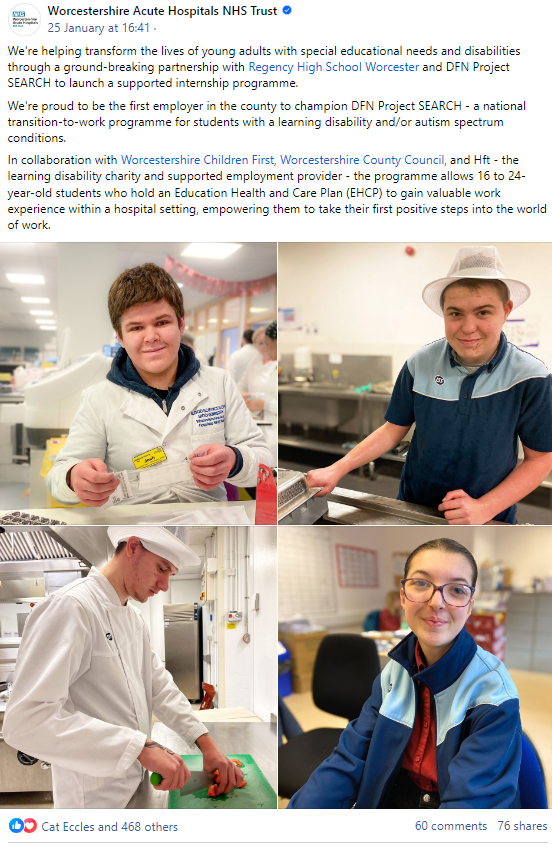
So. I thought I’d run a snapshot using the Fedica tool I use in social media reviews.
I chose five organisations from England, Wales, Scotland and Northern Ireland and counted inactive and accounts that hadn’t posted for six months or more.
Overall? A total of 55.0 per cent of accounts hadn’t been active for more than six months.
Here’s how they panned out across local government, NHS, police and fire & rescue.
I’ve anonymised the account names so as not to point a finger.
Local government
Overall, 53.5 per cent were inactive over six months. A Scottish city council with more than 200,000 followers led the table with 63.5 per cent inactive. Working through the list, a London unitary with just 39.2 per cent inactive was the lowest figure.
Overall, the five councils had a combined 300,000 with half of those no longer being active users.
NHS accounts
For these, I looked at corporate accounts as well as NHS sub-accounts which belonged to a team within an organisation.
The overall result was 48.1 per cent inactive with the highest inactive rate 54.3 per cent belonging to a Welsh hospital trust. The lowest was a Northern English integrated care board with 27.3 per cent. Given that integrated care boards have only become formal entities in 2022 this is understandable.
Follower numbers ranged from 1,200 for a northern English integrated health board to 93,200 for a UK-wide organisation.
The Northern Ireland account is a regional account that covers NHS and social care.
Police
Police corporate accounts have big overall numbers and are long established.
A Welsh police force recorded the highest disengagement rate at 67.4 per cent of followers with a northern English police force 66.9 per cent and a community account that covers an area of Northern Ireland 58.3 per cent.
Almost 700,000 have followed the five accounts with four force corporate accounts and one police city account.
Around two thirds of all police accounts looked at had a disengaged audience.
Fire and rescue
For fire and rescue, long established accounts have high levels of disengagement.
Of the five fire and rescue corporate accounts, there is an average of 30,000 followers per account with an average of 56 per cent no longer using X, formerly Twitter.
The largest is a northern fire and rescue service with 59.1 per cent with a Welsh service at 51.0 per cent.
Conclusions
So, what to make of this.
The public sector first started to use Twitter in 2008 with most accounts being created across a four year window. The headline numbers do not represent the current potential users in 2023.
With half of users straying away from the application the question to ask is whether or not the platform should be used. It’s a reasonable question to ask. For me, there isn’t an overall answer. It depends on your audience.
The audience for X, formerly Twitter, has historically been strong amongst journalists and if this remains the case there is an argument for using it as a distribution channel. Not only that but it has been a go to channel in an emergency such as the London Bridge attacks in 2017.
The jury is out on the role the channel will be playing in an emergency. The reach has been limited by Elon Musk so you’ll see fewer tweets. As you’ll see fewer tweets that can only limit the effectiveness of it as a channel.
Your own use of the channel is something you need to actively consider.
Of course, all social media channels may have an element of dormant accounts.
The Fedica tool is useful but needs a subscription. However, one thing you can do to see how effective your X, formerly Twitter, account is performing judged by Adobe’s own social media engagement research. An engagement rate of 1 per cent is classed as ‘good’ on the channel.
Are you getting more than 1 per cent engagement with your content?
In the finest post-unconference tradition here’s a list of things I learned at commscamp scotland.
It worked as an event. But of course it was going to work as an event.
The most popular football team in Glasgow is Pollock Dynamo AFC.
The Queen Margaret Union in Glasgow was a great choice for the event.
There is creativity, determination and ideas amongst Scottish public sector people that I’m consistently blown away by.
People are starting to engage with AI at this unconference for the first time. The last time it was on the agenda no more than four people came.
The debate about quitting X, formerly known as Twitter, is ongoing. The questions for me are if your audience is there and is it a safe space rather than whether or not you like it.
Linking back what you do as a communicator to what your organisation’s priorities are is not a one and done thing it is painting the Forth Bridge. It never ends.
Everyone’s experience of an unconference with 25 sessions and 135 attendees is going to be unique.
Car parking in the west end of Glasgow is rubbish.
Small teams and solo operators need their own network for their own unique extra set of issues.
The newspaper landscape has changed. It’s long since been more than cuttings and how much you report these can be an impediment to progress.
The ability to say NO and prioritising links through to knowing what the organisation’s priorities are.
There are people in junior positions who make valuable points and are five years away from getting near the agenda of a traditional conference.
If you’re at the start of your career, network, ask questions, approach people you don’t know and ask if they have half an hour spare to tell you how they did that amazing thing.
The principles of an unconference are that whoever comes is the right people, whatever happens is the only thing that could have happened, whenever it starts is the right time and when its over its over. I sincerely hope that people loved thinking and acting differently. They can carry on with this after the event.
David Grindlay, Leanne Hughes and the volunteers did a great job.
I’ve enjoyed that people in the aftermath of the event have put their thoughts onto LinkedIn when once they put them onto Twitter.
Lloyd Davis was right when he said that an unconference should take you out of your comfort zone and put you somewhere more comfortable.
The ability to deal with a media query well should be weighed in gold.
The ability to deal with a comment that can deal with the media as well as social media should weighed in gold, cake, chocolate, likes and incoming comments.
Often books around media relations can be undermined by being strong on traditional media but weak on the socials.
I’ve a lot of time for Alastair Campbell’s analysis of media but he’d be the first to acknowledge his way of dealing with the media belongs to an era.
What’s terrific with Molly’s book is the absolute core of drawing up a response if you need to hold your hands up to something be it online or as a statement is reduced to three things to get right.
They are:
Step One: Own it. You must acknowledge accept or apologise.
As Molly writes, this is the hardest part and fail to roll your sleeves up with this and the statement will come undone within minutes. You’ll get called out.
Step Two: Clarify it, Put the issue into context.
This is where you can put in some explanation.
Step Three: Promise it. Announce your commitment to plans, priorities and changes to come.
This is where you’ll promise to do things differently.
That’s it.
You’d think the process would be foolproof but you’d be surprised at how poorly many media statements are delivered.
Too wordy, too vague and too quick to pass the buck.
Like most effective ideas, if the steps that need to be taken are expressed simply and with clarity you’ve got a chance whether you are a celebrity, a hospital or a council which has messed up bin collections.
As we know, what can start as a media story WILL bleed into the socials and vica versa.
Excitingly, it’s the week of commscamp scotland and I thought I’d write a quick few pointers if you’re new to an unconference.
If you’re going then congratulations you’ve got the hottest ticket in town.
If you’re going to an unconference for the first time you’d be forgiven for feeling a touch of intrigue.
An unconference is very different from a traditional conference.
UK Government civil servant and Brummie James Cattell describes the two simply:
“A conference agenda is set by organisers. An unconference agenda is set by attendees.”
That nails it beautifully.
To put more detail on it, the conference agenda is designed by a small group of people months in advance. There is limited chance to ask questions and discuss. There are many, many PowerPoint slides.
An unconference’s agenda is drawn-up on the day to reflect what the people in the room on the day want. It is flexible and it is reactive. There are no PowerPoint slides.
On the day of commscamp scotland, the agenda will get filled by the attendees with the help of the organisers. There will be a series of breakout spaces across the venue which will each host sessions suggested by attendees. Anyone can suggest a session.
At an unconference, there is no hierarchy. The opinion of a marketing assistant in their first month is just as valid as a veteran head of comms. Given the changing pace of the media landscape that’s not such a bad idea.
Will it work?
It’s the first time in Scotland. Will it work?
I’ve done a lot of work in Scotland in the past decade and I’ve found a group of committed well networked public servants who want to do a better job. I can’t wait to hear what they have to say and what I can learn.
There is a process to the unconference model that works. Find a room. Invite people. Collaborate. Go home. That’s it.
What makes a good session?
There will be more than 20 sessions at commscamp scotland. All will be proposed by those in the room.
What makes a good one?
I’ve given this a bit of thought this week.
After 10 years of organising unconferences I’ve reflected on what makes a good session idea.
If you make a session pitch the only thing you have to do is to go to the session and start the ball rolling. That’s it. You don’t have to bring slides, a speech or be expected to provide all the answers. A session is a discussion where people are encouraged to have a say.
I’ve found good pitches often start with the following and if you’re in two minds whether or not to pitch, think how you would fill these.
“I’ve never pitched an idea before but…”
If you’re in two minds do it. Share what you’d like to learn or share. Some of the best sessions I’ve been to have started like this.
“I really don’t know how to do X. If anyone else is in the same boat shall we put our heads together?”
I remember in the early days of social media someone came along who’d been asked to draw-up a social media policy and didn’t know the first place to start. She frantically scribbled down ideas and came up with some great ideas.
“I’ve just done X which worked quite well. Let me tell you what I did and the mistakes I made so you don’t make them. Have you done similar? Can we swap ideas?”
The great danger of standing up at a conference is to represent your employer. It’s all got to smell of fresh paint, right? But what’s of much more value is to hear about the errors and crossings out along the way. A conference rarely tells you this. A chat over coffee sometimes does. An unconference isn’t live streamed, doesn’t have a slide audit trail and can dip into Chatham House Rule when people don’t want the detail of the tatty truth exposed. How fantastic.
“I’d really like to get this off my chest.”
Often at an unconference there’s a session under Chatham House rules that’s just a chance to show and tell what’s bugging people. Sometimes it’s to search for a solution. Sometimes it’s to just vent. In the past titles have been ‘Local government rant’ or ‘And another thing…’
“I’m worried about X, are you?”
There can be horizon scanning and the good thing about this is that not everyone has the answers.
Road testing your session idea
People are at liberty to pitch a session on the day. If you’re an attendee that’s fine. Come along. No experience necessary.
I’d heard that the biggest single threat posed by deepfake isn’t video at all. It’s deepfake audio.
Audio rather than video, the argument runs, is easier to create and easier to believe.
Of course, I put this to one side onto the pile of things I’d look at when I got around to it.
Days later but hours before Labour leader Keir Starmer was due to make his speech to the Labour Party conference audio was posted that appeared to be of him swearing at an aide for forgetting a tablet.
“F-king idiot,” he appears to say. “I f-king told you, didn’t I? F-ks sake. Bloody moron. No, I’m sick of it.”
Here’s the clip.
The 25-second clip posted to X, formerly Twitter, by an anonymous account with a track record of criticising Starmer, appears to be the politician caught in a private moment.
Online, it was greeted with critics of the opposition leader who gleefully greeted the clip as evidence he has feet of clay.
A follow up tweet claiming to be a screengrab from left wing Skwarkbox website quoting a named audio engineer as saying it is authentic.
Ernest Hemingway wrote that everyone has a bullsh-t detector.
I was detecting bulls-t.
Interestingly, the Labour Party weren’t all out shooting the audio down. I can see there’s two good reasons for this. First, how fast would it be to authoritatively fact check the contentious audio? It would take time. Secondly, what happens when we deny? Rebuttal should never repeat the lie because it just reinforces the lie.
Thirdly, a denial can breathe life into a story. What’s that? What’s the thing they don’;t want me to hear? I’m off to hear it.
Experience shows the best source of online debunking is a trusted third party.
Here, it was a Conservative MP.
But we’ve known this since The Guardian and Reading University’s excellent Reading the Riots research. In it, amid riots blogger Andy Mabbett debunking the rumour that Birmingham Children’s Hospital was on fire. That hospital, Andy pointed out, is right opposite Steelhouse Lane Police Station. That’s hardly going to happen is it? As a result the rumout stopped being shared.
But it got me thinking, why audio and how easy is it? And can fake audio be spotted?
Why audio? It’s got a long history
There’s a long track record of secret recordings tripping people up.Far before the internet was invented there was a cricketer caller Ian Botham. Fans love him. The cricket establishment hated him because, in good story fashion, he was a maverick who didn’t play by the rules.
So, when Ian Botham was secretly recorded at a charity event calling those who ran cricket ‘gin slinging dodderers’ which didn’t go down well.
Those people warning that deep fake audio will have an impact have got a point.
A problem far, far away?
Of course, it’s tempting to look at this and dismiss it as a story about far, far away.
I don’t think it is. This is likely to drop into the inbox of public sector communications people.
First, a story.
In 2009, the far right English Defence League came to Birmingham to protest. Twitter was still in its infancy and we were all working out how it could be used. A tweet from one of the group claimed that a white youth had been attacked by a gang of Asians. It was reposted. It sparked a flurry of accusations that increased tension with sporadic fighting across the city centre.
At first, the police were baffled as to how to respond until a police Superintendent frpm Wolverhampton worked out that if he was in the police’s Gold Control command centre with his smartphone he could monitor Twitter and if a rumour was posted he could shoot them down in realtime.
So, he did just this succcesfully when the EDL returned.
This example set a gold standard for online rumour. Use a trusted source to debunk it in realtime. Not in tomorrow’s papers but a message within minutes.
Just as Twitter was weaponised to spread rumour deep fakes will undoubtedly be used to cause trouble.
It doesn’t need that much imagination.
For example, a school is facing protests on religious grounds from a section of the community about how they teach their children sex education. How is it going to run if deep fake audio was released of the headteacher abusing that religion’s Holy book?
Or how about the council election where the politician is subject to a deep fake about bribery?
How hard is it to create audio like this?
I thought I’d take a look.
What are social channels’ attitudes to deep fakes?
“the product of artificial intelligence or machine learning, including deep learning techniques (e.g., a technical deepfake)”; and the post would mislead an average person to believe that “a subject of the video said words that they did not say.”
The trouble is that complaining through the official channel can take time. Relying on that alone is the definition of bolting the stable door after the horse has bolted.
Creating deep fake audio is really easy
I’m looking at this not so anyone creates deep fake audio themselves but so they’re aware of the issue.
One of the largest AI audio platforms on the internet is resemble.ai. With it you can create audio firstly with some generic voices. Paula J, for example, has an English, accent. Beth sounds like an American. There are more than 20 off-the-shelf examples.
Secondly, things start to get even more interesting when you explore the other functionality.
You can add your voice to your resemble.ai account. So, I did. I recorded 25 voice clips of myself reading prepared text with which to train the tool. There is also the option of uploading audio but to do this I had to explain to them why I was looking to do this. I did and they said they’d email me back. After five minutes of waiting and no email I pressed on ahead to use a generic voice.
I’m sure resemble.ai would say that this is a step to stop potential bad actors. But I’m just as sure there are other tools out there that don’t do this.
The plan was for the AI tool to read back some of the script fake Keir Starmer had said.
So, painstakingly I typed in about 15 seconds of audio.
“F-ing idiot. Have you got it? The f-ing tablet. F-ks sake. I literally told you. F-ks sake. Bloody moron.”
Deep fake audio
I downloaded the audio.
Just to make sure, I also screen recorded the playback of the recording on my mobile phone.
Of course, this audio emerged in one burst without the required pauses so editing to insert suitable gaps would be needed to make it sound more authentic.
I also needed some ambient background noise. So, I screen recorded 30-seconds of audio from a cafe from a clip I found on YouTube.
I then used the Kinemaster video editing app to put together a clip that sounded plausible to the untrained ear. I used the app to add a bit of distortion to the audio and change the sound balance. But this was not a hard thing to do.
A basic knowledge of video editing and I was able to record the clip from start to finish in less than half an hour.
Here it is.
And yes, that’s a stock pic of a couple arguing in a cafe.
For audio, there’s annoyingly few tools. Resemble.ai say they have such a tool. But the webpage is behind a wall which harvests contact details and there’s a promise to get in touch. If this is needed in a hurry it’s not the answer you’re looking for.
So what to do?
Well, a piece on Ampere Industrial Security’s website talks about research being published by researcher Siwei Lyu from University of Buffalo, State University of New York. There is such a researcher called Siwei Lyu, I found. But there isn’t the source of the research there. Does that mean it doesn’t exist? You spend anytime looking at fakes online and you start to get a bit sceptical of the most ordinary looking things.
The Keir Starmer example shows that yes, it will happen. But the debunking should probably come from a third party rather than yourself.
Sometimes people ask me what makes journalists tick and I tell them this.
There are two things that make a journalist tick.
Fear and ego make a reporter tick.
I can say this cast-iron fact after 20 years as a reporter and answering media queries.
Fear because they are under pressure. The pressure is to get the story, fill the paper, post to Facebook or fill the bulletin. Above the journalist is a news editor and above them is the editor. Editors often tend in my experience to be somewhat psychotic and as the saying goes ‘sh-t rolls down hill’.
Fear because they don’t want to miss the next story. A relationship between reporter and comms person could be the length of a phonecall or it could be something more cultivated that stretches weeks and months.
One of the first lessons I learned as a reporter was that in a small town paths will cross. Be fair with people even in a critical knocking story and they’ll be fine.
If you’re the contact for a project that’s likely to be exciting, worthwhile and newsy then the fear is that they’ll miss out. The reporter won’t want to burn that relationship.
Ego because they want the front page bulletin leading story. They want the scoop that everyone else is chasing. It could be something that’s landed in their lap or it could be something that they’ve worked on for days, weeks, months or years.
Fear and ego are so important.
I say all this with absolute love, affection and professional respect. It’s was what I thought when I was a reporter and what I still think now.
Very often people are dismissive of the role journalists play and that’s a big mistake. True circulation is down and there are other games in town. But Ofcom data during COVID showed how a crisis, people turned to content shaped by a journalist be that in print, online, on TV or radio. Even 75 per cent of under 24s were getting their COVID news from a trusted news source.
We overlook the reporter – comms relationship at our absolute peril. How we consume news has changed but what motives a reporter fundamentally hasn’t changed. Understanding what makesa reporter tick helps with this relationship.
A common mistake
I can understand why some comms teams insist the reporter email the query. But by doing this you are not doing as much as you can to build a relationship. Recently, I heard a Reach plc editor talk about how she would agree to give more time to a PR officer to get a response if the reporter had a good relationship with them. That doesn’t surprise me. Fear and ego? They don’t want to burn that relationship for fear they’d need it again in the future.
Isn’t it all about changing the world for a reporter? No, I tell them. It isn’t. It may be at the start but once they’re working in a professional environment fear and ego are the day-to-day influences. You’re not going to save the world if you’ve got an angry news editor shouting at you.
If you understand what makes a journalist tick you’ll know better how to approach the relationship.
In 2010, social media was so simple. Your video was YouTube, Instagram was your pictures, Facebook told you whose children were going to school and Twitter was about your breaking news.
This version of social media – lets call it social media mark I – has changed without many of us realising it.
Today, it is so much more complicated. All of them are about video. All of them penalise links. All of them are keen on creating safer spaces away from the notion of the big Town Square.
Fast forward to today and what do we have? Video is everywhere. All of them have algorithms that select what we see rather than the order they were posted in. Increasingly, they are all selecting content from outside of our networks.
We are also less happy about having a public discussion on a public network. In social media mark 1, the Town Square was where all human life ideas and opinions are. But we are moving to safer spaces where like-minded people are.
Quietly, WhatsApp groups, Facebook groups and LinkedIn have emerged as places where people now are. Groups are self-selecting so if you want similar voices you can have them. Messenger is also very much a thing.
There are two reasons for this.
The first is online abuse and the second is TikTok.
But first, the early optimistic days.
The optimism of early social media
Back in 1999, early web adopters got together to figure out how the social web may work. Their work is contained in the Cluetrain Manifesto. This far sighted document describes how they thought the social web would work. It is the founding document of social media mark I.
In the manifesto, they described the human tone of voice that would work on the social web, that it would be a conversation and that online communities would be powerful. They wrote how hyperlinks would subvert hierarchy. That sharing links would be instant and powerful and we would no longer have to go through existing structures to reach people.
In 2008, the public sector had started to switch on to social media with local government leading the charge. Back then only Derbyshire County Council, Newcastle City Council and Devon County Council were using Twitter. I was at Walsall Council and we were the 4th. Those that were were often taking risks to do things we today expect from our public services. When Derbyshire’s Sarah Lay put election results on the council Facebook page she did so at considerable personal risk.
The connections between these early risk takers and door pushers were all first made through Twitter.
Then came Trump and Cambridge Analytica
Looking back, the inflection point was 2016.
Jon Ronson in his book ‘So You’ve Been Shamed Publicly’. Overnight, everything Lindsay Stone loved in life disappeared when the web lashed out at her for an ill-judged prank photograph in a cemetery. The human cost greatly outweighed the action. This was Town Square as mob.
But by the end of the book, Ronson discovered one shining truth. To be internet shamed you needed to feel shame. So, when Max Mosley was outed in a News of the World expose as taking part in a nazi-themed orgy with prostitutes he was indignant. It was an orgy with prostitutes, he confirmed. But it was not nazi-themed. Shamelessly, he took on the Murdoch title and won.
And Cambridge Analytica.
The company used personal data acquired through rule breaking to game Facebook and skew the 2016 Presidential campaign for Donald Trump. Allegations they also worked on the 2016 Brexit Leave campaign are unproven.
The algorithm was rewarding argument, bitterness and abuse. So, with print declining some newspapers pushed the envelope and prioritised divisive content. Clicks meant eyeballs. Eveballs meant ad revenue. They still do.
I remember thinking that the time that all this was not what the early promise of social media was for.
Online abuse
In the early days of public sector social media abuse was rare. People were largely just pleased to see you engaging in a space where they were. But things change.
If you work in public sector communications you are even likelier to see and be the subject of online abuse.
During the pandemic at three month intervals I ran a tracker survey of how people were faring in public sector comms. Just over 50 per cent said that they were seeing verbal abuse aimed at then organisation at least weekly, 14 per cent were seeing abuse aimed at named individuals weekly and five per cent received threats of violence in the same period.
I’m tired of talking to people who have been worn down by a drone that ranges from abuse to a background hum of microaggressions that chip away.
So where has all this taken us?
Anti social media
It’s taken us away from the Town Square.
There has been a race to create a Twitter competitor but I’ve a feeling they’re looking in the wrong place. We don’t want so much of that version of the social web, we want something far safer.
What is safer?
I’ve sometimes heard apps like WhatsApp, Messenger or Telegram as ‘anti-social media’. I see what they’re trying to say with that tag. I don’t agree with it. It is less about being anti-social in a trolling way and more about finding corners of the internet where people can more be themselves. It takes the danger laced serendipity of social media mark I and swaps it for something less unpredictable and more calmer.
But we haven’t divorced ourselves from the more helpful elements of social media mark I. Breaking news can emerge first on the social web although for calm context a trip to a trusted news source online is what 75 per cent of us do for our news.
Even TikTok
Even TikTok is part of this trend. Find 100 TikTok users and the videos they’ll see will be 100 different streams.
The TikTok algorithm is framed around ‘interests’ not connections. So, if you like videos of dogs, mid-week recipes, places to go with children and cricket then the algorithm will find you out by what you swipe past and linger on. This is not the Town Square. It’s the cafe on the town square that serves exactly what you want.
In the UK, TikTok is in the top three of most favourite channels from everyone from aged 18 to 52, Ofcom say.
TikTok has changed socials mark I because it has subverted it. By subverting it it has proved successful and those are numbers that all the others want.
New developments in messaging
Scroll back through the announcements and developments and you’ll see so much activity around messaging.
So, the landscape changing WhatsApp Channel rollout which makes a potential mass audience tool available for the first time. That’s broadcast.
None of these tools are yet in the API which can be used by third party tools. This means if you are a slave to Hootsuite then you’ll have to go off-piste in order to experiment with them.
Little remains of social media mark l but we’re still working out mark II
Today, little remains of the early version of social media. What used to be sorted for you by the time it was posted is now a highly-curated feed. Not just a curated feed based on your connections but one based on what the algorithm thinks you’ll like. Where TikTok went first by prioritising interests others have followed. Facebook, forever the magpie of others’ ideas are doing the same. They call this the Discovery Engine to make it sound like they invented it. This explains why you are seeing things in your timeline that you aren’t following and aren’t ads.
What social media mark II looks like
In the early days of social media evangelists would consider the word ‘broadcast’ a dirty word. This was now, we were told, what the future looks like. In a recent workshop where WhatsApp Channels was discussed the broadcast nature of the platform was welcomed.
“You mean,” one said, “Each message won’t have a queue of people telling us we’re f–king idiots?
“Where can I buy one?”
But this won’t be a move away from elements of what has come before. There is value in testing the temperature, breaking news, canvassing opinion going to where the eyeballs are. We just want space where people won’t shout all the time.
Conclusion: embrace change
What this means for public sector comms people is this. What felt like something set in stone is not. It has foundations of sand.
This means that a tweet with a link now looks like this.
We have staff knocking on doors across #Dudley borough and speaking to residents about updates to the electoral register. Always check ID and if you’re unsure of anything, just get in touch https://t.co/EH6QMCgIGJpic.twitter.com/YQS0VXvWys
Firstly, there’s always building a thread to help you tell your story which tends to get rewarded. A thread in this context being a series of connected tweets rather than Threads the Meta-launched Twitter rival.
Yes, this does involve more work and no, not every social media management tool can allow you to post threads meaning that you may have to do so natively.
Besides, the answer may be in telling the story on the platform itself rather than asking people to go somewhere else for it. The aim here isn’t to drive traffic to a particular website. You are not a web manager. The aim is to put the right information in front of the right people at the right time.
The bottom line is if you want people to see your message then you’ll have to change and evolve.
When recording studios started to use filters and effects pedals musicians rose up in outrage.
This was not music, they said. People were being tricked, they warned withan air of indignation.
Right now, we’re at the stage of new tools being made available and needing to think about they’re used while they’re already being used by comms people.
When I first sketched this blog post, I pulled together some big picture resources to get you started with AI. There’s some good strategic stuff from UK Government and the CIPR I’ve gone through.
But there’s also a slew of announcements by big tech companies that mean AI tools will be even further into the day-to-day.
So, this is less about needing sign-off to employ banks of boffins in labcoats to come up with great ideas. Although having the big picture covered is sensible you’ll be using AI even without thinking about it too much.
What it also is looking at the announcements by Facebook and Google is that AI is being integrated right into the heart of their social channels.
The good news is that if you use AI this will be flagged up. So, adjust the background and people will be able to see which tool you’ve used. Less Government health warning and more helpful tip to try out the tool too.
This is a good move.
YouTube and AI
And Google are following suit with AI tools around their YouTube Shorts platform. Not everyone is using their TikTok rival right now but you can be sure if it works well in one area it’ll be pushed through into other areas.
How should public sector communicators use AI? The first question might be: “should public sector communicators use AI at all?” The short answer is “yes”. In a few years, asking this question may seem as ridiculous as asking whether we should use the internet.
I’m very much of the opinion that AI won’t replace the whole of comms. But comms people who can use AI will replace those who can’t. Fifteen years ago I was at an LGComms conference on a panel to discuss social media. We were introduced with the words ‘there’s only two things wrong with social media, it’s not social and it’s not media.’ This was at the time a ridiculous thing to say and that individual left the sector not long after.
It’s interesting that GCS are looking to develop their own version of ChatGPT. In other words, a large language model that when asked for a comms plan will use GCS’s own version of a comms plan.
Personally, I’ve found that GCS’s comms planning tool may work for Government but its too unwieldy for a lot of what local government, NHS, police, fire and rescue do. Government departments may think of a dozen campaigns a month. In local government, that can be a dozen issues a week easily.