SESSION LESSON: A DIY guide to running your own small Barcamp

There’s a great quote about learning not being compulsory, but neither is survival.

For the public sector learning and survival are vital in 2011.

No doubt, there’s a place for paid training.

But 2011 will be the year unconference as they expand in size and number.

What’s a barcamp? It’s bright like minded people coming together, booking a venue and running some sessions to exchange ideas.

UK Govcamp in London drew more than 170. It created an explosion of inspiring thinking on the day and after.

For this organisers Dave Briggs and Steph Gray need to be revered as heroes.
But that’s not enough for them. Oh, no. They’ve gone and created More Open. A fund to help start-up barcamps in other parts of the country. What a pair of dazzling gents.

Shropcamp is one of the first to benefit. Others will follow.

Last October I joined Si Whitehouse, Stuart Harrison, Andy Mabbett and Mike Rawlins to put on the comfortably laid back and low level Hyperlocal Govcamp West Midlands.

Around 70 people came on a Wednesday afternoon to Walsall College with tweets and reaching a potential audience through the #hyperwm hashtag we were surprised to learn of 56,000.

Now, I don’t for one minute suggest we’re now fully fledged event planners after one gig. Nor is what we did remotely in the same ballpark as UK Govcamp.

But that’s the point. It wasn’t trying to be. We just fancied doing something in our part of the world that we’d want to go to.

So, in the spirit of doing and sharing here are some things we learned. It feels like the right time to post this.

PLAN AN IDEA

1) Have an idea. Kick it around with some conspirators. If it stands up to the scrutiny of a couple of people you’re on a winner. Rope them in too. It’s good to share.

2) Think of a list of people you’d like to be there. Get their support for the idea. Now you’re on your way.

3) Check Dave Briggs’ 10 things to do for a barcamp. It’s indispensible.

START TALKING ABOUT IT

4) Think of a name for your event. Get yourself a Twitter account. Spread the word. Don’t wait until you have a venue or location. A name will do at first.

5) Get yourself a presence on the UK govcamps site that requires sign-up. There’s already a community of people there.

6) Get yourself a basic WordPress site to host a Google map with venue, parking and other locations.

7) Use your Twitter to flag up potential sessions and sponsors. Build momentum.

8.  Use your offline contacts to raise interest. Email. Talk. Cajole. Enthuse.

PLAN A VENUE

9) Get a venue within striking distance of a train station if you possibly can.

10) Use any contacts you may have to get it at cheap rate or free. Is there a public sector venue that fits the bill?

11) Rolling tea and coffee is a must. Catering is a cherry on top bonus, frankly. It’s 2011.

12) If it’s a public sector thing, think of a venue near a council building.

13) Having it away from the council itself is liberating. It helps people loosen up and makes it a slightly non-work thing.

PLAN SPONSORS

14) Briggs’ guide wisely suggests banging the drum with web companies. There may be some public sector cash knocking around too.
PLAN A DATE

15) There’s a debate on what works best. A Saturday? You may get people who can’t come along midweek. Midweek? You’ll make it part of the day job for less committed nine to fivers. There’s a role for both. Friday isn’t always great, apparently.

16) How about the length of it? All day or half day? How about a post event drink too? You may find people want to chat a bit afterwards.

PLAN TO GET PEOPLE TO COME

17) Use Eventbrite for tickets. Release them in batches to build up a sense of momentum. Give a build-up via Twitter to each release.

18) DM people to invite them to sign up. Don’t think that just because its posted on Twitter at 9am the world is all watching at 9am.

PLAN FOR ON THE DAY

19) Venues often have wifi on lockdown banning access to social media sites. Test what they may offer beforehand.

20) Bring lots of extension cables.

21) Bring sticky labels people can write names on.

22) Have one of your organising team always floating around to sort any problems.

23) Do something different. We invited people to bake a cake.

24) Have a couple of volunteers signing people in. Sounds obvious.

25) You’ll need someone like Andy Mabbett to compare. He’s loud. He has a big beard. He’s good at explaining.

AFTER THE EVENT

26) You’ll need to take the next day off. To recover, but also to capture the resources that have come out of it.

27) You may want to pay for a Tweetreach report to get a seven day snapshot of tweets with your hashtag. It’s handy to see the size of things. It’s also handy to pass on when you’re thanking sponsors.

28) You may want to capture some of the things that came out of the event too. Like Pelsall Common People blog that started in the wake of ours.

29) Have fun. Have fun. Have fun. It’s fun. A bit of work but mainly fun.

Creative Commons credits:

Agile session http://www.flickr.com/photos/paul_clarke/5380789354/sizes/l/in/set-72157625758104141/

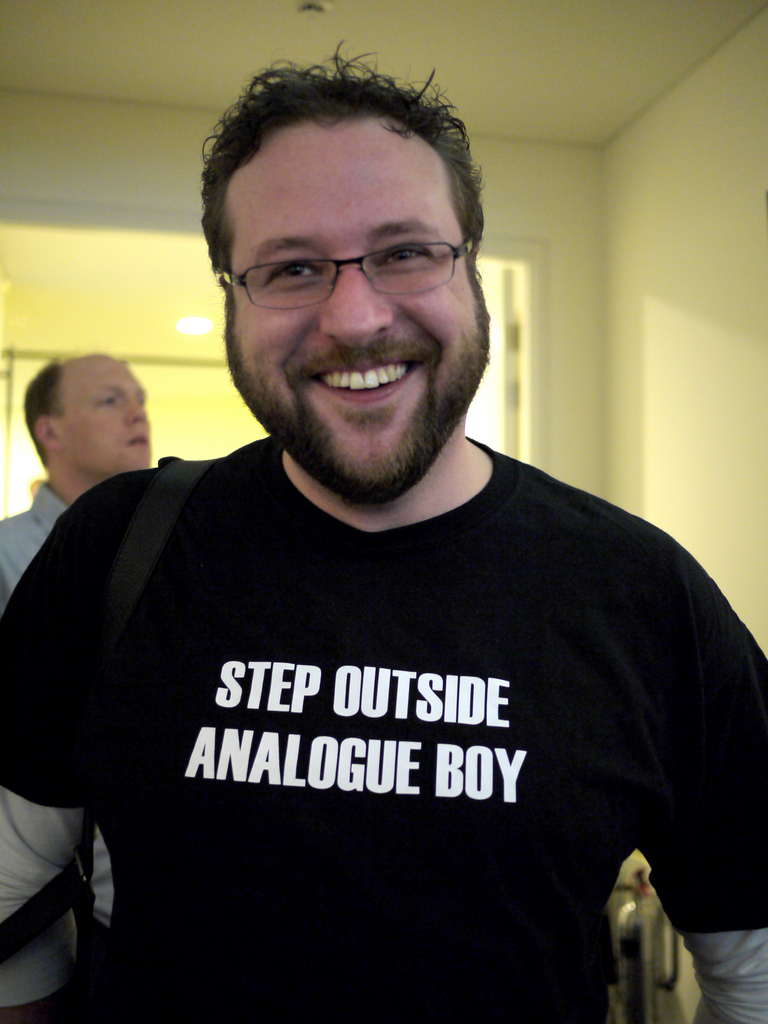
Analogue boy http://www.flickr.com/photos/jenniferpoole/5379048924/sizes/l/in/pool-1638817@N22/

Applause http://www.flickr.com/photos/paul_clarke/5382076388/sizes/l/in/contacts/

FINE PIX: A basic guide to Flickr in local government

Brighton beach shot posted to the Brighton and Hove City Council

You know why Flickr is great? Because all you need is an ability to look at a good picture and say ‘wow.’

Slowly but surely Flickr is starting to spread across local government.

It’s a site that’s a brilliant mix of social and creative.

It’s also a place to celebrate the place where people live.

It’s something I’ve blogged about before with 11 suggestions how it can be used in local government.

This is a basic explanation sprinkled with a few good examples.

What is a Flickr photostream?

Anyone can take out an account free of charge. This let’s you post around 200 images.

Go past 200 and it starts to get trickier and you can’t always see your shots in the one place. Here’s mine as an example. There’s lots of pictures of a place called Beer in Devon. I went there for a week and went a bit bananas with my cheap Fuji camera that cost £70.

Fisherman's cottages posted to the 'Proud of Devon' group.

What’s a Flickr pro account?

For less than £20 a year you get analytics, better tools to upload and the ability to keep your shots in the one place.

How does the social part work?

First, when you create a Flickr stream you can make ‘contacts’. That’s the photo equivalent of a follower on Twitter. Thanks to this route you can see the image stream of your contacts. You can also comment on pictures and favourite them.

What’s a Flickr group?

Anyone with a an account can create a Flickr group on any subject or geographical area they care to. There really are some varied ones that cover all types of hobbies and interest. Big fan of canals, Roman history or gritters? There are groups for you, believe it or not.

Should a council create a geographical Flickr group?

There’s no reason why not but you may want to check to see if there’s not already one.
In Walsall, where I work, there is an excellent Flickr group who work with the council already. There’s no need to create an area-themed one.

But, heck. What do we call it?

Try and avoid the word ‘council’ if at all possible. It turns people off. Proud of Devon which is set up by Devon County Council is a perfect name with some great images.

What does a good geographical council Flickr group look like?

Brighton & Hove City Council with more than 1,100 items and more than 80 members is a worth a look. Not sure about including the word ‘council’ in the title.

However, it also runs in parallel to the long established Brighton group with almost four times as many members and a staggering 56,000 images.

There is the argument that if there is a residents’ group already then don’t muscle in and set your own ‘official’ one up.

A good user generated Flickr group is almost always the best one.

Go to where the crowd is if you possibly can.

There’s a fine example of a geographical Flickr group created by residents themselves. It’s packed with creative commons images of the borough of Sutton.

What if there is no geographical Flickr group?

Sandwell Council was formed in the 1970s merging West Bromwich, Wednesbury, Tipton, Cradley Heath, Old Hill and Oldbury. While people are proud of their town borough pride is slower to develop.

A Sandwell Council Flickr group works because it fills a gap.

How about a themed group?

The Winter Photos of Dudley Borough is excellent. With 160 members it has captured popular imagination.

It’s also a source of photographs with the clearly marked disclaimer telling people that submitting an image means Dudley Council can use it on the web or in print.

What about content forn our photostream? What can we post?

You can post stock images and commissioned shots – if the freelancer who has taken them is fine with it. You can post pics taken by staff. You can post pictures taken by residen ts for competitions too. That’s something Barnet do.

Can a public sector employee use Flickr?

Absolutely. San Fransisco Attorney Dennis Herrera has a Flickr stream which aims captures his office’s work.

What other areas of local government work on Flickr?

Unsurprisingly, its the visual that works well. Finance scrutiny do a fabulous job. They just don’t make interesting pictures.

The Black Country Museums sees museums across Wolverhampton, Dudley, Walsall and Sandwell join together for an interesting and varies collection.

Walsall Museum also has its own stream. It’s a great way to capture exhibitions to showcase what is on offer.

Wolves Parkies – the Wolverhampton parks stream – has an excellent stream with shots capturing nature and the seasonal changes.

Can it be used as a photo library?

Coventry City Council – real innovative users of social media – use Flickr well. They have a photo stream that acts as a photo library and a storehouse of stock images. When commercial image libraries cost thousands to use and operate every use theirs cost less than twenty quid. Hows that for value?

Media outlets as well as hyperlocal sites can go straight to the Flickr page rather than use poor quality images.

Coventry’s shots are largely tagged ‘creative commons.’ This means that they are available for re-use under certain circumstances.

How about campaigns?

Lancashire County Council’s libraries have a Flickr stream linked to the Lancashire Lantern initiative. This puts old pictures over current views rather like the rather brilliant History Pin.

Creative commons

Brighton: Henrike Godoy http://www.flickr.com/photos/godoypk/3912195480/

Notice board: http://www.flickr.com/photos/adrianshort/3962666155/in/pool-1038828@N20

Horse:  http://www.flickr.com/photos/gnuckx/4276963503/sizes/s/in/photostream/

TRUE GRIT: A localgov winter social media case study

Every mile is two in winter, the Elizabethan poet George Herbert wisely said.

True words then and true today and he never had to drive a Vauxhall Astra on the M6 in minus five degree weather.

In local government its worth going the extra mile in wintry weather.

Get things right in sub zero weather and you’re laughing.

Get it wrong and you’re not. Just ask the Scottish transport minister who resigned after scathing criticism.

For the past two weeks Walsall Council – the council I work for –  has been using social media as a key way to keep people updated on wintry weather.

It’s not the first time. Last year, we were one of a small number to use social media. We used Twitter to flag up gritting and service disruption.

This time, we expanded a touch. During the icy period of November 26 to December 11 2010 we used the council website, Twitter, Facebook and Flickr.

What did we do this year?

Staff were primed to email the communications unit, members of the team by 8am every day as well as individuals. When the gritters went out the engineers e-mailed and even called to flag up what they were up to.

Council website www.walsall.gov.uk

With new digital channels taking all the attention you’d be forgiven for overlooking your website. Don’t. It’s where a lot of your content can go.

We used one page on the website as a links directory to more than half a dozen potential service areas so people didn’t have to search around the website.

It’s where most people will go first.

Twitter @walsallcouncil

Stats: 2,200 followers (a five per cent rise in two weeks)

261 tweets at almost 19 a day.

Content: Updates on gritting, school closures, service disruption.
Links to council gritting pages, school closure page organised by education provider Serco.

Links to winter shots taken by residents and posted on Twitpic and Flickr.

Links to BBC weather.

Link to the @mappamercia grit map.

Did we RT?: Of course. Social media is supposed to be social. We retweeted the Met Office weather forecasts, neighbouring authority grit updates and advice on

Facebook: Our Walsall fan page

Stats: 345 likes (up 10 per cent in two weeks)

Daily post views up 3,105 or 82 per cent.

Updates: 27

Each status update received between 159 and 783 page impressions.

Content: Three to four updates a day with links to a general page.

Flickr and Twitpic

Stats: 6 pics posted on Flickr and 12 pics crowdsourced and retweeted on Twitter to provide content from residents themselves. Shots varied from the amateur twitpic to the almost professional here.

A set of pics were posted of the gritters in action at a training event in late autumn designed to test out the routes. These were posted to Flickr but the best pics came from residents themselves. In the spirit of web 2.0 we posted links to good shots.

One pic was crowdsourced for the council website header shot.

Content: snowy scenes taken by residents as well as shots of gritters posted by the press office.

Open data

It’s one of the great jobs of this winter to see a mapping project really take off in Walsall. The Mappa Mercia group are people I’ce blogged about previously. Last winter they drew-up a grit map on open street map for Birmingham. You can take a look here. They spotted the grit routes for Walsall and Solihull too and quietly added them. So, when winter came we were quite happy to link to their map. It shows residents spotting a need and doing it themselves.

Content: grit routes.

EIGHT things we’d suggest:

  • Get service areas to tell you what they are doing.
  • Communicate to residents in good time.
  • Monitor, respond and communicate every four hours. Have a rota to do this.
  • Put the same message across different channels. But in the language of the platform. Don’t RSS it across everything. It won’t work.
  • You can crowdsource good picture content.
  • Have an idea what the frequently asked questions are and think about the answers before you are asked.
  • Take a screen shot of the positive and negative comments from Facebook and Twitter. It gives the service areas an idea of what is being said if you email it to them. The positive stuff will go down very well and make them more supportive of what you are doing.
  • You can reply to negative comments. But if people swear or are sarcastic think twice. You may not have a constructive conversation.

SOCIAL FIGURES: A cunning way to find cool Facebook stats

An amazing statistic like a battering ram breaks down doors.

Here’s a good one.

For every one person who buys a copy of the Express & Star in the West Midlands borough of Walsall there are 10 on Facebook.

That’s print outnumbered by digital by a rate of 10 to one.

It’s the single most powerful argument to use social media in local government you can ever have. Why? Because it shows it’s mainstream. In fact, so mainstream it dwarfs what used to be the colossus of the printed Press.

It’s a cunning wheeze I first came across at the landmark LocalGovCamp in Birmingham in summer 2009.

Paul Cole, a talented man from Derby, spoke about how he did it. People never fail to be impressed by the idea.

You create a Facebook advert — but before you hand over cash you are given the chance to narrow down who you want to advertise to.

It’s at this point that you can get the juicy stats.

Here’s how to come up with one than your community:

1. Log on to Facebook.

2. Click the link that says ‘create an advert.’

3. Fill in the advert. Just type ‘hghghg’ if you like.

4.Upload an image. Any will do. This gets you to the place where you can access figures.

5. Look at the figure in the far right of the screen. That’s the figure of people registered on Facebook for the UK.

6. Add your town or city.

7. Select the radius you want to search from from the centre of your area with 16 km the shortest distance.

8. Click search and you have a figure for your own community.

9. Add an age demographic if you like.

10. Add an interest – like football, knitting or fishing – and search on that term too.

Enjoy!

Creative Commons

Measuring http://www.flickr.com/photos/darrenhester/3989949630/sizes/l/in/photostream/

OPEN FLOODGATES: What publishing Whitehall data means for local government

As one wag said: “A Prime Minister addressing a room full of geeks about open data? I’ve waited years for this.”

At the Wellcome Trust in London more than 200 people gathered for the International Open Data conference.

David Cameron delivered a recorded message and Minister Francis Maude was there in person. So was uber-geek Tim Berners-Lee.

Arranged by the Open Knowledge Foundation This was a chance to launch the UK Government’s data set of its department’s spend over £25,000.

That’s 194,000 lines of text and £80 billion of spending. The link to it is here.

What’s the point in that? The aim is to open the Government’s books to allow residents, journalists and business a chance to have a look.

Pithily one newspaper commentator posed the question: ‘A great leap forward or masochistic folly?’

It is madness isn’t it?

Tim Berners-Lee.

Actually, no. It’s a movement supported by left and right alike which has the aim of cutting waste, allowing entrepreneurs to flourish and a fairer society.

The event may have been Whitehall focussed but there are powerful golden strands that run through all government. Local and national.

Local government has already been asked to publish items of spend over £500 under the label ‘spending transparency.’

They have until January 1 to do it and as Cameron and Maude 100 of more than 300 odd councils had published.

There is a feeling within Whitehall that some will quietly choose not to publish calculating the flak they get for not completing a slightly arcane process is less than the grief a particular financial skeleton may pose.

It’s unlikely Whitehall will allow this to pass without prompting closer inspection.

Walsall Council House.

It’s also unlikely local government will not be asked to publish more as open data. There is more to come. Much more.

Here are some broad messages from the day for local government:

SO, WHAT’S THE BIG PICTURE?

Open data won’t be an easy ride for people in authority. As Francis Maude said: “It’s going to be very uncomfortable for government and local government. Media outlets will find things that will cause embarrassment.”

It’s not going to go away. It’s easy to like open data in opposition, says Maude. You can shine a light at others’ decisions. However, he pledged there were two key advocates – him and the Prime Minister.

The aim is to move influence away from the traditional centres – “information is power. This is a power shift,” says Maude, “to move the decision making away from Westminister.

Expect better decision making on spending – “Once you know you are being scrutinised you’ll be more careful. MP knows this all to well,” Maude says.

It’s FOI turbo charged – It would have taken journalists years of submitting FOI requests to build up the picture revealed in the £25k data sets, the Guardian say.

HOW DOES THIS AFFECT THE PRIVATE SECTOR?

Contracts should allow for open data to be released – The presumption for contracts is transparency, says Maude.

It’ll create wealth – Open government data will create a £6 billion industry, says the Minister.

A website to point the spotlight on the private sector too – Chris Taggart has built opencorporates to shine the light at which big companies are doing well from public sector contracts.

HOW WILL ALL THIS BENEFIT GOVERNMENT – CENTRAL AND LOCAL?

Waste detection – By spotting where the waste is money will be spent better, Francis Maude says.

Procurement needs to get its act together – know what is in the contract before you sign a deal since the detail what it will purchase will be closely monitored, the Minister says.

WHAT IS NEXT?

Historical data will be released – There will be open data from previous administrations. This will help to compare and contrast with the current era.

More public agencies will follow – There are 100,000 public bodies. There’s no timescale for these just yet.

There will be a right to data – David Cameron has pledged that people will ask and receive data for a personal and business use. This is massive for local democracy.

Open data will move from spending into crime – Expect interactive crime maps in the New Year, Maude says.

SO, WHO WILL BE LOOKING THROUGH THIS DATA?

Journalists – the media needs to be data savvy. Data journalism will become more and more important, says Tim Berners-Lee.

“Chatting people up in pubs was one part of your job,” he told journalists in the room. “Poring over data and equiping yourself with the tools to look for the juicy bits will be important.

“Data journalism will be part of the future.”

Right now, local newspapers haven’t grasped what data journalism is. Don’t hold your breath just yet either.

Traditional news is emergency services calls, court and council agendas. It’s not data mining with csv files.

What may put it on the agenda are national stories re-written with a local.

Hyperlocal bloggers – many bloggers have geek tendancies that will happily work with online tools. Stories from all this will be broken by an 18-year-old rather than a laptop. That’s quite exciting. Tools such as timetric.com where graphs can be built using data and embedded in blogs can help with this.

Geeks – an inexhaustable army of geeks will pore over the data – “what happens when the flashflood of geeks go away?” mused Tim Berners-Lee. “It’s perennial.”

Industry – Data company Spikes Cavell have released spotlightonspend.org to interpret local government data. This hasn’t been without criticism from the opendata community who argue against councils dealing solely with the company and not releasing open data too.

Social entrepreneurs – Chris Taggart has built openlylocal.com as a platform for local government data and has been a pioneer in the field.

Real people – Fascinatingly, The Guardian had a team of four working for four days on the data before it was published. They didn’t think they could glean everything themselves. What they did do was make it possible for the public to use the tools to search for stories. This is the wisdom of the crowd as an extra pair of hands in the newsroom. You can download their app here.

BUT IT’S NOT ALL GOOD NEWS….

There’s no funding for people to cross check the data – As one questioner pointed out the tools that held government to account – journalists – have historically been cross subsidised by other sources such as small ads.

There’s no funding for these resources. There’s a question mark against the sustainability and effectiveness of tools.

Creative commons credits:

Tim Berners-Lee: Paul Clarke via wikipedia. http://en.wikipedia.org/wiki/Tim_Berners-Lee

Hand: http://www.flickr.com/photos/davedugdale/5099605109/sizes/l/in/photostream/

Parliament: http://www.flickr.com/photos/olastuen/3784184031/sizes/o/in/photostream/

SLIDE SHARE: How pictures can be used for civic good

A good picture jumps from a page with the power to make you laugh, smile, wonder or be inspired.

I’m passionate abut the fact you don’t need to be a photographer to do civic good with images on the social web.

What’s Flickr? It’s a photosharing website. I’m a big advocate of it and I’ve blogged about how it can work in local government before.

The very nice people at Future Gov and Local Government Improvement and Delivery organised Local by Social Midlands ediction in Coventry.

This brought residents, web people and local government together.

The format is simple and powerful. A few speakers to inspire. Circulate a pre-collected list of residents’ wishes.

Then with the residents, sit down and try and work out a solution using digital tools.

This was the presentation I gave on Flickr. Hopefully it helps answer the questions: what is Flickr? How does Flickr work and how can it be used for civic good?


View more presentations from danslee.

It has a summary of how Flickr works and four case studies of it in action.

Case study 1:

The Walsall Town Hall Flickr meet. How photographers from the community can take pictures of a landmark. You can see more of the images taken at the event here.

Case study 2:

How Flickr images taken by the community can be used by a public sector website as a way to celebrate the area and individuals’ work.

Case study 3:

The Caldmore Village Festival. How Flickr photographers recorded an event and shared the images to a wider audience. It’s mentioned on this blog too. Here are some shots taken at the event.

Case study 4:

Newman Brothers: How a campaign for funding harnessed the power of photography through Flickr. Here are some shots taken by amateur photographers and posted to Flickr.

Case study 5

This arrived too late for me to include in the presentation but acts as an excellent way for residents and local government to connect. Paul Clarke took a shot of a street scene when he was back in his native Ormskirk.

When he spent time looking at it properly he was appalled at a right yellow canopy from a cheque cashing outlet. Traditional routes failed but using Flickr and whatdotheyknow.com pressed planners to take up the case. You can read Paul’s excellent blog on the subject here.

Should local government fear this route? No. Not if people want to deliver a better service.

That shows that photography doesn’t always showcase the best of a borough.

Sun rise above Quarry Bank in Dudley. An image posted to several Flickr groups and celebrates this corner of the Black Country.

That’s a point echoed by Mike Rawlins and Nicky Getgood from Talk About Local.

Shaming pics of abandoned cars work on a community blog and can help prod a council into action, they argued.

A functional pic of a pothole can work on fixmystreet.com as a way to report a problem.

shot of the sun rising over an allotment, stained glass in Walsall Counci House or Spring bulbs celebrate an area.

Each stream is just as valid but has an entirely different character.

It can shame, remind and celebrate.

That’s the power of a good image.

A WAR STORY: A digital story for Remembrance Day

 
My great grandfather Sapper Peter Molyneaux (second right) with his sons George, aged five and Robert, 18 months, his wife, Jim, aged 10, Peter (my grandpa) aged three and Harry, aged seven.

As I watched a tear run down my grandpa’s face I realised the First World War hadn’t ended.

This proud man with clipped military moustache and silver hair sat in a chair across from front of me.

This was 20 years ago. I was a teenager and had been ushered in slightly reluctantly to talk to him on one of his visits.

We chatted awkwardly for a while. I’m not sure how it came up but he started to recall what happened in 1916 when his father died 70 years before.

There was just me and him in the room, a ticking clock and rain on the windows.

He cleared his throat and paused. He straightened his tie and he looked above me at the clock on the mantlepiece as he composed what he was going to tell me.

He was three, he told me, when his father left him. A Liverpool docker his dad was called up to become Sapper Peter Molyneux in the Royal Engineers.

Like his brothers he was six foot, the life and soul of the party his bulk towering over others.

His dad was sent to Mesopotamia, modern day Iraq, to help protect oil supplies.

History tells that the British expected easy victory but were cursed in this inglorious backwater by disease.

A last letter home scribbled in pencil was cheerful but his weakened handwriting gave the truth away. Sapper Molyneux died of dysentry three days later on May 22 1916.

“But that was war,” my grandpa said. “That was what happened.”

Looking back, I can remember every tick of the clock and inflection in his voice as he told me the story. As he finished a tear came to his eye and he reached into his pocket for the pressed handkerchief he always carried. He wiped it away. And I sat unsure what to say. So I said nothing. The conversation unfinished and I knew with crystal certainty it would never take place again.

Months later on Remembrance Sunday alone with a radio and the Last Post his tear came to me unexpectedly and I buried my head and sobbed and sobbed and sobbed.

But my Grandpa, protective of his mother, didn’t tell me what happened next. This emerged at a family funeral years later.

My grandfather’s mother could not cope. Shattered by grief and care worn by feeding five children she married again too soon to a man too fond of drink.

One thing isn’t clear. Did he persuade her to leave her children behind? Or did she die of pernicious anemia the product of a poor diet? We’re not sure.  What is sure is that for three months the remaining children kept up the pretence of family life rooting for food in bins until their shame was exposed.

This was pain on top of pain on top of pain on top of pain.

I try hard not to, but even as a man with two children all I can see is life’s hard unseen hand slapping the small boy that grew-up to be my grandpa. A boy who looks strikingly like my own son.

Without a state to intervene the Molyneaux children were distributed to kind relatives.

As time went on, the boy grew up, married and was called up himself and sent in his father’s footsteps to Mesopotamia.  This time it was World War Two.

On a lull in his duties in the desert near Basra he searched without success for his father’s grave.

That he could not find that grave was a sadness I felt.

Years later and long after my grandpa’s death I took up the search online. It took five minutes on the Commonwealth War Graves site.

It was as easy as googling and it felt wrong he was not there to see it.

Sapper Peter Molyneux is buried at grave XXI row F20 in the Kut-al-Amara graveyard near Basra along with 4,620 others.

When he died, my grandpa left me a wooden desk with a secret draw. In it I found a creased envelope and things from the Second World War.

Inside the envelope was a handful of sand.

I like to think of my grandfather in the Second World War stopping and picking up that handful of sand in Mesopotamia and carefully storing it when his search for his dad’s grave failed.

It’s a conversation and a story unfinished. It feels unresolved and I’m just not sure how to resolve it.

It’s what I think of on Remembrance Sunday.

But maybe that’s the Liverpudlian in me. They’re sentimental like that, are Scousers.

Sapper Molyneux’s great great grandson Joe Slee proudly sporting his Remembrance Day poppy.

But it’s not all sad.  My grandpa died achieving one of his aims in life. He became the oldest person to achieve an Open University degree aged 83 in the year he graduated.He also had three grandsons who have had seven grandchildren.Sapper Molyneaux’s great grandson – my son Joe Slee – bought a poppy for the first time this year.

He trooped into school with his 20p and came back with it on his jumper.

This is a good thing.

When he is older he may learn more about how war affected his family years before he was born.

So why is this story on a blog about digital?

Because the power of the connections that the internet makes cannot be over estimated.

It’s good to remind yourself of that – and other things.

2014 EDIT: My son is now 10 and for a school project we’re looking at Sapper Molyneux as being someone who died in the First World War. We’re researching him, his background and what life would have been life in Liverpool for him. We’ve already made some amazing discoveries and I’ll blog them later this year.

LINKS:

Commonwealth War Graves Commission.

Sapper Peter Molyneux’s Commonwealth War Graves Commission page.

Mesopotamia campaign on Wikipedia.

OPEN DATA: A warning from history

Was this the first data visualisation? Florence Nightingale uses statistical data to argue for healthcare reform for soldiers in the Crimean War.

Open data cutting edge? Like top hats, Christmas trees and giant factories the Victorians got there first.

They may not have built a chimney sweep Google death map.  But their approach was similar. Collect the data. Publish it. Draw conclusions. Argue for change.

Don’t believe me?

Look at Florence Nightingale in her funny lace bonnet. Historian Dr Stephen Holliday in BBC History Magazine August 2010 writes about how she used statistics to

Florence Nightingale - 'funny lace bonnet.'

revolutionise the care of soldiers in the Crimean War.

By using statistics – data  – she painted a picture to show a revolution in care was needed.

“When she reached Scutari the base for casualties from the Crimea,” Halliday writes, “Florence calculated that deaths from disease were seven times those arising in battle and used the campaign to campaign for better food, hygeine and clothing for the troops.”

Battered by the force of Florence’s figures and cutting edge reporting that forged the reputation of The Times the British government was forced into changes.

After the war Nightingale used her Royal connections coupled with arguments based on charts and tables to press for better standards for soldiers who even in peacetime had death rates double that of civilians.

The result? Death rates fell by 75 per cent.

Florence herself said that statistics were “the cipher by way we may read the hand of God.”

We may have lost that religious zeal but it’s an argument Tim Berners-Lee would recognise as a modern-day Florence Nightingale with a passion for data.

Tim Berners-Lee - 'a modern Florence Nightingale'.

Did she get it right all the time?

No. Here’s the warning from history.

By misreading available data Florence Nightingale later helped kill thousands of people.

How?

She used statistics to wrongly argue cholera was an airborne disease.  It wasn’t.

It took London GP Dr John Snow to collect his own data on death rates in his patch to argue they were caused by a contaminated water supplies.

So what’s the message to today’s open data pioneers?

That first data visualisation you have in front of you may not be the whole picture.

The map that Dr John Snow drew to discover that cholera was a waterborne disease.

There may be more to it.

Remember the phrase ‘lies, damn lies and official statistics?’

Statistics were once hailed as the magic cure-all that revealed a hidden truth.

It’s been said that all data in some form or other is political. Let’s not see open data similarly tainted.

LINKS

Florence Nightingale –http://www.florence-nightingale.co.uk/cms/

BBC History Magazine August2010 http://www.bbchistorymagazine.com/issue/august-2010

Creative Commons:

Crimean War data visualisation: Wikipedia.

Cholera map: Wikipedia

Tim Berners-Lee: Paul Clarke via Wikipedia

LOCAL BY SOCIAL: What should Comms 2011 look like?

Back in the olden days all a press officer had to do was a write a press release and book a photo call.

Boy, how things have changed and more to the point are changing rapidly.

How web 2.0 and web 3.0 will affect the communications unit – or press office in old money – is something that I’ve spent a great deal of time mulling over. Why? Because it’s my job.

I’m a senior press officer at Walsall Council. The job I walked into in 2005 is almost unrecognisable to the one I do now. Yes, it now includes, Twitter, Facebook and other forms of social media – or web 2.0 if you are a bit of a geek. But it’s also open data and the challenges of web 3.0.

The nice people from Local Government Improvement and Delivery have asked me to lead a session at their Local by Social online conference on November 3 2010 at 3pm. Looking at the speaker line up it’s something of an honour. There’s plenty for people to get their teeth into on a whole range of subjects.

I’d very much like to hear what your thoughts are. Take part ion the session. Chip in. Listen. It’s all fine. 

Firstly, here is a presentation designed as a starting point and to get the ball rolling…

Secondly, here are a few thoughts I blogged a month or two back. You can read the full version here.

In the days before the web the press office needs to:

Have basic journalism skills.

Know how the machinery of local government works.

Write a press release.

Work under speed to deadline.

Understand basic photography.

Understand sub-editing and page layouts.

For web 1.0 the press office also needed to:

Add and edit web content

For web 2.0 the press office also needs to:

Create podcasts

Create and add content to a Facebook page.

Create and add content to a Twitter stream.

Create and add content to Flickr.

Create and add content to a blog.

Monitor and keep abreast of news in all the form it takes from print to TV, radio and the blogosphere.

Develop relationships with bloggers.

Go where the conversation is whether that be online or in print.

Be ready to respond out-of-hours because the internet does not recognise a print deadline.

For web 3.0 the press office will also need to:

Create and edit geotagged data such as a Google map.

Create a data set.

Use an app and a mash-up.

Use basic html.

Blog to challenge the mis-interpretation of data.

But with web 3.0 upon us and the pace of change growing faster to stay relevant the comms team has to change.

ICE INNOVATION: Ten case studies and ideas to innovate in the winter

Oh, the weather outside is frightful but the idea of doing cool things is always delightful.

Last year, the idea of tweeting when your gritters was going out was revolutionary.

Around half a dozen councils were leftfield enough to do it and the idea spread.

Public sector web standards organisation SOCITM picked up on it making it mainstream with their report for subscribers.

Is that enough?

Can we stand still now?

The fact is local government needs to innovate like never before.

Someone famous once said when you innovate, you’ve got to be prepared for everyone telling you you’re nuts.

So, where’s the innovation this year? Here’s some ideas and pointers on how straight forward they are…

1. MAP YOUR GRIT ROUTES

In the West Midlands, there’s some amazing innovation from mapping geeks.

Bright people from Mappa Mercia including the excellent Andy Mabbett last year built a grit map on Open Street Map to show grit routes in Birmingham. They dug out the routes from pdfs on the council website.

Now, they’re adding Solihull and Walsall too ready for the winter onslaught.


Birmingham City Council have linked to it from their transport pages and we at Walsall Council are tweeting it when the weather gets bad.

That’s a good example of working with a talented and community-minded online community.

Advantage: Community engagement.

Disadvantage: You need mapping geeks to be grit geeks too.

2. TWITTER GRITTER

Everytime you go out you tweet the fact. If you’re not doing it you should. It’s not enough to provide a service at 2am. You need to tell people. Why? Because they won’t know your council tax is being spent in such a way and they may well ring your harrassed staff at a time when they are thinly stretched.

It’s something I blogged about last year with a case study mapping more than 70 tweets.

Advantage: Community engagement. Cuts down unneccesary contact.

Disadvantage: You’ll need some kind of rota or it’ll all fall on one person’s shoulders.

3. YOUTUBE

A short clip to explain what the gritting service is all about. Shot on a Flip video It’s a good way of communicating what is being done.

Embedding the video in the service’s pages should be straight forward. Linking to YouTube and posting via Twitter and Facebook is easy. Tweet the link when you’re team are hitting the road

Advantage: Creates blog-friendly web 2.0 video content.

Disadvantage: You need a Flip video. The process isn’t instant.

4. MAP GRIT BIN LOCATIONS

Publish grit routes as open data? Why not.

But beware the perils of derived data that quicksand argument that means anything based on Ordnance Survey is mired in dispute.

Advantage: Publishing open data increases transparency

Disadvantages: It can’t be based on OS maps.

5 FACEBOOK

As local government Facebook sites mature and grow there’s more reason to post grit updates there too.

Drawbacks? Not all phones will allow you to post to fan pages and you may have to log on at a PC or a laptop.

Advantage: You reach the massive Facebook demographic.

Disadvantage: Your Facebook fanpage is harder to update than a profile.

6. LIVE TWEET

A trip around the borough in a gritter with a camera phone geo-tagging your tweets. It works as a one off and builds a direct connection.

At Walsall, we tweeted the testing of the gritters in a dry-run for winter including geotagged shots from the cab itself as it trundled around the streets.

Advantage: A service from a different perspective.

Disadvantage: Labour and time intensive.

7. TEXT AND EMAIL ALERTS

Sometimes we can be so struck by new gadgets that we can forget the platforms your Dad and mother-in-law have.

Simply speaking, there are more mobile phones in the UK than people.

Many councils are charged around 8p a text to issue an SMS. That’s a cost that has to be picked up from somewhere. But using the standard costs per enquiry of around £7 face-to-face and £5 over the phone the 8p charge starts to look viable.

Advantage: You can reach large numbers of people and cut down potentially on unavoidable contact.

Disadvantage: It costs.

8. BIG SOCIETY TWITTER GRITTER

Not every council has the resources to tweet its gritting. In Cumbria, the community of Alsthom high in the dales regularly gets cut off in the snow. Fed-up with the council response the town clubbed together to buy their own gritter.

Community and digital innovator John Popham floated the interesting idea of the community stepping in to tweet gritting activity. In effect, a Big Society Twitter Gritter It’s a fascinating idea, would share the burden and may fill the gap where a council doesn’t have the digital skills or the staff.

Advantage: If there are residents willing it’s a good partnership potentially.

Disadvantage: It’s dependent on volunteer power.

9. QR CODES

What are they? Funny square things that your mobile phone can identify and can download some information about. I don’t pretend to fully understand them and I’m not sure if they’ve reached a tipping point in society just yet. However, Sarah Lay of Derbyshire County Council is looking at adding QR codes to grit bins to allow people to report problems. It’s a fascinating idea that needs looking at.

Advantages: Tech-savvy citizens can use them to pinpoint problems.

Disadvantages: A format that is still finding traction amongst the rest of the population.

10. OPEN DATA

What can you publish as open data? Wrack your brains and consult the winter service plan. There’s grit routes themselves. There’s the amount of grit stockpiled. There’s the amount of grit spread day-by-day.

Advantage: Open data is good for transparency.

Disadvantages: Day-by-day updating could be tricky as engineers are snowed under. If you’ll forgive the pun.

Links:

Creative commons:

Walsall grit pile Dan Slee http://www.flickr.com/photos/danieldslee/5087392858/

Four Seasons bridge http://www.flickr.com/photos/fourseasonsgarden/2340923499/sizes/l/in/photostream/

Twitter gritter Dan Slee http://www.flickr.com/photos/danieldslee/5115786276/

Road m4tik http://www.flickr.com/photos/m4tik/4259599913/sizes/o/in/photostream/

Exit mobile version