Turn the clock back six or seven years ago and video was the expensive nice-to-have tool in the comms toolbox. Wind forward to 2020 and its clear that video has become the essential asset that needs to be tucked into every team’s skill set. There’s been a perfect storm with video. Austerity has trimmed budgets. Better technology has made shooting video on a smartphone achievable. Since 2015, feature films have been shot on them and you’ll be hard pushed to buy a phone that won’t shoot 4k footage. And to top it all off, social platforms have been rewarding video posted directly to it. Video is not a golden bullet that will reach every audience but it is a handy tool. It dodges ad-blockers, it can tell a story, it is sharable, it can show how to as well as provide trusted evidence in a way that pictures can’t and words definitely can’t. Fake news? While deep fake video is here there’s still a residue of trust with the moving image that we have spent a lifetime investing in.
“Over time we would expect more short-form video to be consumed via smartphones. Screen quality is improving, making images more vivid. More content is being created for mobile, with certain genres, such as memes, working particularly well. Traditional video creators, such as TV news programmes, are getting more adept at repackaging their content for viewing on smartphones.” – Deloitte Mobile Global Mobile Survey
I’ve helped deliver video skills to comms people for the past five years. I’m proud that myself and Steven Davies were the first to offer bespoke training.
In the UK, these are the channels where people consume video
The one-size-fits-all for communications died a long time ago. So, it should be no surprise that different demographics consume different media. Delve into the data and you’ll see the differences.
50 per cent of 16 to 24-year-olds watch YouTube every day.
60 per cent of 65-year-olds will watch ‘how to’ videos – the most popular topic in that demographic.
In the UK the online platforms where video is watched
91 per centof marketers are satisfied with ROI from creating video. (Source: Animoto, 2019) 92 per centof marketers who use video say that it’s an important part of their marketing strategy (Source: wyzowl, 2020) 46 per cent of first-time video marketers started using video in 2019 because they believe video is becoming more affordable. (Source: wyzowl, 2020).
Video content is effective
85 per cent more people are likely to remember a video call to action versus a text call to action (Oberlo, 2019). 72 per cent would rather watch a video to find out about a product or service (Source: wyzowl, 2020). 86 per cent of people go to YouTube to learn something and be educated (Source: Google, 2018)
When I was a kid, towards the end of 1979, my Mum told me a whole new decade was coming and it was going to be great. I can still remember the excitement.
As 2019 ends, a new decade will begin. Excitement isn’t the overriding feeling. If the last 12-months have been turbulent next year will be more so.
Always around this time of year I’ll look forward and make some predictions, some will be right.
What I got right in last year’s predictions
Last year I predicted Social media did get more closed, and Facebook groups would grow along with WhatsApp and Messenger. We’ve seen the public forum and we don’t like what the mob can look like.
Predictions of 5G roll-out, Brexit chaos and abuse of elected members now feels like shooting fish in a barrel although the food shortages and queues didn’t happen. Voice search did grow. More public sector people did sub-title their videos and the need to evaluate got more pressing. Facebook didn’t go away despite some predictions the game was up.
AI became more important but was a hidden set of skills as people bought new media monitoring and other tools. Local democracy reporters did prove their worth and they will expand in 2020. Comms teams did rely on gig economy work and innovation came from journalism.
What I got wrong
I spoke at the need for fake news rebuttals in minutes but we’re nowhere near close. More bankruptcies didn’t happen in the public sector although the threat remains. Trust in institutions continued to fall but the public sector didn’t respond by allowing more voices from across the organisation to connect. The public sector again shied away from properly engaging with young people through new channels just when I thought they’d get better at it.
So, predictions for 2020
The teams that root-and-branch re-shapes their strategy every single year will prosper
It feels like 2020 is a prime year for a re-boot. Eleven years since the first public sector organisation started using Twitter the holy trinity of Twitter, Facebook and YouTube badly is as dated. Twitter is now the joint 6th largest channel. Facebook pages are withering choked by indifference and deliberate Facebook strategy that starves pages of audience unless you advertise. Go back to brass tacks. Check your audience. Check your channels. Is it really a press release? Is it Twitter? Do it urgently.
Oddly, local newspapers and local radio will become more important
By local newspapers, I don’t mean the print edition. I mean the online version. There has rarely been more readers of their content. Reach plc has 39 million online readers and is only marginally behind the chart-topping BBC. With declining trust in institutions, the online mob and fake news growing the established voice of local radio and local newspapers will be trusted more. But to crack this comms people may need to entirely adjust the content they’re creating.
The need for well thought through regulation grows… but there won’t be any
It’s widely accepted tech companies, privacy and new technology needs checks. But with the long shadow of Brexit, Parliamentary time will be spent on other things by national politicians who don’t understand technology.
Brexit will continue to cast a long shadow
If you think Brexit is over because of a Conservative majority, think again. Leaving at the end of January will happen but will a transition period, negotiations, relocations, emergency planning and the chance of crashing out without a deal. Tactically, polish-up your emergency plans. Strategically, plan for smaller budgets.
Managers with EU members in their team need to be especially aware.
Nationalism grows
As the impact of Brexit becomes clearer louder will become the voices of the nations. Government and local government communicators will feel this pull. Not all of it will be attractive.
Ethics will be challenged
The 2019 General Election saw ethics flouted and barriers pushed. There will be pressure on government communicators to build that fake fact checking account or create that Facebook ad with falsehoods. Institutions like CIPR, NUJ and LGComms need to batten down the hatches and make sure their ethical advice is clear and available. Managers and heads of comms need to brief their teams and stand behind them. NUJ membership has never seemed so sensible.
Aside from this, you may be asked to justify something you feel to be morally unpalatable.
Mental health-washing
From CIPR research, it’s clear that mental health issues are an issue. Beware managers, people and organisations who tell you to take lunch breaks then overload you with work. A yoga session once a year isn’t a strategy. It’s a fig leaf.
Stay neutral
As debate continues to polarise, public sector communicators need to double down on their neutrality. Most communicators are politically restricted which allows them to be a party member but not campaign or make political statements. There will be more pressure on this and greater penalties for those who break it.
TikTok and influencers
TikTok will grow. This is a tricky. It has a growing audience. But there are barriers for the public sector. They’re Chinese-owned and they have issues as a platform around child protection. The bright public sector team may find most success by side-stepping to engage influencers rather than using it direct. Influencers doesn’t mean Zoella. They’re your museum visitors. Or the teenage carers’ group encouraged to create content on their own channels.
In the NHS, crisis comms
With NHS staff recruitment and retention problems and stretched budgets the challenge will be simply to keep the A&E doors open. Expect a year of attritional crisis comms caused by shortages and partner screw-ups. Where private companies are involved pay very, very close attention to who is responsible for PR in the contract.
In the fire service, crisis comms
Expect cuts and fires under the long shadow of Grenfell.
Get good at voice search or go home
Between 30 and 50 per cent of all searches are done by voice. The skill of creating online content for voice is poorly lacking. Your web team need to look at how to crack this problem to serve their residents. Reputational damage looms.
5G will see more video consumed
5G was introduced in the UK in late 2019 and will grow in 2020 as more devices are sold. In theory, downloading a movie takes seven hours on 4G and no more than 40 seconds on 5G. However, it will take time to roll out. Over time this only points to greater video consumption and over time a flattening out of the digital divide as rural areas enjoy far faster download speeds.
Facebook groups continue to grow
In 2019, research showed that the number of Facebook group members grew by more than 120 per cent. This trend will continue. Public sector people will need to develop the skill to connect with group admins and share content.
Public sector no-go zones and shareable content
Dark social platforms such as WhatsApp and Messenger have created a black hole on the internet where the public sector are not allowed or encouraged. These no-go zones are where misinformation and disinformation can circulate.
To counter this, the need for sharable content that works in whatsapp as well as social media is needed. So, images, gifs, memes and videos. Not unsearchable pdfs on websites.
Getting good at pre-buttals
A pre-buttal is getting your voice in before someone else does. The Royal British Legion in the run-up to Poppy Day are gold standard. They tell people that no, wearing a poppy doesn’t mean you support war and they create sharable content in doing it. Take a leaf out of their book and create things than can be shared.
In 2020, you are locked out of part of the landscape with WhatsApp, Messenger and hostile Facebook groups, this is part of the arsenal you’ll need.
Check in with AI
AI will grow. For me, you don’t need to know how to do it. You do know its happening. There is some great work done by the CIPR #AIinPR group. Keep tabs on their work.
Gig economy comms support grows
The cost of employing people full time as part of a team is onerous so the trend towards bringing people in project-by-project will increase. If you are skilled and freelance you’ll find clients.
Email marketing as a safe harbour
In a changing landscape where investing time on a platform doesn’t lead to long term certainty there will be safety in investing time in email marketing. Unsexy but effective. Collecting email addresses in a GDPR-compliant way will be worth it as part of any mix.
The tech gap widens
As new technologies emerge the public sector won’t be in the vanguard. Postponing the website rebuild for another year won’t show up on a balance sheet but it will further erode the point of the public sector to someone who banks and shops online.
Voter ID will be a headache
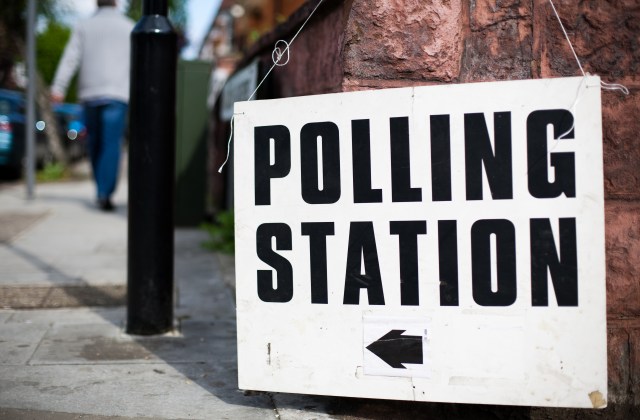
In 2016, there were two convictions for voter fraud. As a response, the UK government is bringing in legislation to require all voters to bring photo ID. If people think online grief about pencils in polling stations is a headache, boy, you’ve seen nothing yet. Plan. Communicate. Do your best. Don a helmet. Don’t get me started about Russian involvement in elections.
Climate change comms
The recurring issue will be climate change either directly through flooding or extreme weather through protest as the green movement goes mainstream. Expect more incidents to react to and more protest.
Well, blow me. I’ve just noticed I’ve been blogging for 10 years.
So, I’ve been looking back.
Bear with.
I started when social media in the public sector was new there was a group of us looking to try and get our heads around it. It was by Twitter, unconferences and blogs that we worked it out.
Then, I blogged weekly sitting at the dining table late at night at the end of the working day. I’d listen to a Canadian krautrock band called Holy Fuck. Now I write in my own office or on the move and it is the working day.
Each blog I write is a digital post-it note to store for future reference. Some have been read by tens of thousands and some less than a dozen. Both are fine.
As time has evolved, blogging has changed. In my first year, 1,801 people came to my blog and Twitter was the most significant referer. In my 10th year, 72,000 came and search engines were how people found me most. Everything I now do comes directly or indirectly from blogging.
It may be quite an old school thing to do, to write and then post but I find it hugely cathartic to work things out in writing instead of by talking about them. That’s not for everyone, I know.
“For me, there are two purposes for the corporate and the devolved non-corporate. The corporate can put out the central messages. It should be a Match of the Day highlights show sharing the best of the rest. It should be human. The comms team can set the direction. It can deliver the training. But the non-corporate team, service area or individual accounts are where the real gold will be found. So have both.”
“What is human comms? You’ll recognise it if you see it. It’s engaging and it connects. Sometimes it delivers a message. Sometimes it just works to show that human beings also work in an organisation, too.”
“It’s astounding the number of people playing fast and loose with their organisation’s Facebook pages. How? By allowing or even encouraging staff create second profiles to be admin.”
“So, what is the difference was between journalism and PR? I’ve stopped and asked myself the question this week. I’ve been thinking of how to explain the difference.
“For 12-years I was a journalist and rose to become assistant chief reporter of a daily regional newspaper. Back then I would have told you that the difference was news was everything they don’t want you to know. The rest is PR, I’d have said.”
He buys me a pint and after we take a drink he tells me he’s doing to tell me something really important. He levels with me and I’m expecting some tips on how to chat up women. Or at the very least play cricket better. He leans across the table.
“Dan,” he says, “the best advice I can give you in life is never argue with an idiot. You end up on the same level and to a passer-by it’s just two idiots arguing.”
He said: “My generation of the Web 3.O PR will be a digitally native team with skills… yes there will be the specialists, but I’ll be the cost effective one, the one who will build your campaign, take the photos, make the videos, stick it on a web site, tweet about it and get your brand the press attention you want.
“The future is diverse, and the industry needs people who can adapt and change across all platforms, digital and otherwise.”
As never before local government needs to shout what it does from the roof tops. In a 24-hour experiment colleagues across Walsall Council on March 3 aim to do just that. This is the first time in UK local government – and possibly the world – someone has tried something on this scale.
As I watched a tear run down my grandpa’s face I realised the First World War hadn’t ended. This proud man with clipped military moustache and silver hair sat in a chair across from front of me.
This was 20 years ago. I was a teenager and had been ushered in slightly reluctantly to talk to him on one of his visits. We chatted awkwardly for a while. I’m not sure how it came up but he started to recall what happened in 1916 when his father died 70 years before.
Channel 4 news reader Jon Snow apparently once told a Local Government conference: ‘The trouble with you lot is this. You do wonderful things. You’re just a bit boring.’
As an ice breaker it’s bold. Trouble is, he’s right. Partly. Councils deal with people. They help them in all sorts of ways with 800 services – many of them amazing. But how do you give them a human face? That’s where Twitter can work brilliantly for councils.
There is a creativity at Christmas that you don’t always find at other times of year and its lovely to see.
Looking round at the seasonal offerings from the public sector there’s a mix of things from the professionally shot to the smartphone created.
If there was one wish, it would be for people to exercise creativity at other times of year. To steal the Dog’s Trust slogan, creativity is for life not for Christmas.
West Yorkshire Fire and Rescue’s ‘Fairytale of New York’ parody
This five minute epic is long on time but well put together. I’m presuming they’ve got around the legal obstacle of copyrighted material and using an established Christmas song to parody gives them a headstart. Bonus brownie points for sub-titling.
Why this is good: A catchy tune well sung with some fire safety messages. And sub-titles.
Leeds Teaching Hospital’s Christmas film of elves making presents
There’s a bit of a narrative here. The staff help make the presents so the children can have a happy Christmas. It’s a story in its own right and I reckon by focussing on staff as the stars of the film they’ll get a decent reach as their friends, families and colleagues share it.
Why this is good: Staff are human beings. And Elves.
Sandwell and West Birmingham Hospital’s player visit
West Bromwich Albion players visit the children’s ward to give out presents and lift spirits. More newsy than story telling the players are featured meeting patients. Branded with the logo this is eminently sharable.
Why this is good: Footballers with real people.
Durham County Council’s recycling Christmas song
This is really straight forward. Take a festive song and add some lyrics that encourage recycling. They’ve dropped in some festive touches and cutaways.
Why this is good: Staff being festive with a simple message.
The dog is part of a campaign to encourage people to come to town centre events with the wider hashtag #hendrixthereindeer.
Why this is good: Children + animals + Christmas + storytelling = win.
Cambridgshire public sector’s film that reminds people they work over Christmas
Many people work over Christmas and often its unseen and taken for granted.
So, a film with a Christmas carol that soundtracks footage of foster carers, gritters, police officers, fire crew, control centre staff, housing people and others is a nice way to remind people that there’s help and support.
Why this is good: Action shots of public sector people.
Essex Police’s film about Jess the dog
There’s a story to this. Jess maybe knaws on a present from under the tree, helps herself to a piece of chicken and can be cheeky. But at heart, she’s a good dog and helps catch the bad people. I’ll presume they secured permission from REO Speedwagon to use their track.
Why this is good: Dogs are great and people will watch them and the safety message you may want to add.
Kent Fire and Rescue’s fire safety tips as verse
A Christmas story with fire safety tips on not overloading plug sockets, snuffing candles out and other things.
Why this is good: By using the metre of ‘Twas the Night Before Christmas’ the verse feels familar and is easily adapted. And there’s sub-titles, too. Win.
Full disclosure: in the past I’ve helped train staff from Kent Fire and Rescue Service, Wigan Council and Sandwell and West Birmingham NHS.
Thanks to spotters Madeleine Sugden, Hannah Pudner, Georgie Agass, Caroline Riley, Michelle Atkinson, Alex Walsh, Kerri-Ann Docherty, Heather Turner, Hayley Douglas, Kevin Wright and Rob Davies.
There’s a fascinating new batch of statistics for the UK media landscape and you should see them there’s some surprises.
If you stare at tectonic plates for five minutes not much happens. But when you map them over time you can see the big shifts. Same with a new batch of Comscore data.
Change. Should we be surprised? No, the only constant in communications is change. Constant change. As Robert Phillips wrote in ‘Trust Me: PR Is Dead’ we need to embrace chaos because we’ve not got much choice.
Five hot takes on what the new UK social media data says
Commscore have published some data on who is using what and anyone with an interest in communicating needs to take a look at them. I’ve read and crunched the numbers.
There’s no TikTok in these figures, yet. But I’m sure the music and video platform will be making a dent in the figures just as they are amongst teenagers.
Twitter has slipped to equal 6th in the UK
Wow, this is really striking. Remember when Twitter and Facebook were neck and neck? Good times. As Twitter declines, are we easing off the tweets? I’ve long had a hunch that the public sector is too closely wedded to Twitter. It’s easy. It was one of the first platforms to be mass-adopted by government. That makes it safe. But we kid ourselves if we think that by using it we are reaching all audiences at all time.
YouTube still dominates
Video remains a booming destination with more than 46 million users for the Google-owned platform in the UK. That’s a lot of unboxing, make-up tutorials, vloggers, music videos and how-to guides.
Facebook hasn’t gone away
After Cambridge Analytica the kickback against Mark Zuckerburg was significant. But the platform remains significant.
Instagram elbows its way to 3rd
Instagram is a difficult one. The public sector feel at home with Facebook and Twitter and are happy with using YouTube badly. But Instagram? Look around the room and there’s a whole range of expressions on people’s faces very few have nailed it.
The fact that it is third on the list in the UK and has elbowed a while pile of other platforms aside is striking.
LinkedIn puts on some muscle
Throughout 2019, LinkedIn has come of age with some tweaks to how it operates. Looking more and more like Facebook with a newsfeed that actually has value the platform has shed its grey image. Sure, there’s not much bantz and holiday pics but that’s the whole point of LinkedIn, isn’t it? It takes itself more seriously and when you want to be serious its really handy.
Dark social keeps rising
Messenger and WhatsApp have blindsided many people. They’re on people’s phones and are a brilliant way to quietly tap someone on the shoulder or have a closed group for a limited number of people.
But hang on a minute… newspapers?
One striking thing about the commscore stats is the focus it puts on the digital footprint of what we used to call local newspapers but can now call media companies.
Reach, who used to be called Trinity Mirror, are responsible for a network of local titles that are morphing print into the online space. So, the Birmingham Post and Mail becomes Birmingham Live. The Evening Sentinel has become Staffordshire Live.
The Comscore report maps these sites and builds an overall number of 39 million just 200,000 behind the all powerful BBC. There is an audience in local news. However, what we used to know as local news and what we now get are often different things and the cliche of print dollars for digital dimes rings true.
Older people really are all across this information superhighway lark
The next time someone tells you that older people don’t use the internet show them these stats. By no means is it universal, sure. But the total digital population in the UK is 44 million. That’s the number of people using web-enabled devices be they PCs, tablets or phones.
Mobile devices account for 81 per cent of the time we spend online.
Over 55s? There are 9.1 million in that demographic who use a mobile device to reach the internet.
So, where does this really leave us?
To be quite honest, it leaves many comms people quietly exposed.
It’s great that you and your team managed to persuade the chief executive to let you use Twitter in 2010. But the landscape has not stood still. You’re absolutely right not to leap onto the first new trend in town. Google Wave, Foursquare, Google Plus and Google Glass have all come and gone. Bujt you need to be aware of them and experiment. If you do you’ll have learned something to take with you along the way.
Is it all about the latest new thing? Of course its not. You’re fine to keep a weather eye but when it embeds itself with a section of the population it’s time to take it seriously. We’ve absolutely reached that point with Instagram if you are after under 30s. Innovation with messenger and whatsapp is long overdue.
Make it a New Year resolution to map where you are and where your audience is.
It feels like people are looking forward to 2020 already and have asked about workshops for the New Year.
People have also asked if they altogether in one place hence this round-up blog post that brings things together.
At the moment, there’s the ESSENTIAL VIDEO SKILLS FOR COMMS workshop as well as VITAL FACEBOOK SKILLS but more are to follow as we head into the new decade.
Over the past six years I’ve helped train more than 3,000 people across the UK and Republic of Ireland and there is nothing more satisfying than seeing a light bulb appear over someone’s head. To be in the room has real value as anyone who has been on a conference call can confirm.
Workshop: ESSENTIAL VIDEO SKILLS FOR COMMS
Video is big. It’s going to get bigger. It makes up 90 per cent of the internet by bandwidth and is the most effective form of content on Facebook and Twitter.
This session shows you how to plan, shoot, edit, add subtitles, titles and music and post effective comms video and how to tailor them to a range of platforms. There’s also legal advice on how to stay safe with copyright and GDPR.
Facebook is the channel that dwarfs them all. With almost 40 million users in the UK alone it is the place where people hang out. The strategy of having a page and waiting for people to come to it is over. The numbers around Facebook groups have soared by 121 per cent and ads have become more of a go-to.
This session shows you how to create better content for your page, connect with groups effectively, deal with trolls and create effective Facebook ads.
I deliver this with experience digital comms expert Sarah Lay.
Facebook groups have become part of the landscape but the question still remains should the public sector connect with them?
The answer is yes, but please don’t go on about politics.
All over the country, it’s great to see people from the public sector starting to use Facebook groups to connect with their audience. It makes sense. Go to where the eyeballs are. Always.
Intrigued , I surveyed people to see how the public sector could use them. More than 100 people took part and 91 per cent were members of community Facebook groups.
Community Facebook groups are useful places for members
If you have a favourite Facebook group there’s a strong chance you’ll find them useful.
For me, the Saltwells Clean and Green group with more than 200 members tells me when there are litter picks in the green space near my home. The Stafford Remembered group which celebrates my hometown has 14,000. Both play a different role as the digital Parish pump in my timeline.
Fig 1 – In general, how useful do you find the community Facebook group you most use?
Overall, Facebook community groups can be useful places. Almost 90 per cent of users described them as varying degrees of ‘useful’.
Facebook group users would most like to see the police in their group
Of all the broad categories of public sector it is the police that topped the charts for the ones who would be made most welcome. A total of 79 per cent would like to see police in their group.
Second place was the council which some may find surprising. But as councils offer up to 1,200 services from potholes and schools to bins there shouldn’t be too much amazement at the request for council staff.
Third place is NHS on 58 per cent with Fire and Rescue 4th on 47 per cent. Politicians did less well with 42 per cent wanting to see a councillor and just 25 per cent the Member of Parliament.
Fig 2 Which organisations or people would you most like to see as members of a community Facebook group?
But politics is a huge switch-off in Facebook groups
With the General Election fresh in the memory a set of questions in the survey focused on how engaged people were with politics.
Just over 50 per cent of Facebook groups had political discussion with 35 per cent not allowing them.
“People attempted to start political discussions before the election in a number of the community groups I belong to. In every case, the discussions rapidly descended into unpleasantness and abuse and were eventually deleted by moderators and admins. Communities are deeply divided on politics atm, and the groups reflect that.” – survey respondant.
It’s clear to see why those groups that banned political debate did so. Very few in the survey spoke about friendly political discussion. The overwhelming feedback was the political debate was unfriendly and a cause of argument and division.
“I try to avoid local groups with a political bent as they always descend into abuse. I would however appreciate updates from local community representatives about local issues.” – Facebook survey respondant.
Fig 3. In the run-up to the 2019 General Election were there discussions about politics in the community Facebook group you most use?
People did not like political discussion.
Overall, more than 70 per cent said the political discussion was not useful compared to 11 per cent who thought they were useful.
Talking to Facebook group admins, the toxic nature of online debate was to blame for people not getting much out of them.
“I steered clear of discussions about politics as it was the usual vociferous suspects instructing me how to vote- which I don’t appreciate.” – Facebook group user.
All this does ask the question of how Councillors can connect with Facebook groups. The answer remains guidance I’ve given to the LGA and the Improvement Service in Scotland. In short: don’t talk about politics. The post on social media that starts: ‘Whatabout Marr, then?’ sees you talk to other political anoraks not the people who put you there. Talk about day-to-day things, the park in good weather, your dog walk through the nature reserve or what you’ve done about fly-tipping.
The 2019 General Election was one marked by a series of trends and Facebook groups was amongst them.
The growing role that Facebook groups has played I’ve blogged about before here.
I’m a member of several Facebook groups across the country and things ranged from the carefully considered to the hugely fighty.
BBC Trending caught the zeitgeist with this post on how the election was playing out.
Once upon a time people may have filed into town halls or village squares to debate the issues of the day. Now modern technology makes it easier for people to engage in political debate, especially in the depths of a British winter.
But social media can also suck in those who never intended to spend their evenings arguing with strangers about politics.
Unlike the village square, on Facebook you can’t look someone in the eye or read the tone of their voice. That distance means people sometimes suspend their usual social niceties. The job of keeping things on track falls to volunteer moderators.
It’s easy for conversations to get hijacked. Those who come for the hedgehog photos may end up getting sweary rants about politics instead.
It’s the last few days of the 2019 General Election and I’m mapping the trends and techniques of the past few weeks.
Remember the Barack Obama ‘Hope‘ image from 2008? or ‘It’s The Sun Wot Won It‘ frontpage? Or the Saatchi ‘Labour isn’t Working‘ poster of 1979? All winning images that reflect the prevailing influence of the shareable image, the newsstand or the roadside poster ad.
A General Election is a petri dish for comms where ideas are tried out. Successful ones are adopted more widely by the comms profession.
But what of the crop 2019?
In a word: depressing.
There’s enough here to be quietly terrified at the state of democracy and of comms in general.
A disclaimer
First, this is an apolitical post looking at techniques and ethics.
Second, not all political comms, PR and digital people indulge in unethical behaviour. Some of this year’s hot trends don’t appear to have come direct from the party political machine. Not every party is blameless.
Thirdly, paid, earned and owned. That’s a mix that plays out online just as it would a comms plan.
Calling out the unethical
Former CIPR President Stephen Waddington has blogged to call out some of the behaviours. He’s right to do so. My great worry in the shake-down of all this is the damage to the profession and the pressure on comms people to knock-up that quick sock puppet account. Stephen is dead right when he says we need to hold the line.
Responsible bodies such as the CIPR, LGComms and the Government Communications Service need to re-state their commitment to ethical comms the day after the election if not before. As a profession, we need resources to help people deflect requests for unethical behaviour. We need to know where the line is so we can hold it.
Techniques during the election
Of course, it’s worth remembering that so much of electioneering in Britain is envelope stuffing, doorstepping and leaflet pushing. In 2019, online campaigning is having a direct influence but so is the army of volunteers pounding pavements.
In 1983, Margaret Thatcher would look for the two TV news cameramen from the BBC and ITV. The 24-hour news cycle hadn’t kicked in and the landscape was dominated by the newspaper frontpage, BBC Radio 4’s Today programme and the 1 o’clock, 6 o’clock, 9 o’lock and 10 o’clock news.
That 24-hour news cycle feels more like 24-minutes. Journalists on Twitter break news. But so do the public. The passer-by captures the heckle then posts it online. The journalist rips the video and shares it.
Misinformation? Some say that we all need to get clued-up on how accurate what drops into our timeline is. We probably do. But we won’t. Not if that video chimes with what we think. Besides, its far quicker to share it and move on than to spend five minutes researching provenance.
Facebook advertising
From a small base, the 2019 election has seen Facebook ads embedded as a campaign tool. According to the Finanacial Times. The Conservative Party launched a staggering 2,600 ads in a single day with spending projected at reaching almost £3 million outspending their rivals with deeper pockets.
The days of a single image campaign are over. That’s the double whammy bombshell.
Status: Legal but content is unregulated.
Single issue websites from campaign groups where it’s not immediately clear who the campaign is from
In the week before the election, social media was flooded with tailored content that compared the three main parties’ education spending. What is particular about it is that you can search for your school and find out relative spending plans. So, its’ personalised content.
The schoolcuts.org.uk can create content for more than 20,000 schools that delivers a personal message. Who is it from? It’s a site maintained by the Education Union and supported by four other unions. It even awards itself a blue tick.
Status: Legal but hard to verify.
Fake local newspapers delivering a political message
It’s an interesting take on trust that a newspaper is recreated in this approach. Trust has rebounded for newspapers, according to the Edelman Trust Barometer so parties have gravitated towards this technique.
While its on the right side of the law, media companies are unhappy and it feels like this approach has a shelf life.
Status: legal but owned media posing as paid is questionable.
Content is created outside of the party machine
I’d love to see research that shows how much content comes from parties and how much from voters. Like this instagram post.
Status: Ethical.
Real fact checking websites
It comes to something when the truth rather than coming from the media or the politicians themselves now needs to come from a fact checked source.
Fact checking websites such as fullfact.org are running a checking service that seeks to correct mistruths.
While they’re diligent they’re also niche and are unlikely to have a popular reach.
Status: Legal and a higher level of verified trust.
Misleading fact checking websites
Twitter described as ‘misleading’ the Conservative Party rebranding of their main account as a ‘fact checking’ service.
Of course, rather than an independent fact checking service the account was a partisan spin on the Opposition. There is a school of thought that the ploy was a deliberate attempt at controversy in order to get commented upon and shared thereby blocking the light for any debate around opposition policy.
Status: Legal but questionable.
Shit posting for the RTs
Shit posting is the deliberate tactic of posting poor content with a message to get it to stand out.
This New Statesman piece describes the early Conservative campaign strategy of comic sans to spread a message.
It’s also a technique I’ve seen in one or two other places. Harmless. Sometimes fun. But not something everyone can do not least all the time.
Status: Legal.
Emails to the converted with clear fundraising calls to action
In the 2017 election, Labour were particularly effective at fundraising through targeted emails to supporters but its a technique all parties use.
Governed by GDPR this form of owned political comms is that rare thing… something governed by legislation.
Status: Legal and regulated.
Poster sites now just mock by reminding of past statements
One striking thing in the 2019 election is the almost complete absence of billboard posters. Once a striking feature of a campaign they now seem to have been relegated to the fringes of the toolbox.
By 2019, the art form has been fully subverted by campaign groups like the non-party political Led by Donkeys who play back statements and comments that come to haunt.
Back in the olden days politicians would tour the market towns armed with a soapbox and a megaphone to address the willing and win over the doubters.
In 2019, the big hitters were kept well away from real people. But when they were let out the heckling was curiously fact based. It’s less ‘Maggie, Maggie, Maggie, out, out, out’ and more ‘Where’ve you been? You took your time’ or ‘Racism has gone right up since you’ve been here.’
Status: Legal and traditional.
Complaining about empty chairing
As politicians are more reluctant to submit to scrutiny from journalists the trend of empty chairing has emerged. This strategy is placing an empty chair in a studio where the invited politician would have sat.
As a campaigning tool, complaining about empty chairing has become a strategy.
The intention is to create some noise for the 24-minute news cycle and draw attention from the fact that the politician is ducking answers.
Status: Legal.
Ducking interviews
The request for interview feels like its gone from a must-do to a maybe. So when Boris Johnson refused to be grilled by Andrew Neil on the BBC opinion was divided. Some comms people thought he’d lose by appearing to run. Others thought he may put his foot in it.
Status: Legal but there’s a question about transparency.
Shaky video on the hoof
I’ve banged on for the past five years about the emerging trend that’s now mainstream. Your smartphone has a video camera. So, press record and use it.
Jess Phillips here uses selfie mode to say she’s at the Little Explorer’s Nursery in Sheldon, Birmingham with noise and activity in the background. It has a re-elect Jess Phillips logo and is subtitled. Two big ticks.
Status: Legal.
The death of the set-piece party political broadcast
Ten years ago, the words: ‘There now follows a party political broadcast on behalf of…’ was about as far as most people got. The formal introduction at allotted times pointed out the fact that what was following was propaganda.
Unattributed false briefings translated into instant news headlines
On the day when Boris Johnson caused a storm when he refused to look at the image of a four-year-old sleeping on the floor of a hospital the health secretary Matt Hancock was despatched to the hospital.
When the visiting politician left protestors gave him a send off. Within minutes the media had been briefed that a Tory aide had been punched in the face. Within hours this was shown to be false by video shot by a bystander.
Whatever the ins and outs of this, false briefings to journalists are a really bad idea.
Status: False briefings are unethical.
Sock puppet accounts
Sock puppet accounts are accounts set-up to share and amplify a point of view.
‘Very interesting,’ the text starts. ‘A good friend of mine is a senior nursing sister at Leeds Hospital – the boy shown on the floor by the media was in fact put there by his mother who then took photos on her mobile phone and uploaded it to media outlets before he climbed back onto his trolley.’
The thread traces the two-hour window where the version was shared unchallenged. Two things are wrong with the post. Firstly. Leeds Hospital is called Leeds General Infirmary and secondly, senior staff had accepted the version of events and apologised.
There is no suggestion these misleading tweets came from a political party.
Status: Unethical and terrifying.
Facebook groups being the new frontline of political campaigning
I’ve blogged before about the reach of Facebook groups in small communities. They are the digital Parish pumps and they play a part in an election.
The four-year-old sleeping on the hospital floor debunking was pushed through Facebook and through groups. The same text was used that started ‘Very interesting. A good friend of mine is a senior nursing sister at Leeds Hospital…’
The contrary message follows some hours later.
Twitchfork mobs of supporters accusing journalists / Jews / People who don’t believe in the project enough
Journalism is said to be the first draft of history so the first tweet is the first doodle in the margin.
Journalist’s Twitter accounts are seen as the new front page. There is a race to break news that sometimes leaves verification behind. If ‘a source’ claims something the reporter posts to Twitter and that something then takes a turn on the news cycle.
There’s something really troubling about the mob in action and in 2019 there’s been plenty of it in the run-up to the campaign and during it.
Laura Keunssberg of the BBC and Robert Peston of ITV come in for fierce criticism, often unwarranted.
Status: Fair debate ranging to the illegal and unethical.
Misleading stories going viral
Liberal Democrat leader was the subject of a misleading piece of information as this detailed BBC piece shows.
The allegation starts on one site, is shared by another and then before you know it is halfway around the globe before the truth has got its pants on. The BBC piece here is well worth the read.
Status: At best unethical.
Microphones are everywhere #1: The Tory MP and the planted door knock
Microphones are everywhere #2: When you go to be interviewed take your own film crew so you can get your pre-buttal in
When Boris Johnson refused to appear on the Channel 4 Leader’s debate he sent Michael Gove instead. His film crew then filmed the response of Channel 4 staff.
While legal this exerts pressure on the journalist to comply and justify on the spot.
Status: Legal but you’ll probably burn your relationship with the journalist.
The sharable parody
Cassetteboy is an artist who cuts and pastes political interview and speeches into mock pop videos.
At a glance, it feels as though ethics have gone through the window at times during the 2019 General Election. It doesn’t matter if you lie because the pace of the internet moves it on and besides, no-one watches the news. We’re also all over the place consuming information in different ways on different channels.
But there will be greater pressure to to bend the rules.
Facebook is one of the central places in the UK where people to spend their time online.
The digital Parish Pump of Facebook groups is where the places people chew the fat, get their local news, gossip, rumour and information.
If a fire breaks out, it’ll be a Facebook group where the news gets broken.
If a pothole breaks out, a road closure happens or a break-in happens its likely to show up in a group.
The evidence is overwhelming. If you want to talk to people, they’re on Facebook. If you want to talk to them about local matters you need to find them in a group.
Three years ago, I started research to see how Facebook groups and pages were being used. Crunching the 2019 data, the headlines are that pages have declined and groups have surged.
Two years ago Mark Zuckerburg talked about the shift towards friends, family and community as being where Facebook was heading. That’s playing out in your timeline with people seeing fewer updates from pages as they scroll. On mobile now have their own dedicated newsfeed.
If you are a communicator looking to reach a local audience in 2020, knowing your Facebook admins is as important as knowing your beat reporters was twenty years ago.
The basic Facebook landscape
Facebook took a hit earlier in 2019 in the wake of Cambridge Analytica and other scandals. In Statista data shows the UK numbers dipped from 40 million regular users to 36 million. That’s now recovered and upwards trend has resumed on 36.3 million.
Why Braintree?
Over the past three years I’ve researched Facebook groups and pages in Braintree in Essex. Why Braintree? It’s a mix of urban and rural. It has 151,000 residents with a new town and a surrounding network of almost 20 smaller towns and villages from the hamlet of Ashen to the town of Wishen.
Since 2017, the data is clear. Facebook groups across Braintree have increased by 121 per cent in number from 301 to 667. They’ve now overtaken pages entirely. There’s now more groups in Braintree than there are pages.
Year on year the number of memberships of groups is up 86 per cent.
There’s also more people a member of a group than there are people who like pages. On average, every member of the population is a member of four community Facebook groups.
Facebook groups are filling the void left by declining news rooms. But they’ve also caused their demise. They’re simple to set-up, have a strong local following and are cheaper. Why take out a small ad in the paper for £5 to sell your child’s bike when you can post an ad on a selling group for free?
What the data says: Facebook pages are losing ground
The Facebook page remains a cornerstone of the landscape but they are declining.
In Braintree there are fewer pages and fewer people like them.
Facebook pages have long been hobbled by Facebook Zero has all but obliterated their effectiveness in reaching a broad audience. Post something to your page and it reaches one per cent of your audience. If it performs well with them it could go to more. But without a hefty advertising budget your content needs to be rip-roaringly tip-top to stand a chance of breaking out.
In Braintree, overall Facebook page numbers have declined by 11 per cent in 12-months to just over 600 in the district. In addition, there is a five per cent drop in the overall number liking them. Counting every page in and around the district, there are almost 490,000 likes. That’s still a hefty number.
Don’t have just one Facebook page to rule them all
In the public sector, people are more inclined overall to like places provided by the council than the council itself with Essex County Council’s Great Notley Country Park with 8,000 likes, and Cressing Temple‘s 7,000 likes. That’s against the 8,000 who like the Braintree District Council page or the one per cent of the population who like Essex County Council’s page.