Romans at Wroxeter in Shropshire I can vouch for. Select a venue and then take a look in the bottom right hand corner . There you’ll see a really great use of Flickr.
By posting into an English Heritage group you agree that you don’t mind if the image is linked to via the organisations’ website. That’s a brilliant idea. They’re also upfront about it too.
Forget leather patched tweed jackets, those people at English Heritage are actually pretty cutting edge.
Can this idea be used in local government? No question. Does it cost money? Not a penny. But what it does do is this:
It provide an extra resource for people looking to browse for a place to visit.
It creates a presence on a popular social networking site.
It builds links with the community who can really feel as though they own a small slice of the website.
At a time when budgets are tight and very painful cuts have been made at English Heritage, this is good work by the history geeks.
This blog has clocked-up more than 50,000 page views in the past 21 months.
Considering it was only ever written for two men and a dog that’s something I’m falling off my chair at.
Mind, that figure is skewed by a single crowd sourced blog post on what I should tell colleagues sceptical about Twitter. That got RT’d by @twitter itself and pinged to its 5.4 million followers.
But what it did do was make me think of why I started blogging in the first place. What has resulted and why I think others should too.
There are 98 million words a day posted to WordPress blogs, 53 per cent of bloggers are aged 25 to 35, according to Mashable.
Why did I start blogging?
Because I was getting a fund of information from them myself and wanted to add to that stream.
Because – most importantly – I bet @jaynehowarth who was similarly dithering that if I didn’t I’d send her cake.
Some of my blogs have been absolute stinkers. Some I’m proud of. One I even wrote in a car park in Solihull. All have been written in my spare time.
What’s been the benefit?
Valuable thinking time. An online notebook to refer back to. Having a voice. Shouting about some of things we’ve done or others have done well.
There’s been the unexpected spin-offs too. A chance to speak on interesting subjects to interesting people at interesting places. I’ve a vague feeling this may be a help to my career at some point down the track.
Why YOU should blog
For all the above reasons. But mostly because we’re all learning. All of us. There are no experts. There’s just shared knowledge. Your view is a just as important. There’s not a blog post I’ve read by someone in local government I’ve not learned something from.
Because with platforms like WordPress it’s pretty straightforward.
Because ‘do stuff then share it’ is a good thing to aspire to.
Because none of us are experts on everything. But we do know about our tiny corner of the allotment and by sharing it we get a sense of the bigger picture.
The only difference between a stumbling block, a barrier and a stepping stone is the way you use them, apparently.
There were a lot of stumbling blocks talked about at localgovcamp in Birmingham. Many such obstacles were were from corporate comms. They were the corporate branded elephant in the room.
Heard the one about the comms team’s response to snow? Instand updates via facebook or Twitter? Nope. Book a half page advert in the local paper?
Oh, how we laughed. As a comms person myself it was more a case of nervous laughter.
I believe strongly that there’s an argument for having a light touch on the tiller from enabling comms people.
When you put online and offline channels together they can be incredibly powerful. You’re delivering a similar message on the platform people want using the language of the platform.
But then again, if you’re reading this on Facebook or Twitter you already know this even if you haven’t admitted it out loud.
So, what’s localgovcamp?
It’s an event that saw more than 100 people giving up their free time on a Saturday to help make their corner of local government bloom a little more. It’s Glastonbury for local government geeks. There was web people, open data people, comms people, hyperlocal bloggers and even an engineer.
Attending the first event at Fazeley Studios two years ago changed the way I think about my job. I’ve heard the same said from others too. It’s been brilliant seeing the light bulbs going on above people attending their first ever localgovcamp.
Two years ago one of the main frustrations was some IT people who were keeping the social web in lockdown. Many, but not all, think progress ended with the Commodore 64. Of course, it goes without saying that the IT people I work with are all hugely helpful and forward thinking.
That battle to use social media seems to have be getting won. Slowly in places but the it’s irreverable. The battle now is with unenlightened comms people and it’s a subject I keep returning to.
For people in a PR job it’s about waking up. For those not in PR it’s about helping wake them up. And yourself and colleagues while you’re at it.
So, because I can’t write a blog post without a heap of links, here’s a heap of links to help those who don’t get it wake up…
A heap of links…
Whats the role for local government comms and social media?
Social by Social is a NESTA-produced landmark text that shows how the web can be used for a social impact both by government and individuals. http://www.socialbysocial.com/
How does the social web work in practice?
When a tornado struck Joplin killing 154 people the state support networks were overwhelmed. A website http://joplintornado.info was launched as a place to log missing people and phone numbers. It evolved into a place for info and help. More than 48,000 people ‘liked’ the Joplin Tornado Info page set up as a http://www.facebook.com/joplintornadoinfo?ref=ts
How can the public sector use social media in an emergency?
Stirling Council used a short video as part of their bag it and bin it campaign http://youtu.be/bMoMNK3tX6A But it doesn’t have to be broadcast quality. An apprentice gritter driver made this short film of how he helps treat the roads http://www.youtube.com/watch?v=TClrk-VDthM
Thanks to Ben Proctor for the crisis comms links, Corrine Douglas for Stirling Council YouTube.
Thanks Si Whitehouse, Dave Briggs and others for organising localgovcamp.
Okay, so you’re not stupid. You see the landscape is changing. But what the flip do you do about it?
Think about Bob Dylan and the famous cry of ‘Judas!’ from a disgruntled punter when he went electric.
The most lasting effect, as The Guardian’s History of Modern Music rightly points out, was not on Dylan but on folk revivalism which was sidelined as a bit stick in the mud.
That’s the price you pay for trying to stop progress.
But it seems fair pointing out to people they’re sleepwalking to irrelevance to point them in the right direction.
Here are some pointers to equip you as a comms person — or a press officer for the 21st century when there are fewer presses. I’m no expert. Every day is a school day. But what I can say is that the best learning for a comms person isn’t within an organisation or a college that teaches HND in Geek – although Birmingham City University is doing brilliant things – it’s actually to experiment yourself and learn from what others are doing.
Just starting out…
Firstly, don’t panic. You can’t know it all straight away. In fact, you can’t know it all. Learn one thing at a time. One step at a time. There are some useful people who can come in and give you a headstart. Helpful Technology, Nick Booth or Andy Mabett are all good people. Cold calling emails that promise the earth probably aren’t going to always deliver. If you’re doing this as a solo mission there’s plenty of resources.
As a starting point, watch the YouTube clip Shift Happens. It’s a cracking piece that while slightly old is still relevant. It sets out the pace of change. You can see it here.
Watch the Simply Zesty clip on where UK social media is in 2010. There’s some good stats. See the link here.
Read a landmark text. Clay Shirky’s ‘Here Comes Everybody’ is a brilliant book that sets out how social media can work.
Set aside time every week to read blogs. There’s a stack of good learning from innovators across the field. Have a look at those of my blogroll and also at Public Sector Bloggers. It doesn’t matter if they’re not comms people. There’s good learning all over.
Map your media landscape. Work out how many papers get sold on your patch. Then compare that with how many people are on Facebook. There’s an easy-to-follow way you can do that right here. It’s something I bang on about but it’s worth doing.
Sign up for mashable.com. It’s a social media news website that looks for things so you don’t have to. Don’t be put off by the geekiness of some of the headlines. There’ll be things there that are relevant.
Get a Twitter account. Yes, you may have scoffed about it being ‘Twatter’ and it being full of people talking about their breakfast. It’s actually a brilliant way to connect with people. Here’s a piece that helps explain it.
If you’ve got a Twitter account, follow some good people. Ones that share links can be a real help. @pubsecbloggers is one that pulls public sector blogs in one place. Other good ones for comms people include people who aren’t all comms people: @dominiccampbell, @davebriggs, @ingridk, @adrielhampton, @simonwakeman and @pigsonthewing. I’m on Twitter as @danslee. Have a look at who I’m following for some suggestions.
Get a Facebook account. If half the population are on its useful to know how they work.
Start blogging. Do. Then share. It helps other people learn. It’s also a helpful thing to demonstrate what you’ve been up to in these post-CV times. WordPress is a good platform.
But most of all, embrace it. Don’t worry. You’ll not look back and by not standing still you’ll stand a better chance of keeping your job and prospering in your career.
One of the great things about a bright idea is that someone comes along, innovates and makes it even better.
Last year Greater Manchester Police had the bright idea of tweeting all the calls they had in a 24 hour period for #gmp24.
At Walsall Council we picked up the ball and hooked up 18 Twitter accounts to tweet what an average local government day looked like for #walsall24.
The linked social approach went global with a 24 hour event that reached a potential audience of more than a million people.
Water Aid 24 was a worldwide operation realtime stories were posted from across the world moving from Australia to Nepal to Africa and South America.
It’s amazing the stories that were told. Here is a few:
On the blog, Slus Simba, Papua New Guinea, on the Water Aid blog wrote about his pride in encouraging people to build life saving water toilets.
In Nicaragua, Mishel, aged 15, has to collect water herself and walk home with it. We get to see a twitpic of her.
In Mozambique, taps were installed at two primary schools while in Britain, the routine back office functions were tweeted.
In Nepal, only 203 of 3,915 villages have been declared ‘open defecation free.’
In Timor Leste, Jose ‘Rui’ de Oliveira Pires drives an hour by motorbike every day to remote villages to carry out work.
In Liberia, it takes two days to travel 300 miles. Roads as well as water is needed.
It’s the bringing together of those stories that build a picture of work going on around the globe.
It brings the fact that people die from water borne disease right home to your smart phone. The subtle message is this: give us the means to act and we’ll do it for you.
But the YouTube clip recorded for Glastonbury that’s embedded above also helps deliver the message in a fun, accessible way.
There’s a few things I love about this:
It thinks big. It brings together a variety of voices to tell a louder story and it uses the real time approach that is uniquely powerful. There is a stronger connection made in real time by a message delivered with a picture.
But the campaign does not stay onTwitter. It’s on the Water Aid blog, YouTube on their website and is communicated through the traditional means through press release to the media. It’s brilliant stuff and shows how social media and traditional routes can work hand-in-hand.
It’s amazing communications people are walking towards irrelevance but have not yet woken up.
In 2011 people get their information through a range of places.
Twitter broke the news of Osama bin Laden’s death. For some peoplem, it was Gary Neville’s Twitter stream that did it.
Closer to home, for the first time I found out the reason for a blocked road near my house via social media. That’s a personal tipping point.
But what of communications units?
They’re tackling the 21st century media landscape with a 20th century set-up. They’re geared to print when the world is turning to digital. It’s still what the local paper says that drives the agenda despite the paper being read by a minority. They’re a voice. But they’re one of several.
It’s now about doing both. Really well and getting to that point really, really quickly.
Here’s a quick history lesson.
Typesetters were once the kings of their craft using hard won skills to play a key role in delivering the news.
Computers came along and soon it was easy to replicate what they did.
Almost overnight generations of hard learned skills were irrelevant.
Once, having the skills to deal with media queries and to shape messages for print were all important.
But the media landscape has changed.
Newspaper sales are collapsing around us. People who read at least one a day fell from 26.7 million to 21.7 million from 1992 to 2006.
Best estimates in 2011 are that 12 million local and national newspapers are sold every day. A further three million like the Metro are given away every day in the UK.
How many people are on Facebook in the UK? There’s 29 million. About half the population.
Facebook is the fourth biggest website in the world for news.
By 2013, smartphones are predicted to be the first point of contact with the internet overtaking PCs.
85 per cent of the UK population in summer 2010 was online.
Of those, 29 million had visited a social site in ther past month.
If you’re starting out there’s a great YouTube clip from Simply Zesty that’s a good starting point. The link is here.
Stop and think.
Where are people getting their information? Where do you get your information?
Then think how much time do traditional communications units and press offices devote to print media.
How much time is spent on digital platforms?
Are we really spending time going out onto Facebook to tackle issues where they arise? Or are we – at best – waiting for them to come to our corporate page? If we have one, that is.
Too many communications units have got the balance wrong putting scarce resources into print with little if any for digital.
But by doing so they’re becoming more irrelevant with every passing day and comms people with them.
This isn’t an argument for stopping writing press releases overnight. It’s more about recalibrating and getting the balance right.
Right now, it’s the press release, the photocall – where news photographers or photography budgets – AND the digital channels too.
My grandpa was a headteacher in the Lake District. He refused to have a telephone in the house because people he didn’t have the time to answer it. Many comms units are backing off from truly embracing digital for the same reason. They think they’ll be inundated, that the world will end and they don’t know where to start.
But digital is the one thing that will keep them relevant.
A couple of times recently I’ve been at events where trad comms people have been in the majority. You could almost touch the fear of change. The digital disasters and ‘what if scenarios’ were being trotted out. You could practically see the wagon train forming a circle.
It’s fine to keep the trad comms skills for the while. But press officers and marketing people need to learn new skills too if they’re not to become the typesetters of their generation.
A transport officer recently asked me if comms people would be irrelevant in 10 years time when we all have Facebook streams and officer Twitter accounts or presences on platforms that have yet to be even start-ups.
It’s a fair question.
As things stand, yes.
But as professionals who can help deliver a message through different channels, not at all if we evolve to meet them. That means new skills but most important of all the time and space to deploy them.
Here are five things a trad comms person needs to know:
Without learning new skills you’re unemployable. Interviewing skills, drawing-up a release, a campaign and dealing with the old media are still good basics to have. But without the digital strings to your bow how are you going to talk to the Facebook generation? Social media is not a silver bullet. But it’s a bullet you’ll need in your next job.
It’s not scary. Honest. The fact that you can deliver a message via print and radio means you are halfway there. Surely, you’d like to reach as many people as possible? Once you grasp the basics the door will open and you’ll find whole new vistas of possibility opening up.
It’s easy to get started. Do things under your own steam first to learn how platforms work. The lessons you’ll learn blogging about cake will come in handy further down the track. There’s also a wealth of learning out there on blogs, at mashable,com and places like the LGiD’s Communities of Practice forum.
There’s no such thing as a social media expert. We’re all learning. All of us. Every day is a school day and chances are the things you’ll do will be pioneering because social media hasn’t been around that long.
It’s web 2.0, baby. It’s a new way of doing things. People expect a two way conversation not someone broadcasting at them.
All these things so many people are already taking for granted.
Back in 1997, the first Walsall Council website sported a dancing light bulb.
No, really. It did.
There’s also a notice telling people that the website was under construction (it’s slide number two on the presentation embedded in this post.) If you’re on a mobile device the embed may not be showing. If that’s the case the link is here.
We need to evolve, learn and innovate. Nothing demonstrates that better than the late 90s webpage frozen in time showing Billy the Bulb and one giant leap for a council website. Time has moved on and we need to too.
At the Socitm Learning from Better Connected event at Manchester there was plenty of examples of innovation.
Not least the forward-thinking webteam who ripped up the rule book and re-designed the liverpool.gov.uk website based on what people want rather than what officers think people want.
Here’s my preasentation that I’ve posted to Slideshare.
Included on it are:
Some stats on internet use.
Some stats on the mobile web.
A quick map of the Walsall media landscape 2011 and 2005.
A quick case study on engaging with the community through Flickr.
How a countryside ranger can tweet from the sharp end.
Some stats on Walsall 24 which saw us live tweet for 24 hours in real time.
All good stuff for 2011, but you can bet your bottom dollar in 13 years time when we’ll All have robot butlers it’ll seem a bit tame and dancing lightbulbesque.
As Mrs Doyle herself said, didn’t the Lord himself pause for a nice cup of tea?
With a cup of tea comes conversation, learning and sharing.
And cake.
Over the past few months, I’ve been involved with something called Brewcamp.
This is about 20 people meeting up at the end of a working day at a cafe in Birmingham.
How did it come about?
Back in 2010 myself and a team of others – Si Whitehouse, Stuart Harrison, Mike Rawlins and Andy Mabbett – staged the unconference Hyperlocal Govcamp West Midlands.
This was a big shindig. We hired Walsall College with catering, there was 12 sessions and it all cost just over £1,000 to put on.
It dawned on us that the planning meetings were actually a sociable chance to catch-up and bounce ideas.
We looked at the idea of Teacamp in London and quite liked the idea of a meet-up between like minded people with a £0 budget and minimal organisation. All power to the Teacamp people.
A few Warwickshire people Kate Sahota, Sasha Taylor and Kaz Ramsey-Smith have now come along too.
There’s three topics of about 30 minutes, a ban on powerpoint and space for questions and debate.
I’m increasingly struck how this happy accident with milk and one sugar has something more to offer than just a post-work chance to eat Victoria Sponge.
With Walsall 24 we told the story of what a council did across a borough in 24 hours.
With Walsall Town Centre 100 we’re looking to go a step further and tell a different story.
We want to tell a hundred things about the life of a town centre across seven days from May 17 to 23 2011.
It’s not just about litter getting collected this time. It’s the faces on the market, the people in the shops and what gets done to keep people safe and protect law and order.
In effect it’s the council, the police, businesses and other partners joining forces to tell people what they do. It’s also about letting residents speak with Q&A sessions for key people.
All these factors make up the life of a town centre.
In many ways, Walsall is a typical town. It competes against bigger neighbours in Birmingham and the Merry Hill Shoping Centre in Dudley 14 miles away.
There’s three indoor shopping centres, 400 shops, an 800-year-old market, a circa 1905 Council House, a New Art Gallery, two museums and a 35-acre Arboretum giving a splash of green on the edge of the town centre.
It’s a town with civic pride built on the leather industry and one that was once known as the town of a hundred trades – hence the name of this experiment.
What are the channels?
We’re looking to use the council website walsall.gov.uk, the Walsall police web pages, Twitter, flag up some locations on Foursquare and also keep people informed via Facebook. There’s even geocaching too and a Flickr group to celebrate the beauty of the town.
The purpose is not to use a whole load of web tools just for the sake of it.
It’s to talk to people on a platform they might want to use.
How can you follow it?
You can take a look at three main Twitter accounts as well as the #walsall100 hashtag.
There’s a web page on it to tell you all about it here.
Why more than one organisation?
Because what happens in an area isn’t just down to one. It’s down to several.
Why use social media?
Because it’s a good platform to communicate and listen.
What will it look like?
If you’ve seen Walsall 24, that was a barrage of information in real time. This is slightly different. There may be a background noise of tweets with more focussed on events this time.
For example, We’re live tweeting a pubwatch meeting, a day on the market and a Friday night with the police on patrol. All this is part of what makes a town centre tick.
What else?
There’s a Peregrine Watch staged by countryside officers, RSPB Walsall and the West Midlands Bird Club, a walk in the Arboretum and other things.
There will also be a chance to ask questions with Q&A sessions.
To show all parts of the town centre from Saturday morning shopping to a Friday night on the town to a regular weekday morning.
This is what linked social is about. It’s a range of voices from a range of places with input from residents and shoppers too.
Will there be resources from it?
With Twitter being the live action, we’ll look to pull together Match of the Day-style highlights with storify.com.
Hats off to the following for their role: Kate Goodall, Jon Burnett, Jo Hunt, Gina Lycett, Darren Caveney, Morgan Bowers, Helen Kindon, Kevin Clements and Stuart Williams.
Pictures:
Peregrine Falcon on Tameway Tower http://yfrog.com/hs90k9j
Walsall images from my Flickr stream http://www.flickr.com/photos/danieldslee/
It’s clear there’s been a quiet revolution. It’s not if we use social media, it’s how.
Old media is still here. But they’re now part of the landscape they used to dominate.
In the UK, 28 million are registered on Facebook, more than 5 million on Twitter and a village as small as Beer in Devon has 6,000 images of it on Flickr.
We’ve come a long way, baby.
But where are we going next?
I’ve thought a lot of late on the path we’ve taken and where we’re headed.
A few pieces I’ve read helped crystalise my thinking.
Firstly, an excellent, witty and well thought out piece in The Guardian on SXSWi the annual event that sees cutting edge geeks talk to other geeks and pitch for funding.
They took a wry pinch of salt to the current hot terms. It’s all gamification, apparently.
The internet where you actively go to do things will be. The web which is unthinkingly enmeshed in day-to-day lives is where we’re headed.
You call a friend because you saw they were having a bad time from a Facebook update you saw after you booked tickets online. All on your phone. That’s day-to-day. Twenty years ago it would be sci-fi.
But don’t let’s any of us fall into the trap that we’re all on the innovation curve frantically trying to gamify the wastebin experience. We’re simply not.
I’ve been reminded recently that so many in local government are still on the starting blocks or filled with fear at the task ahead.
It’s fine to be worried about the Himalayan range of technology ahead of you. Everyone starts at the bottom of the hill. Just relax a bit. Do it a bit at a time. Chris Bonnington started small and got bigger. He didn’t start ice climbing. Maybe all you need to do is stroll up a hill rather than Everest.
We’re all learning. You don’t need a chartered qualification or a session with a socmed guru to start climbing the curve.
So where does this all leave local government and the web?
The public sector local government is beginning to actively put out a stream of information on digital channels.
Yes, there’s open data. This will grow but this has some distance to travel before it becomes an enmeshed part of my Dad’s life.
Our own Walsall 24 is another that I’m really proud of.
Southampton University hospital’s live tweeting of a shift in the children’s heart unit took it to another level by putting a human face on what they do.
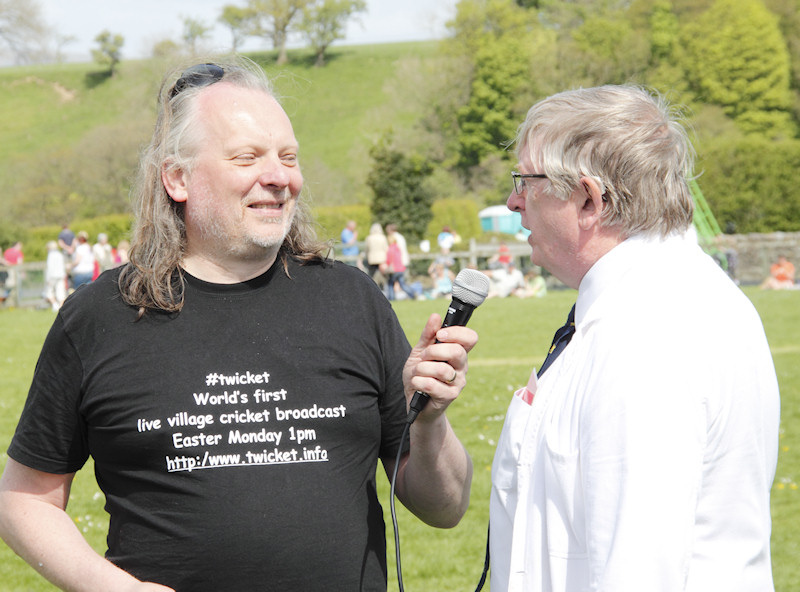
Live tweeting and streaming a village cricket match is another fun example of real time updates. The Twicket experiment in the Lancashire village of Wray drew a worldwide audience.
A Philadelphia local government blogger Jim Garrow talked this when he described how things like this are changing communications.
Imagine a situation in local government where each department and each office had a social feed. That it would be as common as a telephone or an email address. That you could pick and choose the streams you wanted to tune into.
That an organisation could tap into those streams to tell people what it’s doing. That’s – for want of a better phrase – as linked social. As the number of smart phones in our pockets grow that’s where we’re headed in the long term. I’m sure of it.
Here’s what the local government social media evolution curve looks like to me. Because I’m fond of lists it’s in a list form and there’s eight steps.
The eight stages of local government social media evolution
1. Ignorance: We may have heard of the social web. Just. But we’ve never really heard of Facebook or if we have, we’ve not seen the film. We heard a caller to Nicky Cambell’s phone in saying it’s the worst thing ever invented. We agree with the Daily Mail. It gives you cancer.
2. Fear: We – or our boss – think we need to use it. We don’t know how to get started.
3. JFDI: The Dave Briggs rule of Just F***ing Do It. We’re experimenting. We’re not really asking much in the way of permission. It may grow into something bigger. We’re experimenting and innovating. In Dave’s axis, there’s a trade off between JFDI and being boring. You’ll get more done by JFDI but it’s far less sustainable.
4. Boring: It’s getting bigger. We need a social media strategy like this one from Wolverhampton Homes. It keeps people higher up happy. That makes people lower down happy too. We’re starting to mainstream things. Slooowly.
5. Lone social. We have a single Twitter account for the organisation. We have a single Facebook page. We’ve not heard of Flickr. Or Foursquare.
6. Chattering social. We’ve let others use digital platforms too. So long as they stick to the basic common sense advice. We have different voices talking about different things.
7. Linked social. We’re now talking on one offs about the same issue from a different perspective. Like Walsall 24. We’ve got something bigger than the sum of the parts.
8. Mainstream linked social: We’re doing this as routine. We have a stream on what the countryside ranger is doing at a nature reserve. And what the litter hit squad are doing at the same site. We’re using the same hashtag. Some of this is automated. For example, there’s an RSS feed linked to bin wagons. Ten days a year in the snow it really comes into it’s own.
That’s my map of where we’ve been and where we’re going. Feel free to disagree.
Creative commons credits:
Smiling man and woman http://www.flickr.com/photos/cyberuly/4742800632/sizes/l/in/photostream/